

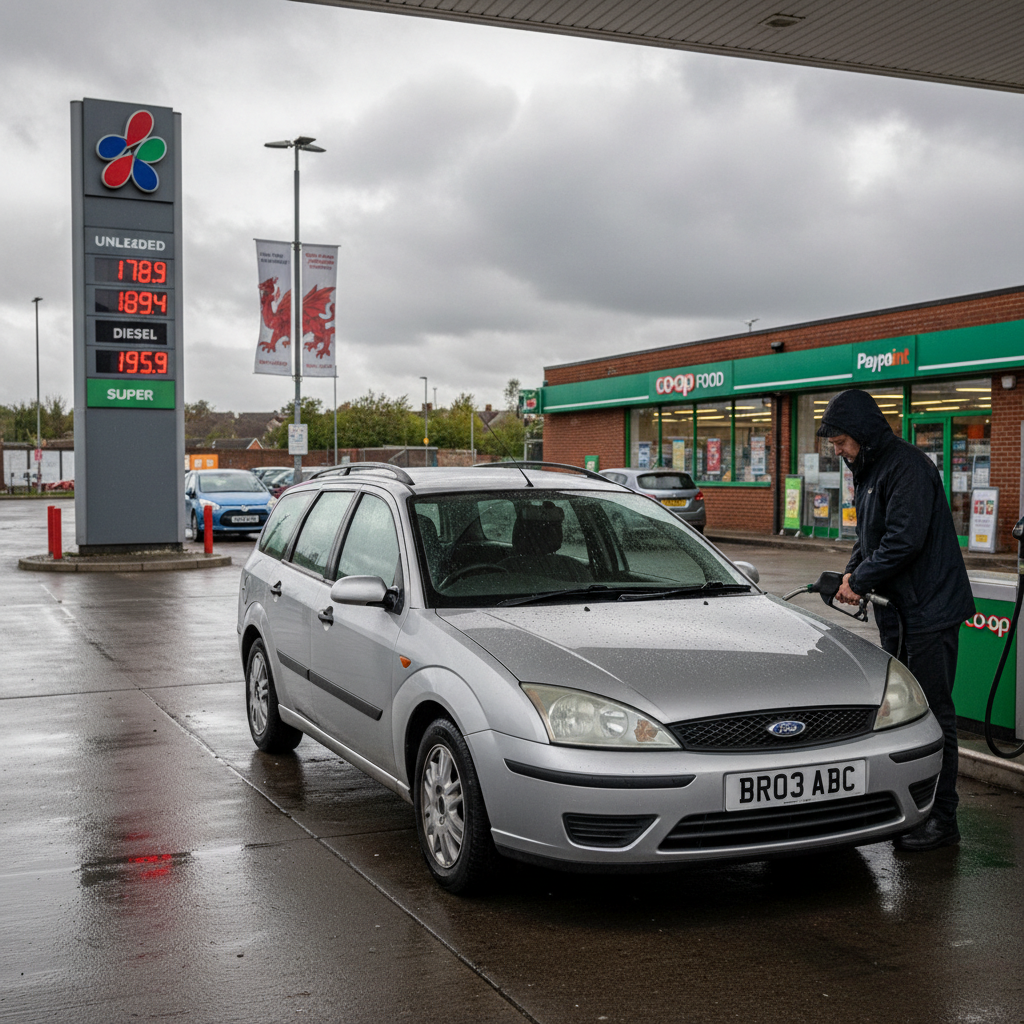
For decades, British motorists have adhered to an unwritten rule of the road: do your weekly shop, collect your loyalty points, and fill up your tank at the supermarket forecourt for the cheapest fuel in town. It was a reliable, wallet-friendly ritual. But today, live pump data has blown that assumption completely out of the water.
A deep dive into today's pricing data across 500 filling stations reveals an upside-down fuel market. The nation’s biggest supermarket fuel retailer, Tesco, is currently averaging a staggering 186.55p per litre for standard unleaded. Meanwhile, agile independent operators are proving that it is entirely possible to turn a profit while keeping prices on the floor. The reality is stark: the supermarkets are no longer the drivers’ champions.
The 44p Supermarket Premium
When we look at the hard numbers, the gap between the corporate giants and the nimble independents isn’t just a few pennies—it’s an absolute chasm. Karan Retail, a leading independent operator, is currently offering an average unleaded price of 142.53p per litre.
Compare that to Tesco’s average of 186.55p, and savvy drivers are looking at a 44.02p per litre premium just for the convenience of filling up at the supermarket. On a standard 55-litre family hatchback, that decision costs you an extra £24.21 per tank.
Even compared to major road networks managed by Motor Fuel Group (164.12p) or JET (163.90p), supermarket pricing has ballooned. Today, Tesco is trailing only Rontec (190.15p) as one of the most expensive places to buy fuel in the country—charging even more than motorway service operator Moto (182.09p).
| Retailer / Group | Average Unleaded Price (p) | Cost to Fill 55L Tank (£) | Difference vs. Karan Retail (£) |
|---|---|---|---|
| Karan Retail (Independent) | 142.53p | £78.39 | - |
| JET | 163.90p | £90.15 | £11.76 more |
| Motor Fuel Group | 164.12p | £90.27 | £11.88 more |
| Moto (Motorway Services) | 182.09p | £100.15 | £21.76 more |
| Tesco (Supermarket) | 186.55p | £102.60 | £24.21 more |
| Rontec | 190.15p | £104.58 | £26.19 more |
Why Have the Supermarkets Deserted Us?
Historically, supermarkets used cheap fuel as a loss-leader to get feet through the glass doors of their grocery stores. However, fuel market analysts suggest a fundamental shift in retail strategy has occurred. With squeezed margins on grocery shelves due to intense competition from discounters, the forecourt has transitioned from a promotional tool into a major profit centre.
By keeping pump prices high, corporate retailers are effectively asking motorists to subsidise the price wars happening inside the aisles. Because drivers still believe supermarkets are the cheapest, they fill up without checking, falling straight into a highly profitable trap.
Meanwhile, smaller independent networks don’t have massive corporate overheads or complex cross-subsidisation strategies. They buy fuel on the wholesale market and price it dynamically to get volume through their pumps. If wholesale prices drop, independents like Karan Retail pass those savings on immediately to attract local custom, resulting in a bargain 136.90p low-point today.
Actionable Advice for Savvy Drivers
To keep your hard-earned money in your pocket, you need to break old habits. Here is how you can beat the supermarket premium today:
- Ditch the Loyalty Blindness: Clubcard points and loyalty schemes rarely offer enough value to offset a 44p-per-litre price hike. Do the math before you buy.
- Seek Out Local Independents: Look for smaller, unbranded, or regional chain sites. Today’s data proves they are actively competing for your business.
- Use Price Comparison Apps: Before you leave the house, check live local prices. A five-minute search can easily identify which local station is offering a genuinely wallet-friendly price.
The Verdict
The myth of the cheap supermarket fill-up is officially dead. When Tesco averages 186.55p while regional independents are comfortably trading at 142.53p, the market is telling us everything we need to know. Stop paying the supermarket premium—vote with your wallet, support the independent retailers driving down costs, and keep your fuel spend where it belongs: in your bank account.