

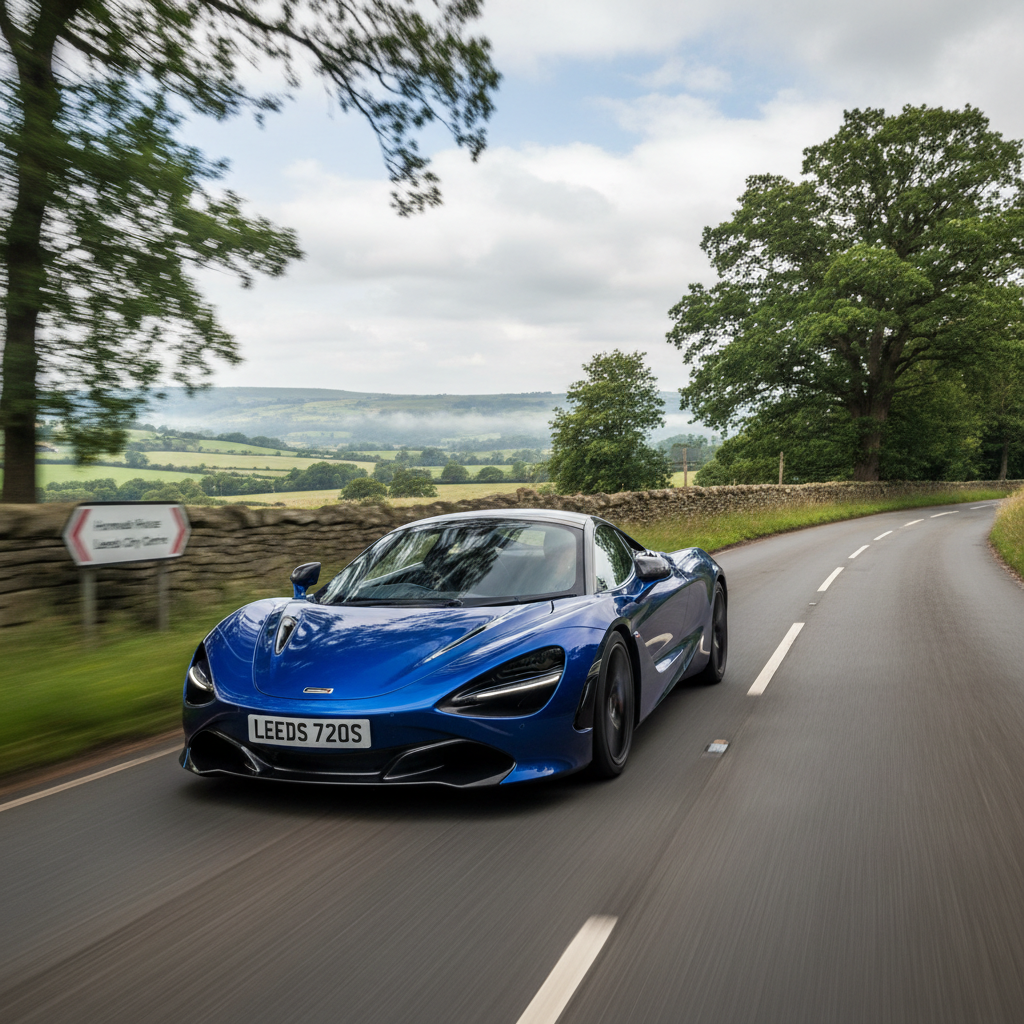
If you live for that perfect apex—the moment where the chassis settles, the steering communicates exactly how much bite is left in the front tyres, and your right foot becomes a direct extension of the engine’s soul—then the current state of high-performance machinery should both thrill and terrify you. Right now, we are witnessing a fascinating, highly volatile collision between old-school mechanical violence and the clinical, computer-managed future of speed.
The 1067bhp Antidote to Modern Sanity
Let’s start with the absolute sensory overload heading for the tarmac at the Goodwood Festival of Speed. The mad geniuses at Californian Porsche specialist Gunther Werks are bringing a machine that defies the polite, heavily restricted boundaries of modern performance. It is called the F-26, and it is a race-honed, £1.2 million tribute to the legendary Porsche 911 "Slantnose".
According to reports from Autocar, this isn't just a static design study; Gunther Werks is actively aiming to shatter the Goodwood hillclimb shootout record. They are doing it with some truly ballistic performance data. Beneath that aggressively sculpted, ultra-wide carbon-fibre bodywork sits a twin-turbocharged flat-six engine pumping out a mind-warping 1067bhp. Power is fed strictly to the rear wheels. It is a terrifyingly focused, razor-sharp distillation of pure mechanical grip and raw horsepower, designed to attack tarmac with a level of engagement that modern electronically sanitised supercars simply cannot replicate. Watch this space, because if they hook up that power through the rear contact patches on the damp, narrow Goodwood lane, it will be a masterclass in driving dynamics. For more on the allure of raw, rear-wheel drive machines, check out our recent analysis.
Silverstone’s Energy Management Headache
Now contrast that analog, boost-heavy brute with what just unfolded at the Formula 1 British Grand Prix. We are in the 2026 season, and the cutting edge of motorsport is facing a massive identity crisis. The young prodigy Kimi Antonelli put on a masterclass for Mercedes, taking his fifth pole of the season and storming to his first sprint race victory ahead of Lewis Hamilton, as reported by Autosport. On paper, it was a spectacular display of talent from the Italian youngster.
But scratch beneath the surface of the timing screens, and the picture becomes far more complex for those of us who care about the pure driving experience. The drivers themselves are sounding the alarm. McLaren’s Oscar Piastri led a chorus of criticism, describing the sprint race as "chaos with the energy usage" and calling the frantic, computer-regulated "yo-yo" racing at Silverstone "pretty dangerous at some points."
When drivers are forced to lift and coast on some of the fastest, most iconic corners in the world just to satisfy battery-regeneration algorithms, the purity of the sport suffers. It becomes a game of mathematical optimization rather than a test of who can carry the most speed through Copse or Stowe. The cars are incredibly fast, yes, but when the power delivery feels simulated rather than organic, the visceral thrill is compromised. This complex relationship between technology and driving enjoyment highlights why the soul of driving is under siege in modern performance vehicles.
The Drama Off-Track
Even the paddocks are full of tension as teams grapple with these complex regulations. Autosport reports that Mercedes team boss Toto Wolff has been trading barbs with Ferrari's Fred Vasseur over the Scuderia's aggressive upgrade cycle for their 2026 machine. Wolff suggested Vasseur was being "very emotional" in misunderstanding comments about Ferrari's development trajectory. When the stakes are this high, and the engineering behind squeezing every fraction of a kilowatt out of a hybrid system is so intense, tempers are bound to flare.
Meanwhile, in the world of GT racing, Aston Martin has proven that simpler, combustion-powered drama still delivers the ultimate spectacle. At the Norisring, Nicki Thiim claimed a historic maiden DTM victory for the British brand in a race marred by a horrific, high-speed crash involving Maximilian Paul’s Lamborghini, as reported by Autosport. It was a stark reminder of the razor-thin margin of error when driving highly responsive, front-engine, rear-drive GT3 weapons on tight street circuits.
Key Takeaways for the Performance Enthusiast
- Pure Analog Violence: The Gunther Werks F-26 brings 1067bhp, rear-wheel drive, and a £1.2m price tag to conquer Goodwood's legendary hillclimb.
- The Tech Dilemma: F1 drivers at Silverstone are criticizing the "yo-yo" energy management of current hybrid units, calling the non-linear power delivery dangerous.
- Youth Triumphant: Kimi Antonelli secures his first 2026 sprint victory, proving that raw driver talent can still shine through complex electronic systems.
- Aston's Milestone: Nicki Thiim secures Aston Martin's first-ever DTM victory at a chaotic, red-flagged Norisring.
The Verdict
What does all of this mean for the enthusiast? It tells us that we must cherish honest, driver-focused engineering while we still can. While Formula 1 battles with battery percentages and complex recovery algorithms that leave even the world’s best drivers feeling disconnected, projects like the Gunther Werks F-26 show us what happens when engineers design a vehicle solely for the thrill of the drive. Give us a chassis that feels planted, steering that is responsive, and an engine that reacts instantly to our inputs. That is where the soul of performance truly lives. This pursuit of mastery through chassis engineering is the ultimate battleground for driver joy.