

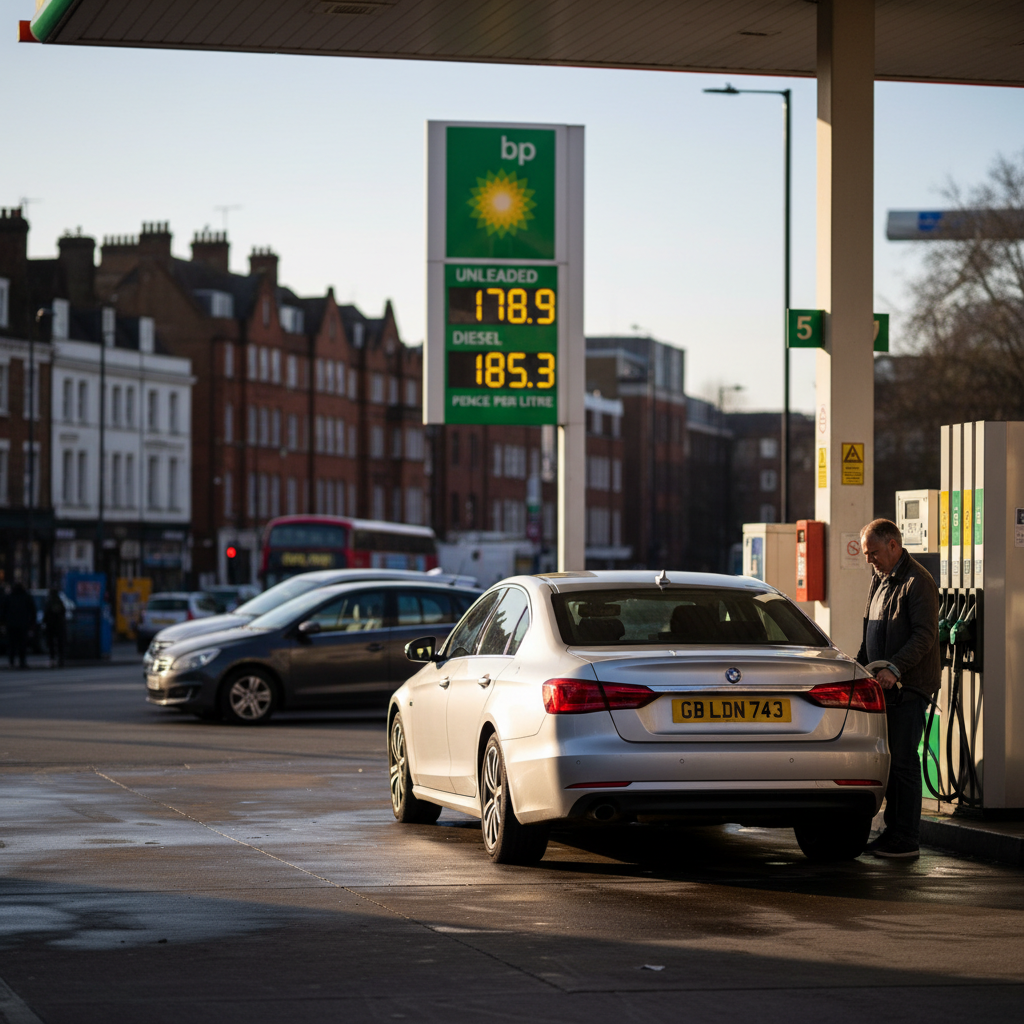
The £34 'Two-Tier Tank': Why Timing Your Top-Up Could Save You a Fortune Today
As Fuel Economics Editor for Motoring News, my mission is to cut through the noise and deliver actionable insights that genuinely save working-class drivers money. Today’s live fuel analysis has unearthed something truly compelling: a significant £34 price gap for a tank of unleaded. But this isn't just about finding the cheapest forecourt; it's about understanding the 'two-tier tank' phenomenon currently at play, where astute drivers can unlock significant savings simply by understanding a crucial timing anomaly.
Let's crunch the numbers. The national average for unleaded has settled at 184.49p per litre today. However, beneath this seemingly stable surface lies a volatile landscape. We've recorded prices as high as 199.90p and as low as a remarkable 129.90p. That’s a frankly astounding 70p per litre difference across the UK, creating a £34 divergence for a typical 50-litre family car.
But here’s the twist: this isn't solely a geographical lottery. While some previous analyses highlighted isolated bargains, today's data points to a strategic timing dynamic. The single Morrisons forecourt offering unleaded at 129.90p sticks out like a beacon of affordability. This isn't just a slight discount; it’s a price point usually reserved for periods of much lower wholesale costs, as heycar UK noted, with prices reaching near four-year lows in May 2025 – a stark contrast to today's average. This suggests a unique stock rotation or a deliberate marketing play by this particular retailer.
Comparing this to the higher end reveals the stark reality. Forecourts under brands like Moto are hitting the 196.90p mark – almost 70p more per litre than the Morrisons outlier. Even the broader average of major players like Tesco (186.55p) and Esso Tesco Alliance (187.58p) is substantially higher. The question isn't just *where* to fill up, but *when* a retailer dips into a significantly cheaper, older stock. This creates a fleeting 'bargain window' that savvy drivers can exploit.
Retailer Snapshot: Today's Unleaded Averages
| Retailer | Average Price (p/litre) | Stations Counted |
|---|---|---|
| Morrisons | 129.90 | 1 |
| Karan Retail | 142.53 | 42 |
| JET | 182.90 | 11 |
| Tesco | 186.55 | 100 |
| Esso Tesco Alliance | 187.58 | 41 |
| Motor Fuel Group | 188.50 | 100 |
| SGN | 189.23 | 100 |
| Rontec | 190.15 | 100 |
| Moto | 196.90 | 5 |
Why the Discrepancy? Understanding the 'Stock Lag'
While the RAC and BBC News consistently report on a 7p change at the pumps for every $10 movement in oil prices, this doesn't always translate immediately or uniformly across all forecourts. The significant difference we see today, particularly with the Morrisons outlier, points to what I call 'stock lag'. Larger retailers, or those with unique supply chain agreements, sometimes hold onto older, cheaper fuel stock for longer. When they need to clear it, prices can temporarily plummet well below the current market average. This creates a window of opportunity for drivers who are paying attention.
The AA has previously highlighted concerns that wholesale costs aren't always fully reflected at the pump, particularly for diesel, and that motorway prices are consistently higher. This underscores the fragmented nature of fuel pricing in the UK, where local competition and individual retailer strategies can carve out surprising pockets of affordability.
Your Actionable Advice: How to Catch the Bargain Window
For working-class drivers, every penny saved at the pump translates directly into more food on the table or crucial bills paid. To catch these fleeting bargain windows, you need to be proactive:
- Daily Price Checks: This isn't just about finding the cheapest station in your postcode. Monitor a few key retailers along your regular routes. A sudden, significant dip at one – like today's Morrisons anomaly – is your cue.
- Think Beyond Your Usual: Don't just default to the big brands. Today's data shows Karan Retail, with 42 stations, averaging a very respectable 142.53p, significantly below most larger players. These independent or smaller chains can often be more nimble with their pricing.
- Don't Discount 'Older' Stock: Recognise that a retailer dramatically undercutting the average might be clearing older, cheaper inventory. This is a good thing for your wallet, but it won't last forever.
This 'two-tier tank' phenomenon illustrates that fuel pricing isn't a static calculation; it's a dynamic interplay of wholesale costs, retailer strategies, and inventory management. By staying informed and acting swiftly, you can capture those unexpected moments of value.
Key Takeaways for Today's Drivers:
- £34 Difference: A staggering £34 price gap for a 50-litre tank of unleaded exists today (Morrisons 129.90p vs. Moto 196.90p). This highlights the 'phantom bargain' bust, where such low prices can mask broader market realities.
- The 'Stock Lag' Advantage: Look for retailers significantly undercutting the average – they may be clearing older, cheaper fuel stock. The 'pricing anomaly' is key to maximizing savings.
- Act Fast: These significant price dips are often temporary. Check local prices daily and fill up when you spot a major anomaly. This can lead to a 'hidden half-price' tank if you're quick.
- Consider Independents: Smaller retailers like Karan Retail can offer consistently competitive prices.
The verdict? While the average unleaded price hovers at 184.49p, savvy drivers today have the chance to fill up for nearly a third less if they find that Morrisons outlier. Otherwise, retailers like Karan Retail offer a consistently wallet-friendly alternative to the higher-priced Motor Fuel Group, SGN, and Rontec stations. Don't just accept the average; seek out the 'two-tier tank' and make your fuel budget go further.