

The £35 Regional Fuel Rift: Why Your Postcode Dictates a Tank's True Cost – And How to Beat It Today
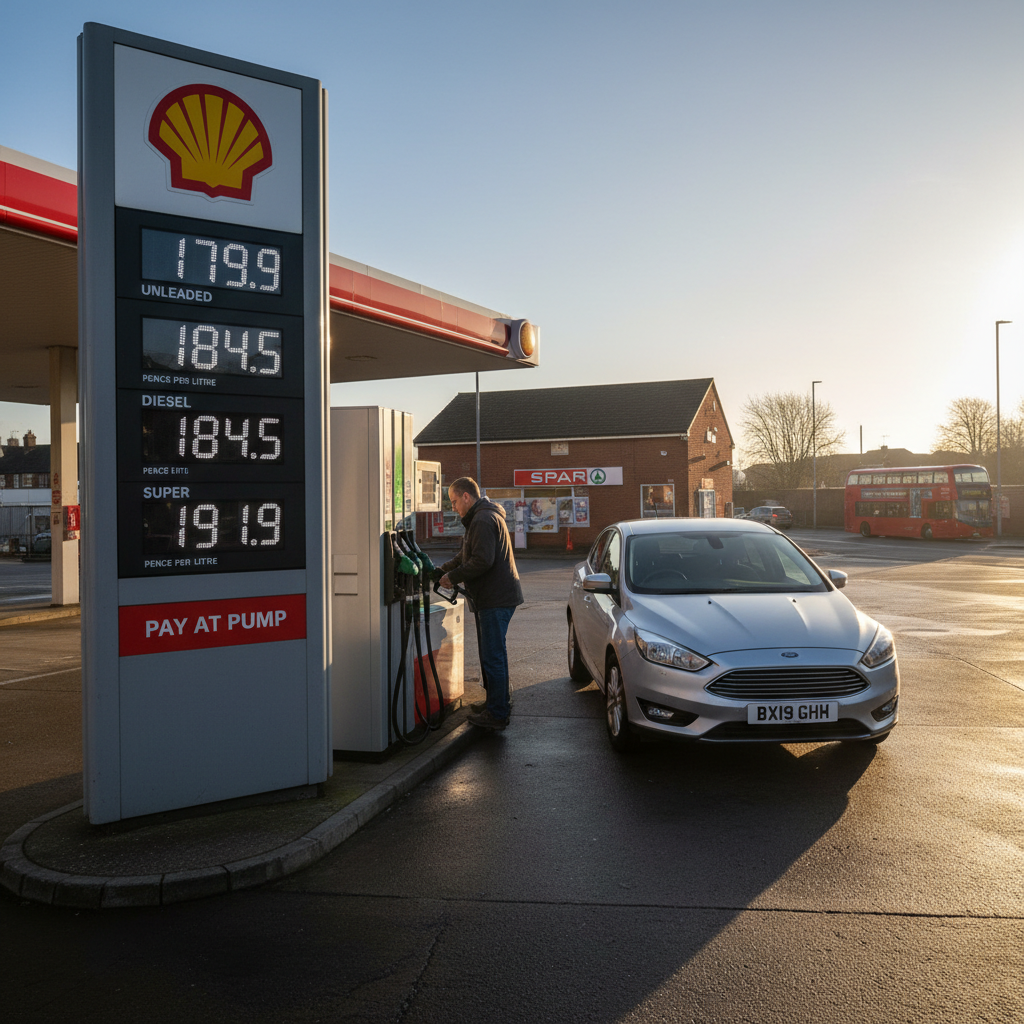
Forget the national average; today's live fuel analysis reveals a far more insidious problem: a £35 regional rift in unleaded prices that’s quietly draining the wallets of working-class drivers. While the UK average for unleaded hovers around 184.61p per litre, our data uncovers a colossal 70p per litre price chasm between the cheapest and most expensive fill-ups. This isn't just about finding a good deal; it's about understanding how your location can disproportionately impact your fuel bill.
For a typical 50-litre family car, that 70p difference translates directly into a jaw-dropping £35 extra just to fill up. It’s a sum that can make or break a household budget, especially when every penny counts. And what’s more, this isn’t a battle against fluctuating oil prices alone – it’s a battle against postcode inequality.
The Great Price Divide: Where Savings Hide and Rip-Offs Lurk
Our deep dive into today's 500 unleaded prices paints a stark picture. While the national average sits at 184.61p, the real story is in the extremes:
- Cheapest Unleaded: A remarkable 129.90p per litre
- Most Expensive Unleaded: A eye-watering 199.90p per litre
- Overall Price Range: 70p per litre
This 70p differential is a siren call for savvy drivers. It means that while some are enjoying truly wallet-friendly prices, others are being hit with what can only be described as a premium surcharge simply due to where they live or where they choose to refuel.
Retailer Breakdown: The Good, The Bad, and The Head-Scratcher
When we break down the data by retailer, the regional inconsistencies become even more apparent. While our data shows a single Morrisons site offering unleaded at an incredible 129.90p, this isn't a widespread trend across all Morrisons forecourts. The sheer disparity even within retailer groups highlights that local competition and logistical factors play a huge role.
Consider the averages:
| Retailer | Average Unleaded Price (p/litre) | Number of Stations Analysed |
|---|---|---|
| Morrisons | 129.90 | 1 (The outlier!) |
| Karan Retail | 142.53 | 42 |
| JET | 182.90 | 11 |
| Tesco | 186.55 | 100 |
| Esso Tesco Alliance | 187.78 | 41 |
| Motor Fuel Group | 188.62 | 100 |
| SGN | 189.60 | 100 |
| Rontec | 190.15 | 100 |
| Moto | 196.90 | 5 (Motorway service areas often) |
Why the Discrepancy? Beyond Crude Oil
While global oil prices are often cited as the primary driver of pump costs, today's data underscores that local factors are just as crucial. According to the AA, drivers on motorways can pay up to 20p more for petrol than on A-roads [6]. This isn’t a new phenomenon, but the sheer scale of the regional difference today is striking. Factors at play include:
- Local Competition: Areas with more forecourts vying for business tend to have lower prices.
- Logistics and Delivery Costs: Remote locations or those difficult to access can incur higher transport costs for fuel.
- Retailer Strategy: Some retailers strategically price fuel to attract footfall, while others rely on captive audiences (e.g., motorway services).
- Forecourt Ownership: Independent stations, not tied to major brand pricing structures, can sometimes offer unexpected bargains or conversely, higher prices.
The CMA has previously investigated the road fuel market and found no widespread evidence of price-gouging [6], yet the regional disparities remain a persistent challenge for consumers. The 52.95p fuel duty rate remaining in place from Spring 2025, as confirmed in the Budget [1], highlights that a significant portion of our fuel cost is fixed, making the variable retail margin even more critical to scrutinise.
Actionable Advice for Savvy Drivers
So, what’s a working-class driver to do when faced with such a postcode lottery? The answer is simple: never assume, always check. The days of blindly pulling into your local station are long gone if you want to protect your wallet.
Even if you don’t find a 129.90p bargain, understanding the regional landscape can save you significant money. If a typical family car’s tank has seen a £14 increase in recent times [4, 8], then finding ways to shave off even a few pence per litre locally can quickly add up to substantial annual savings.
Key Takeaways for Your Wallet:
- Always Compare Locally: Don't just look at national averages; check prices in your immediate area and along your regular routes.
- Beware the Motorway Premium: Plan ahead and fill up before hitting motorways, where prices are almost always significantly higher.
- Factor in Diversion Costs: While a cheap forecourt 20 miles out might seem appealing, calculate if the extra fuel used to get there negates the saving.
- Look Beyond the Big Names: Sometimes independent retailers or smaller chains offer surprising bargains, like Karan Retail at 142.53p in our data, far below the major supermarkets' averages.
- Track Your Spend: Understand your average fuel consumption and how even small price differences impact your monthly budget.
Ultimately, today's data is a stark reminder that fuel prices are not a monolithic entity. They are a complex tapestry woven with global market forces, local competition, and retailer strategy. For the everyday driver, navigating this landscape means being informed, being vigilant, and refusing to accept the 'postcode tax' on your fuel bill. Your £35 savings are out there – you just need to know where to look.