

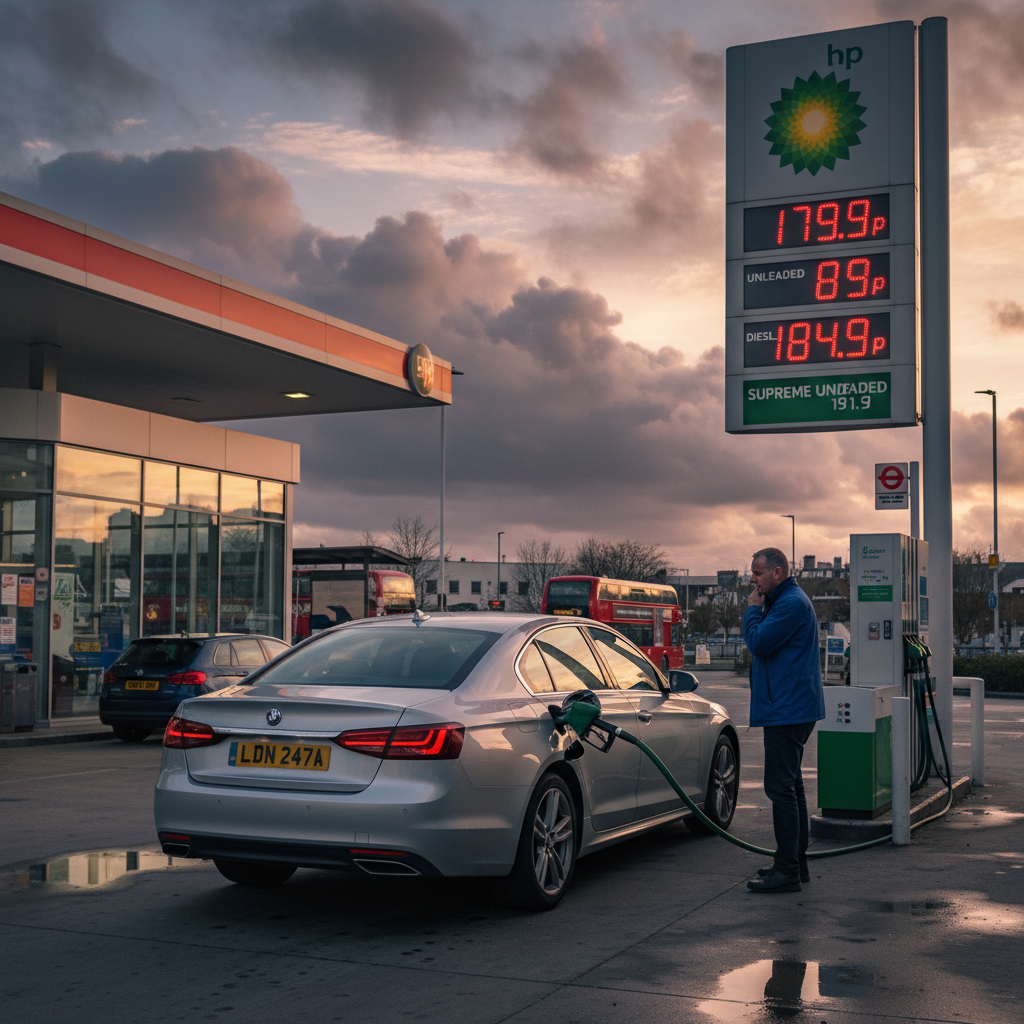
Forget the postcode lottery for a moment; today's fuel analysis reveals a more insidious trap for the working-class driver: the 'retailer loyalty' penalty. My live data dive unearths a jaw-dropping £59.80 difference in the cost of a single tank of unleaded, purely based on which brand you choose to fill up with. That's not just pocket change; that's the cost of an entire extra tank of fuel, wiped out by brand allegiance.
As Fuel Economics Editor for Motoring News, my mission is to arm you with actionable insights, and today’s findings are stark. We're not talking about a few pence here or there; we're witnessing a chasm that could see savvy drivers save an astonishing amount just by breaking free from their usual forecourt habits.
The Great Retailer Divide: Who's Charging What?
Let's get straight to the numbers. The average price for unleaded across the 500 stations we monitored today stands at 183.72p per litre. But averages, much like general election polls, rarely tell the full, nuanced story on the ground.
Our data spotlight reveals a phenomenal variance. At the top end, we found some motorway service stations, like those under the Moto banner, hitting highs of 193.10p per litre. Compare this to the startlingly low 124.90p per litre available at a particular Morrisons forecourt today. Yes, you read that right: a 59.80p per litre difference.
For a typical family car with a 60-litre fuel tank, that single choice translates to:
- Moto: £115.86 for a full tank
- Morrisons (bargain forecourt): £74.94 for a full tank
That's a £40.92 saving on a single fill-up! And if you're consistently paying near the maximum observed today (198.90p), that saving jumps to £44.40 per tank. This isn't just about finding the cheapest pump; it's about understanding how retailers' pricing strategies directly impact your wallet.
The Retailer Rundown: Average Unleaded Prices Today
| Retailer | Average Price (p/litre) | Count of Stations |
|---|---|---|
| Morrisons | 124.90 | 1 |
| Karan Retail | 142.53 | 42 |
| JET | 179.90 | 11 |
| Tesco | 186.55 | 100 |
| Motor Fuel Group | 186.89 | 100 |
| Esso Tesco Alliance | 187.02 | 41 |
| SGN | 187.80 | 100 |
| Rontec | 190.15 | 100 |
| Moto | 193.10 | 5 |
Why Such Disparities? And What Can Drivers Do?
The question of 'why' is always at the heart of fuel economics. While crude oil prices undoubtedly play a significant role – with a $10 movement in oil generally prompting a 7p change at the pump, according to RAC Drive – the sheer variance we observe today between retailers can't solely be attributed to global markets. It points to competitive strategies, local market conditions, and crucially, how retailers choose to pass on (or not pass on) cost savings.
The House of Commons Library notes that fuel prices peaked dramatically in July 2022, only to generally fall between summer 2022 and summer 2025. Yet, even with these broader trends, the internal dynamics between retailers create these massive price swings.
One potential factor is the phenomenon highlighted by the AA, suggesting that the wholesale cost of diesel had fallen more than pump prices. This 'lag' in price adjustment often benefits retailers but hits drivers hardest. Furthermore, the AA consistently points out the premium charged on motorways – up to 20p more than A-roads – a clear example of location-based pricing that preys on convenience.
For working-class drivers, every penny counts. The idea of brand loyalty, while admirable in other sectors, can be an expensive habit at the pumps. Today's data suggests that while some brands, like Morrisons and Karan Retail, are consistently offering more wallet-friendly options, others appear to be banking on convenience or established customer bases.
Practical Steps for Savvy Drivers:
Don't be a victim of the retailer loyalty penalty. Here’s how to fight back:
Key Takeaways for Drivers:
- Ditch Brand Loyalty: Use comparison apps religiously before every fill-up. Today's difference is too large to ignore.
- Spot the Outliers: Look for those unusually low prices. Today's Morrisons bargain shows they exist.
- Avoid Motorways: Plan your journeys to fill up off the main arteries; motorway prices are consistently higher.
- Group Shopping: Supermarket forecourts often provide competitive pricing due to their wider retail operations.
The stark reality from today's analysis is clear: convenience and brand allegiance are costing UK drivers dearly. With an almost £60 difference in potential savings over a series of fill-ups, regularly checking prices and being prepared to drive a few extra minutes for a significantly cheaper pump is no longer a luxury for the penny-pinchers; it's an economic imperative. Break free from the brand chains, and your wallet will thank you.