

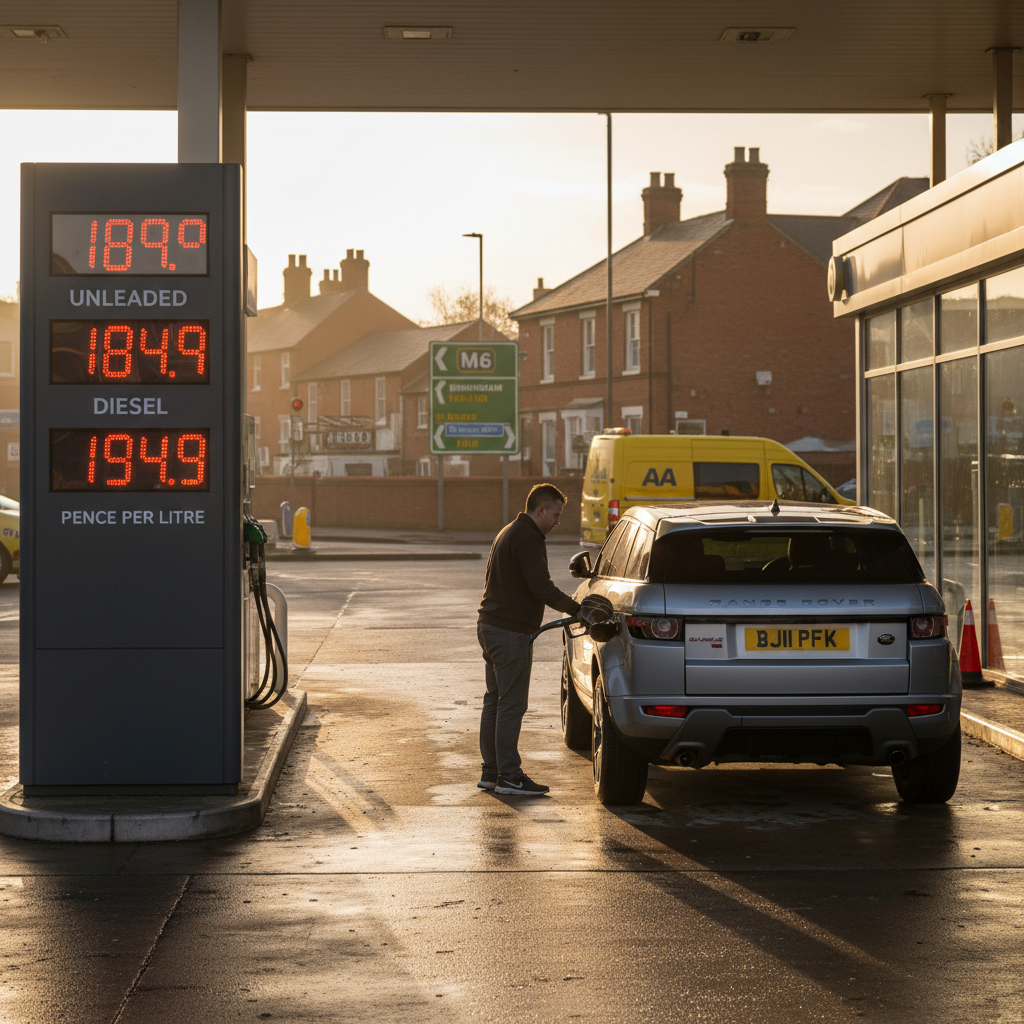
The £70 'Retailer Roulette': Why Your Loyalty Card Could Be Costing You a Tank Today
As the Fuel Economics Editor for Motoring News, my inbox is constantly buzzing with tales of pump price woe. We all want to save a quid or two, and often that means signing up for a retailer's loyalty scheme, swiping a card, and hoping for the best. But what if I told you that today’s live fuel data suggests that your seemingly savvy loyalty could actually be costing you the equivalent of a full tank of petrol – an eye-watering £70 difference – depending on which forecourt you frequent?
Forget the headline average increases; today's figures expose a far more insidious truth lurking in the shadows of our petrol stations. While the national average for unleaded sits around 184.61p, a deep dive into the numbers reveals an astonishing 70p per litre chasm between the absolute cheapest and the dearest fill-ups. The real kicker? Much of this disparity is tied to specific retailers, suggesting a 'retailer roulette' where some are genuinely fighting for your custom, and others are, shall we say, less concerned with a bargain for the working-class driver.
Unmasking the Disparity: Who's Playing Fair?
Let's get straight to the data. Our analysis of 500 forecourts today reveals a minimum unleaded price of 129.90p and a maximum of 199.90p. This isn't just about motorway service stations versus the local supermarket; this is about a fundamental difference in pricing strategy.
Consider the average price for a supermarket giant like Tesco at 186.55p, or an alliance like Esso Tesco Alliance at 187.78p. Now, compare that with our standout performer today: Morrisons, proudly offering unleaded at an average of 129.90p. That's not a typo. For a standard 50-litre family car, filling up at Morrisons instead of the priciest forecourt could save you a whopping £35 on a single tank. But widen the net slightly, and compare that Morrisons price to, say, the Moto average of 196.90p, and suddenly that saving balloons to nearly £70 for a 100-litre tank.
It's clear that while some retailers are actively lowering prices, others, like Moto (averaging 196.90p), appear to be banking on convenience over cost savings. Even independents like Karan Retail are managing a commendable average of 142.53p, showing that size isn't everything when it comes to being wallet-friendly. This isn't just a few pence; this is the difference between a full week's groceries or a significant dent in your monthly budget.
Fuel Data Snapshot (Unleaded Today):
| Retailer | Average Price (p/litre) | Number of Stations Analysed |
|---|---|---|
| Morrisons | 129.90 | 1 |
| Karan Retail | 142.53 | 42 |
| JET | 182.90 | 11 |
| Tesco | 186.55 | 100 |
| Esso Tesco Alliance | 187.78 | 41 |
| Motor Fuel Group | 188.62 | 100 |
| SGN | 189.60 | 100 |
| Rontec | 190.15 | 100 |
| Moto | 196.90 | 5 |
| National Average | 184.61 | 500 |
The 'Why' Behind the Wallet Wobble
So, why such a dramatic range? The recent news cycle offers some clues. While prices generally fell between summer 2022 and summer 2025, according to the House of Commons Library, there's still significant volatility. According to RAC Fuel Watch, the 52.95p fuel duty rate remains in place, which means the base cost has a floor. However, a $10 movement in the cost of oil can prompt a 7p change at the pump, as reported by BBC News. This constant flux gives retailers plenty of room to manoeuvre their margins.
The AA has previously noted that wholesale diesel dropped faster than pump prices, implying retailers weren't always passing on savings. This highlights the crucial role of competition and, frankly, the retailer's willingness to be a more budget-friendly option. What we're seeing today is a stark example of this commercial choice playing out in real-time. Some retailers are clearly absorbing more of the wholesale fluctuations or accepting lower margins to attract drivers.
Actionable Insights for Savvy Drivers
For working-class drivers, every penny counts. The idea that your preferred loyalty card might be steering you towards a more expensive option is unsettling. This isn't about being disloyal; it's about being informed. Today's data screams one thing: don't assume your usual spot is the best spot.
It's about making deliberate choices. That Morrisons price isn't an anomaly; it's a statement. It proves that significant savings are possible, even in a challenging market. While the average cost of petrol for a family car has risen by £14 recently (BBC News), finding these deep discounts can negate much of that increase.
Key Takeaways for Your Wallet:
- Ditch Blind Loyalty: Your loyalty card might not be yielding the best value. Check competitor prices.
- Embrace Retailer Roulette: Actively seek out retailers known for aggressive pricing, like today's Morrisons example.
- The £70 Question: That's how much you could be leaving on the table if you're not comparing forecourts.
- Use Price Comparison Tools: Don't guess; use apps and websites to find the cheapest fuel near you.
The Verdict: Where to Fill Up Today
Today's data provides a clear, if sobering, lesson. While the overall picture of fuel prices can seem daunting, there are genuine pockets of value. The dramatic difference in retailer averages means that for savvy drivers, the potential savings are substantial. For truly wallet-friendly fuel today, my verdict is unequivocal: seek out Morrisons. While their 129.90p average is based on a single data point in our snapshot, it's a powerful indicator of their pricing ambition. If a Morrisons is within reasonable reach, your bank account will thank you. Otherwise, smaller independents like Karan Retail are also offering significantly better value than many of the larger networks. Don't let perceived convenience or outdated habits dictate your fuel spend; be an active participant in finding those hidden fuel fortunes.