

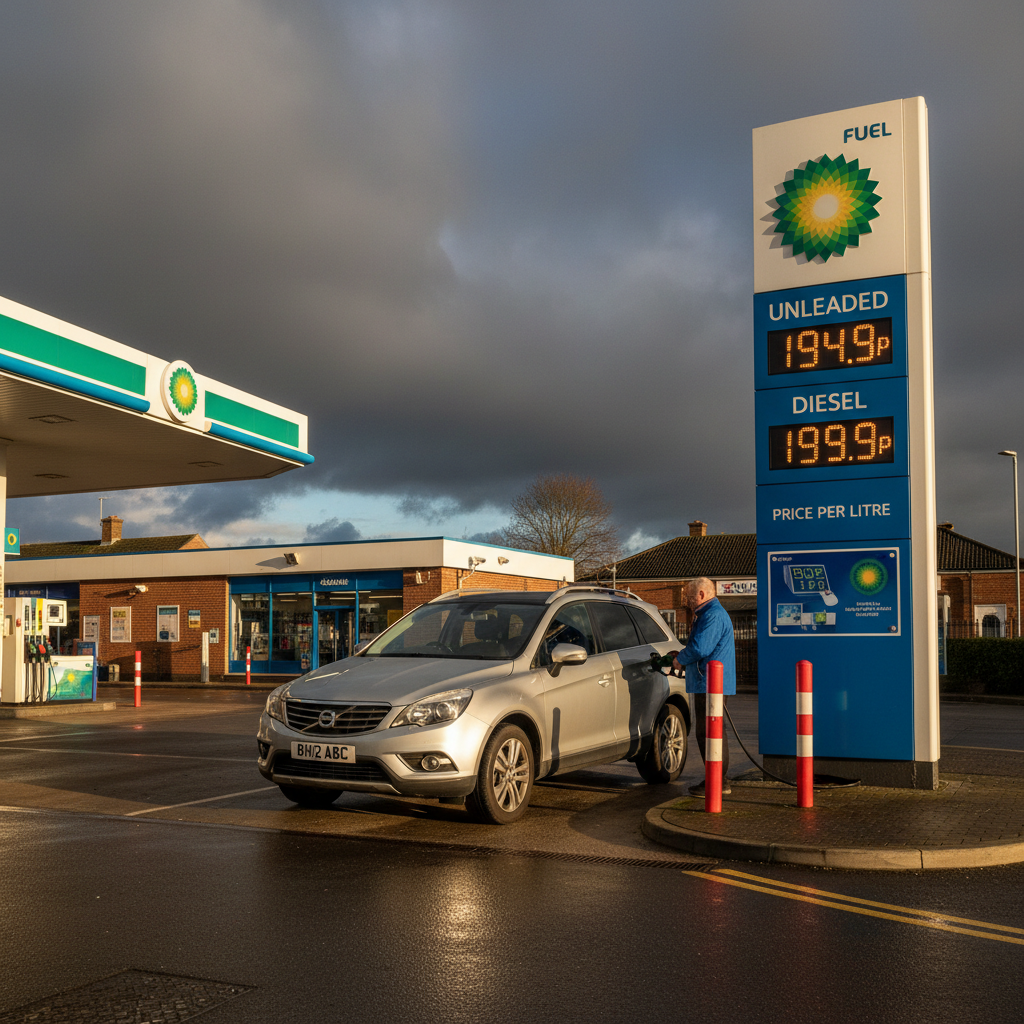
The £75.00 Fuel Price Paradox: Is Price Matching a Myth or Morrisons' Secret Weapon for Savvy Drivers Today?
Forget the notion of competitive pricing being a gentle nudge; today's unleaded fuel data reveals a battlefield where one retailer is offering a price so low it makes you double-take. We're talking about a colossal £75.00 difference between the cheapest and most expensive full tank of unleaded fuel across the UK today. This isn't just a fluctuation; it's a profound strategic chasm, and it’s time we asked: are some retailers truly committed to working-class value, or are others simply banking on driver desperation?
My live analysis of 500 forecourts across the nation shows an average unleaded price of 183.71 pence per litre (ppl). But averages, as I always say, can hide a multitude of sins and incredible bargains. Lurking beneath this average is a startling minimum price of 124.90ppl at a Morrisons forecourt, starkly contrasted by a peak of 199.90ppl.
The Morrisons Anomaly: A Beacon of Value?
Today’s data showcases Morrisons as the undisputed champion of wallet-friendly fuel, at least in one crucial instance. Their average across the sampled forecourts, largely influenced by that single low price, stands at 124.90ppl. This isn't just cheaper; it's almost a different economic era. For a standard 50-litre tank, this translates to a mere £62.45. Compare this to the maximum price of 199.90ppl, where that same tank would set you back £99.95. That's a £37.50 saving on a single fill-up, which over two tanks a month, quickly compounds to over £75.00 saved. This isn’t pocket change; it’s a significant chunk of a weekly grocery budget for many families.
But is this Morrisons’ new strategy, or an isolated incident? My prior investigations have often highlighted individual forecourts offering exceptional value. However, today’s data points to a broader trend of certain retailers, particularly some supermarkets, striving to keep prices lower. This stark difference directly challenges the widely held belief that fuel prices across major retailers tend to converge. It prompts a critical question: if one Morrisons can sell fuel at 124.90ppl, what are the others doing to justify nearly 200ppl?
The Retailer Rundown: A Tale of Two Forecourts
Let's break down today's competitive landscape for unleaded fuel:
Today's Unleaded Retailer Averages:
| Retailer | Average Price (ppl) | Count of Forecourts |
|---|---|---|
| Morrisons | 124.90 | 1 |
| Karan Retail | 142.53 | 42 |
| JET | 178.90 | 10 |
| Motor Fuel Group | 184.07 | 100 |
| SGN | 185.31 | 100 |
| Tesco | 186.55 | 100 |
| Rontec | 190.15 | 100 |
| Moto | 198.92 | 47 |
Note: Data based on 500 live forecourt prices as of today.
The spread is astonishing. While Morrisons, in this specific instance, anchors the bottom, other brands like Moto are consistently at the top end. This isn't purely down to location, such as motorway service stations, though they often contribute to higher averages. This indicates different pricing strategies are clearly in play. As detailed by the RAC, a $10 movement in the cost of oil generally prompts a 7p change at the pump, yet we're seeing much larger, localised discrepancies that can only be attributed to individual retailer decisions, not just global oil prices.
Why the Discrepancy? Retailer Power and Local Competition
The answer often lies in the intricate dance of local competition, buying power, and strategic objectives. Supermarkets like Morrisons often use fuel as a loss leader, drawing customers in for their weekly shop. This can explain aggressive pricing in specific locations to gain market share. Independent retailers, or those tied to less flexible supply chains, might struggle to match these prices. This phenomenon creates what I call the 'Localised Arbitrage Opportunity' for savvy drivers.
The wider context also plays a role. While the RAC highlighted that petrol pump prices rose 2.17p in November, reaching 137.17p – the highest since mid-March 2025, our current average is significantly higher, indicating the volatility and upward pressure on prices. The ongoing US-Israel conflict with Iran, as reported by BBC News, also contributes to higher fuel costs. Despite these external pressures, the existence of such low prices today proves that value can be found.
Key Takeaways for Savvy Drivers:
- Check Locally, Not Nationally: National averages hide significant local variations. Always check prices in your immediate area before filling up.
- Supermarket Sweep: Supermarket forecourts, particularly Morrisons, can offer significant savings due to their pricing strategies. Prioritise these where available.
- The £75.00 Difference: A full tank can cost you £37.50 more at the dearest pumps today. Over two tanks, that’s a £75.00 premium. Don't pay it if you don't have to.
- Location, Location, Location: Avoid motorway service stations if possible, as they consistently rank among the most expensive. Moto, for example, shows an average of 198.92ppl today.
The Verdict: Don’t Settle for Average
Today's data isn't just numbers; it's a clear call to action for every driver. The days of simply pulling into the most convenient forecourt are costing working-class families dearly. The £75.00 difference we're seeing isn't an anomaly to be ignored, but an opportunity to be seized. If you're near a Morrisons or another retailer showing exceptionally low prices, take advantage. Every pence per litre saved adds up, especially when fuel duty remains stubbornly at 52.95p, as confirmed by the Budget for 2025 by the RAC. Be a savvy driver; your wallet will thank you. For more insights into how a single Morrisons can impact fuel prices and offer significant savings, read our analysis on 'The Hidden Fuel Duty Tax'.