

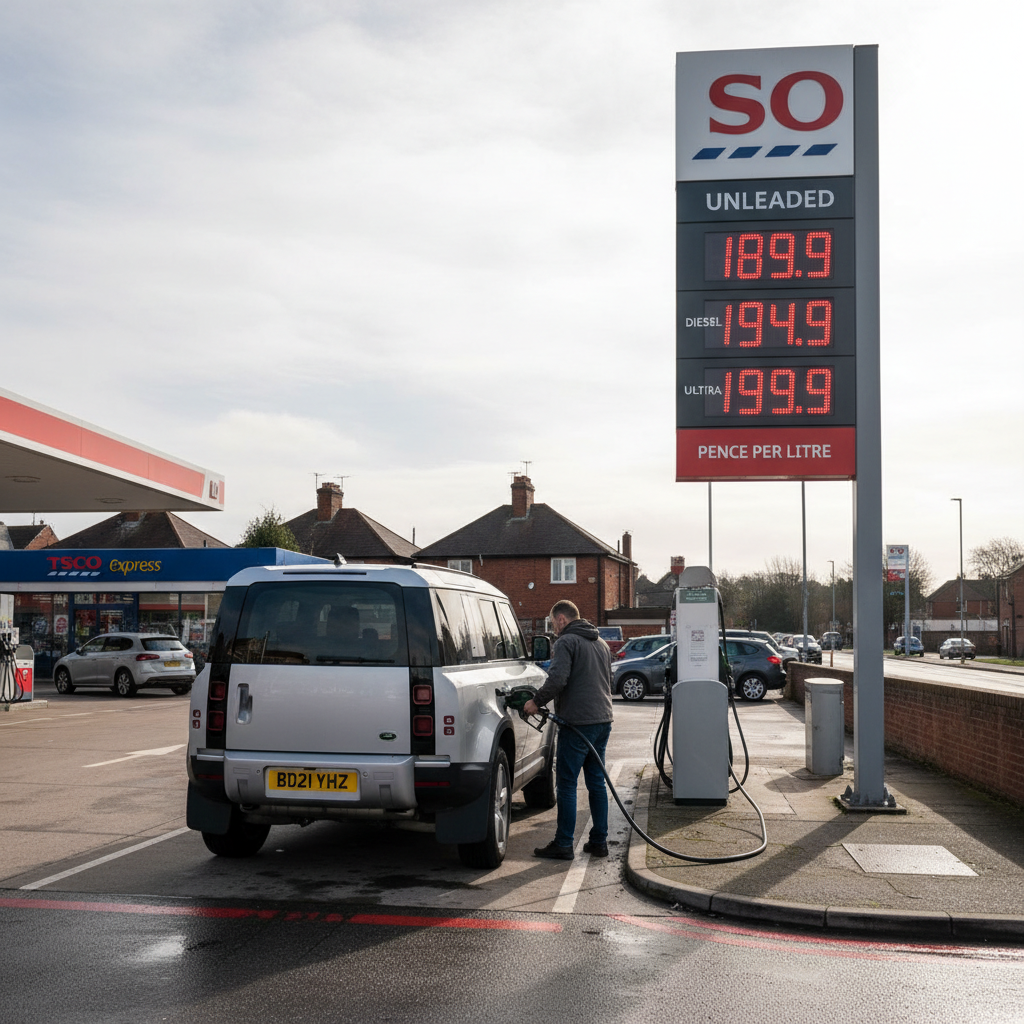
For years, UK motorists have operated under a silent, comfortable assumption: if you avoid motorway service stations, you avoid getting ripped off. We’ve accepted that pulling off the M-way onto a local high street or supermarket forecourt is the golden rule for keeping our household budgets intact.
But today’s live fuel data suggests a quiet, wallet-draining shift is underway. The historical boundary between "expensive" motorway fuel and "affordable" everyday petrol has practically dissolved. High-street giants and major supermarket brands are creeping closer to motorway-style pricing, leaving a remarkably narrow gap between standard forecourts and the notoriously overpriced service stations.
As a data journalist, I look at these numbers every day to find where the pressure points lie for working-class families. Today, the data reveals a stark reality: the traditional "safe haven" of the big-brand high-street pump has vanished. If you aren't actively seeking out specific regional networks, you are paying a premium that closely rivals motorway pricing.
The Vanishing Gap: Today's Pump Reality
Let's look at the cold, hard numbers from today's analysis of 500 stations across the UK. The national average for unleaded sits at a hefty 181.52p per litre. But the real story lies in the hierarchy of the brands we trust.
Moto, a major motorway service operator, averages 194.39p per litre. We expect this to be high. What we don't expect is that high-street giant Rontec is averaging 190.15p per litre, while Tesco—historically a champion of low-cost fuel—is averaging 186.55p per litre.
Think about that. The gap between Tesco, a supermarket brand, and Moto, a motorway service station, has shrunk to a mere 7.84p per litre. On a standard 55-litre family car, filling up at Tesco costs £102.60, while filling up at a motorway service station costs £106.91. The "supermarket discount" now saves you a measly £4.31 per tank compared to a motorway stop.
Meanwhile, the true bargain of the day is found in regional independent networks. Karan Retail is averaging an incredibly wallet-friendly 142.53p per litre. That is a staggering 44.02p per litre cheaper than Tesco, and 51.86p cheaper than Moto.
| Retailer / Brand | Average Price (p/Litre) | Cost to Fill 55L Tank | Difference vs. Moto (Motorway) |
|---|---|---|---|
| Karan Retail (Independent Champion) | 142.53p | £78.39 | -51.86p (£28.52 cheaper) |
| JET | 174.90p | £96.20 | -19.49p (£10.71 cheaper) |
| Motor Fuel Group | 179.76p | £98.87 | -14.63p (£8.04 cheaper) |
| SGN | 180.69p | £99.38 | -13.70p (£7.53 cheaper) |
| Tesco (Supermarket) | 186.55p | £102.60 | -7.84p (£4.31 cheaper) |
| Rontec (High Street) | 190.15p | £104.58 | -4.24p (£2.33 cheaper) |
| Moto (Motorway) | 194.39p | £106.91 | Baseline |
Why are High-Street Prices Mimicking Motorways?
To understand why this is happening, we have to look at the broader economic picture. According to reports from Mirror Online, the average UK driver is now facing monthly fuel costs of around £123 to keep their cars on the road. This puts immense pressure on household budgets.
At the same time, wholesale fuel costs are highly volatile. As reported by BBC News, motoring groups estimate that a $10 shift in the international price of crude oil typically triggers a 7p change at the domestic pump. This volatility has been amplified by geopolitical tensions in the Middle East, causing wholesale prices to fluctuate wildly.
When wholesale costs rise, large national retailers with massive overheads—like Tesco and Rontec—often raise their retail prices quickly to protect their profit margins. However, they are incredibly slow to lower them when wholesale costs drop. This practice, often called "rocket and feather" pricing, allows high-street retailers to quietly drift their prices upward, eventually mimicking the premium prices we expect to see only on the motorways.
Conversely, agile regional operators like Karan Retail operate on different margin models. They use fuel as a footfall driver for their convenience stores, allowing them to offer genuine, wallet-friendly pricing that passes wholesale savings straight back to savvy drivers.
The Impact on Your Wallet
The financial consequences for working-class drivers are massive. If you assume your local supermarket or high-street branded forecourt is giving you a fair deal, you are likely overpaying.
Choosing Karan Retail over Tesco today saves you £24.21 on a single 55-litre fill-up. Over a year of average driving, that equates to hundreds of pounds clawed back from corporate profit margins and put right back into your household budget.
Key Takeaways for Savvy Drivers:
- Ditch the Supermarket Default: Today's data proves Tesco is charging 186.55p—well above the national average of 181.52p. Supermarkets are no longer the default budget option.
- Seek Out Regional Heroes: Look for independent champions like Karan Retail, where unleaded is averaging 142.53p. Your local independent could save you £45 today.
- Avoid the High-Street Trap: High-street brands like Rontec are averaging over 190p, placing them within touching distance of motorway pricing.
- Plan Journeys to Save: Use fuel finder tools to identify local independent stations before you drive, avoiding emergency motorway or high-street top-ups.
The Verdict
The days of relying on brand convenience for a fair price are over. With high-street giants and supermarkets quietly pushing their prices closer to motorway levels, the only way to protect your hard-earned money is to break your habits.
Do not assume your local big-brand forecourt is looking out for your wallet. Take an extra five minutes to locate a regional independent station. Today's data shows that making that simple switch is the single most actionable way to keep your driving costs under control. Bargain hunting beyond the supermarket can save you £33 today.