

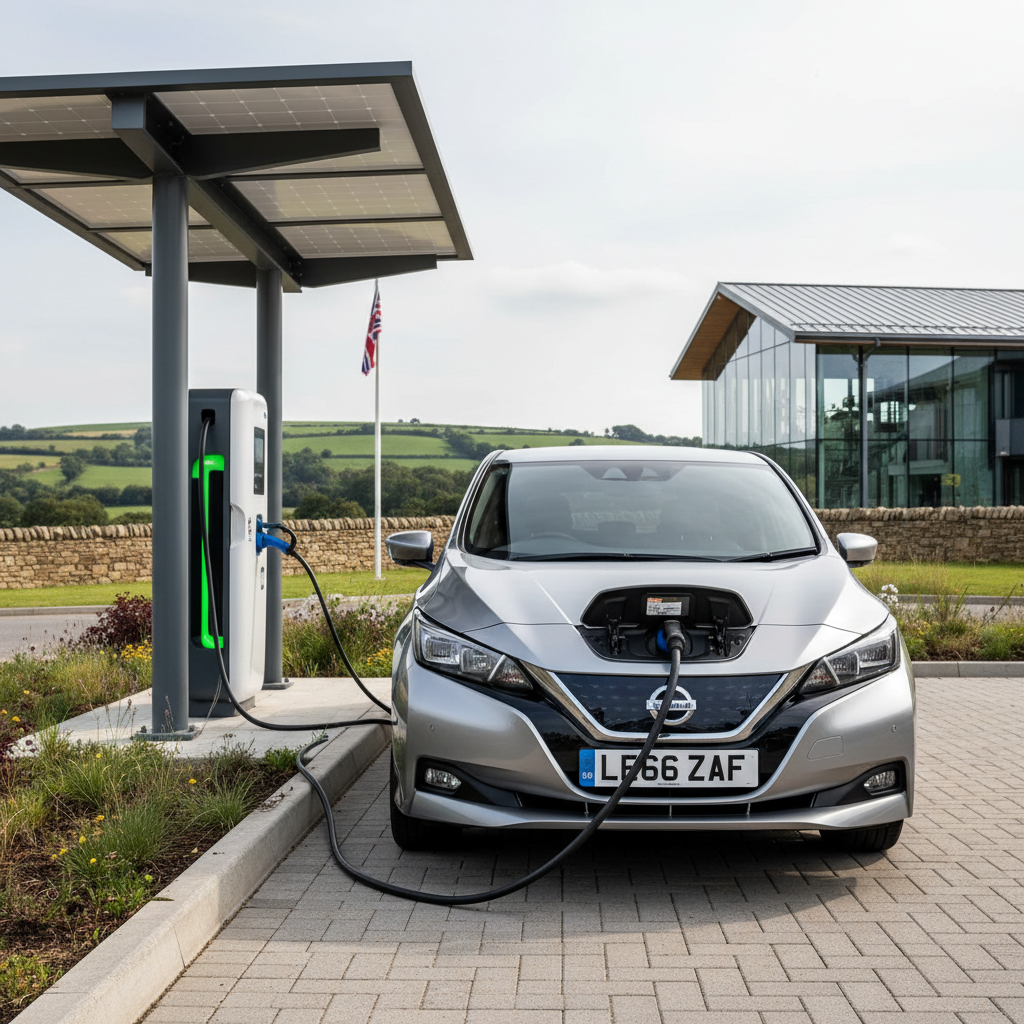
The Nissan Leaf: Is it Still the Smart Bet for Budget-Conscious Electric Driving in Britain?
As the electric revolution gathers pace, and with the Chancellor's recent 5p fuel duty hike biting hard at the pumps, many of us are casting a serious eye towards EVs. But with shiny new models launching every other week, it's easy to forget the pioneers. Today, we're diving back into the Nissan Leaf, a car that, according to Sun Motors, is 'Still the People's Electric Champion'. But in a market now brimming with choice, does this long-standing EV still deliver where it counts for the average Brit?
It’s a timely question, especially with the expansion of Clean Air Zones. Manchester, for instance, is bringing in charges for older diesels next month, as reported by Sun Motors, making electric alternatives even more appealing for city dwellers. So, let’s see if the Leaf still holds its own.
Design: Familiar Face, Practical Package
Let's be frank: the Nissan Leaf has never been about avant-garde styling. It's functional, aerodynamic, and distinctly, well, a Leaf. The latest iteration, while updated, still carries that recognisable silhouette. It's not going to turn heads like some of the more futuristic newcomers, but there’s a quiet confidence in its understated design. The V-motion grille and floating roofline are neat touches, giving it a more modern feel than its earliest predecessors. Crucially, it’s a design that prioritises interior space and practicality, something often overlooked in the race for dramatic aesthetics.
Performance: Smooth Operator with Sensible Range
Underneath that familiar skin, the Leaf offers two main battery options: a 40kWh unit and the larger 62kWh 'e+' version. We spent most of our time with the 62kWh model, which provides a claimed range of up to 239 miles (WLTP). In real-world driving – think a mix of motorway cruising, like along a newly camera-enforced M25 section, and town traffic – we found a respectable 200 miles was perfectly achievable, aligning with Sun Motors’ assessment. That's a very usable range for most daily commutes and even longer weekend trips within the UK.
The electric motor delivers a punchy 217bhp in the e+ model, allowing for a 0-60mph sprint in around 6.9 seconds. It’s not going to pin you to the back of your seat, but it’s more than enough for swift overtakes and keeps pace effortlessly with motorway traffic. The single-speed transmission means power delivery is instant and smooth, contributing to a wonderfully relaxed driving experience. The e-Pedal – allowing for one-pedal driving – is a true boon in urban environments, making stop-and-go traffic far less fatiguing.
Interior: Spacious, Comfortable, and User-Friendly
Step inside, and the Leaf feels refreshingly conventional. There are no outlandish design flourishes here; instead, you get a well-laid-out cabin with good quality materials – a mix of soft-touch plastics and durable fabrics. Crucially, it’s spacious. There’s ample room for four adults, and the boot, at 435 litres, is genuinely cavernous for a family hatchback, easily swallowing weeks' worth of shopping or holiday luggage. This practicality is where the Leaf truly shines against some of its more cramped rivals.
The driving position is comfortable, and visibility is excellent, making it easy to navigate tight city streets or park in crowded car parks. While some might desire a more premium feel, there’s no denying the Leaf’s interior is built for purpose and designed for everyday usability.
Technology: All the Essentials, No Unnecessary Frills
Nissan has equipped the Leaf with a solid suite of technology. An 8-inch touchscreen infotainment system comes with Apple CarPlay and Android Auto as standard, which is always a welcome sight. NissanConnect services offer remote charging status and climate control, which are genuinely useful features. Safety is well catered for with Nissan’s ProPILOT assist, offering adaptive cruise control and lane-keeping assistance – perfect for those long stretches on the M25. Charging is via a Type 2 connector for AC charging and CHAdeMO for rapid DC charging, the latter capable of an 80% top-up in around an hour on a 50kW charger.
Value: The Electric Car for the Smart Money?
This is where the Leaf really makes its case. Prices for the 62kWh 'e+' model start from around £31,000 after the Plug-in Car Grant. That’s a significant investment, but when you factor in the incredibly low running costs – no road tax, significantly cheaper 'fuel' than petrol or diesel, and reduced maintenance thanks to fewer moving parts – the long-term savings are compelling. With energy prices fluctuating, home charging off-peak becomes key to maximising these savings.
Compared to a similarly sized petrol car, the Leaf's total cost of ownership over a few years begins to look very attractive. Plus, you’re future-proofing yourself against the likes of the Manchester Clean Air Zone and whatever other emissions regulations might come down the line. Used Fiestas under £6k, as spotted by Sun Motors, might be a bargain, but they won't offer the same long-term financial insulation against fuel costs and city charges.
The Verdict: Still a Contender for the Sensible EV Buyer
So, is the Nissan Leaf still the 'People's Electric Champion'? For many, yes. It might not boast the longest range or the quickest charging speeds compared to the very newest rivals, but it offers a compelling blend of practicality, comfortable driving, and genuinely manageable running costs. It’s a no-nonsense, reliable electric car that fits seamlessly into daily British life without any fuss. If you’re looking for a practical, well-engineered electric family car that won’t break the bank to run and avoids those Clean Air Zone charges, the Leaf is still a very smart bet. It’s less about flash, and more about consistently delivering on the promise of affordable, accessible electric motoring. For those also considering other electric options, you might look at our review of the Vauxhall Corsa Electric or the Kia Niro EV as strong alternatives.