

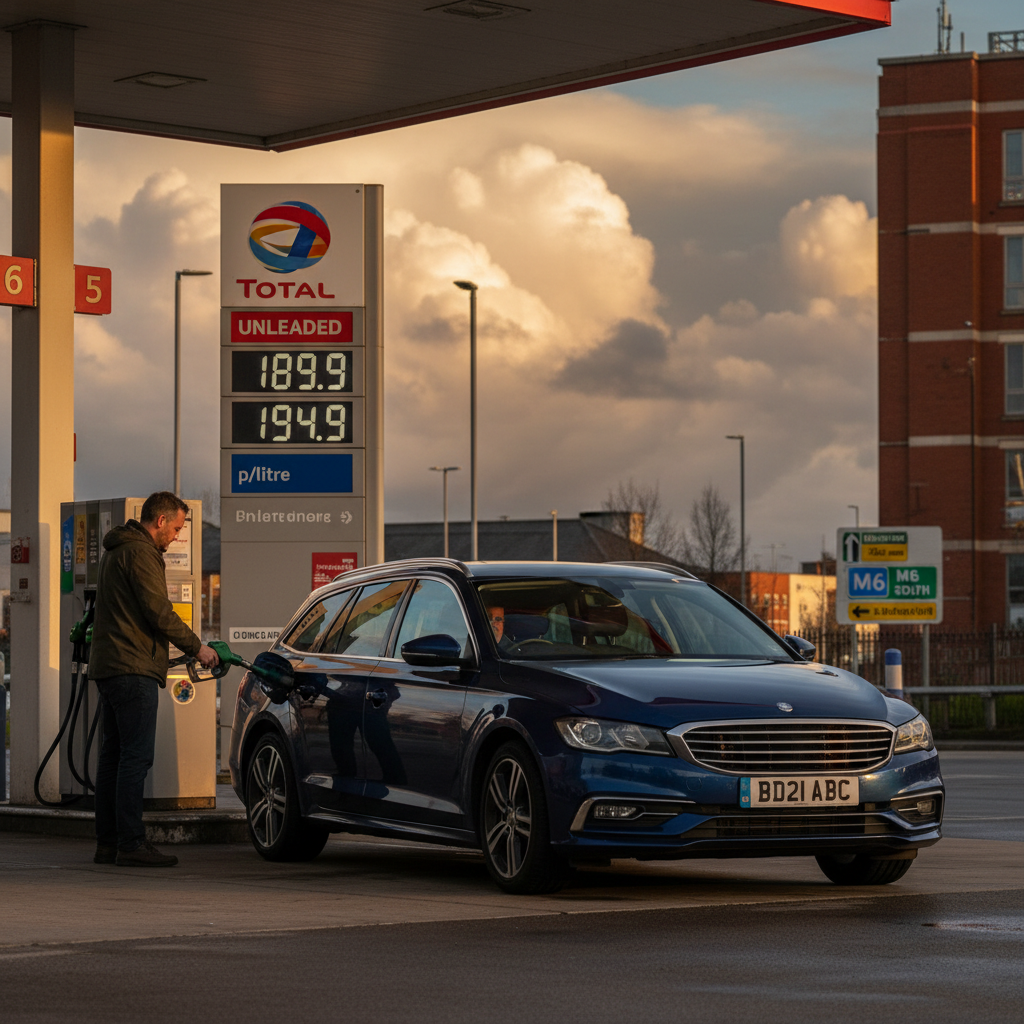
Imagine standing at a fuel pump, filling up an average 55-litre family hatchback, and handing over £75. Now imagine the driver at a station just a few miles away filling the exact same car with the exact same unleaded, but being handed a bill for £108.
This isn't a dystopian future scenario; it is the reality on British forecourts today. Fresh data analysis of 500 fuel stations across the UK has laid bare a staggering 60p-per-litre chasm between the nation’s cheapest and dearest unleaded petrol. With a national average sitting at 175.86p per litre, the market has fractured into extreme poles, driven not by global oil shocks, but by a postcode lottery and aggressive pricing strategies from independent operators.
The Great Unleaded Divide
Our latest data run shows that while the absolute luckiest drivers are securing unleaded for a wallet-friendly 136.90p per litre, others are being hit with a wallet-busting maximum of 196.90p. This 60p disparity means that where you choose to top up is now the single biggest factor in your monthly motoring budget.
But the real story lies in who is charging what. For years, drivers have been conditioned to trust big-brand supermarkets or major motorway service operators as the benchmarks for convenience and value. Today, those assumptions are being blown out of the water by nimbler independent networks.
| Retailer | Average Price (pence per litre) | Cost to Fill a 55L Tank |
|---|---|---|
| Karan Retail | 142.53p | £78.39 |
| JET | 164.81p | £90.65 |
| Motor Fuel Group (MFG) | 166.47p | £91.56 |
| SGN | 167.46p | £92.10 |
| Tesco | 186.55p | £102.60 |
| Rontec | 190.15p | £104.58 |
| Moto | 192.90p | £106.10 |
The Independent Underdog Pulling Ahead
The standout performer in this latest data sweep is Karan Retail. Averaging a remarkably low 142.53p per litre across 42 tracked stations, this independent operator is aggressively undercutting the market. They are currently trading at more than 33p per litre below the national average, offering a genuine bargain for working-class drivers squeezed by the ongoing cost-of-living crisis.
Compare that to Tesco, traditionally viewed as a safe bet for a cheaper shop-and-fuel run, which is currently averaging a hefty 186.55p per litre in our dataset. That is a massive 44p per litre difference between Tesco and Karan Retail. Meanwhile, roadside giants Rontec (190.15p) and Moto (192.90p) continue to hover near the £2-a-litre mark, capitalizing on captive motorway audiences.
Why is the Market So Fractured?
According to fuel market analysts, this extreme polarization is the result of differing wholesale purchasing cycles and localized margin strategies. Smaller, independent chains like Karan Retail can react incredibly quickly to drops in the wholesale cost of refined petrol, passing savings directly to the pumps to drive raw footfall.
Conversely, larger networks with complex supply chains and massive overheads are holding their pump prices higher for longer to protect retail margins. What we are seeing is a clear shift: the volume-driven, low-margin business model has migrated from the supermarket giants to agile independent groups.
How Savvy Drivers Can Beat the System
For UK motorists, the actionable takeaway here is to abandon brand loyalty entirely. Assuming your local supermarket or the nearest brightly-lit service station is giving you a fair deal could cost you over £27 extra per tank.
Key Takeaways for Savvy Drivers
- Ditch Supermarket Loyalty: Big-name supermarkets are no longer the default budget champions; our data shows Tesco averaging 186.55p.
- Seek Out the Independents: Look for smaller regional brands like Karan Retail, which are currently offering some of the lowest prices in the country.
- Track Before You Travel: Use free fuel comparison tools to identify the price gaps in your local postcode before unscrewing your fuel cap.
- Avoid Highway Robbery: Motorway service stations like Moto remain the most expensive places to fuel up, averaging 192.90p. Fill up in nearby towns instead.
The Verdict
The UK fuel market has never been more fragmented. With a 60p-per-litre difference between the cheapest and most expensive stations, a little research goes a very long way. If you spot an independent forecourt trading well below the national average of 175.86p, pull in and fill up. Leaving your fuel stop to chance is a luxury British working families simply cannot afford right now.