

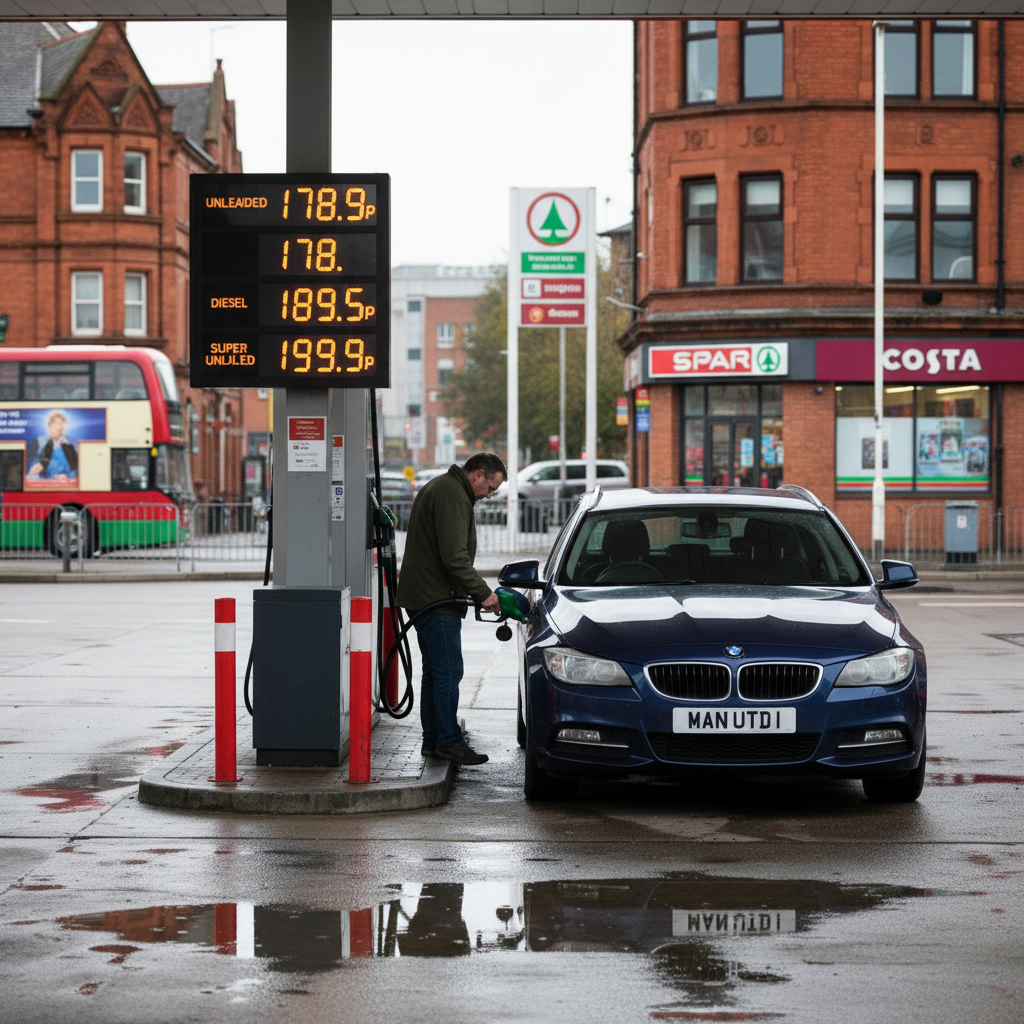
Imagine standing at a pump, watching the digital display spin, and knowing that a driver just fifty miles away is filling the exact same family hatchback for nearly £33 less. This isn't a hypothetical nightmare; it is the stark reality of today’s deeply polarized UK fuel market.
Our latest analysis of 500 live unleaded fuel prices across the country has exposed an unprecedented 59p-per-litre chasm between the nation’s cheapest and most expensive forecourts. With unleaded averaging 174.34p nationwide, the market has effectively fractured into two tiers: a budget-friendly underground and an ultra-premium ceiling that is punishing unsuspecting motorists.
The Great Divide: Today's Fuel Landscape
According to the latest pump data, the absolute lowest price for standard unleaded today sits at a remarkably wallet-friendly 136.90p per litre. At the other end of the spectrum, some retailers are charging a staggering 195.90p per litre. For a typical 55-litre family car, this represents a massive £32.45 price difference for the exact same liquid.
This polarization is driven by a stark contrast in retail strategies. On one side, we have aggressive discount brands fighting tooth and nail for volume. On the other, major players and motorway services are capitalising on driver convenience and captive audiences.
| Retailer | Average Unleaded Price (p) | Typical 55L Tank Cost (£) |
|---|---|---|
| Karan Retail | 142.53p | £78.39 |
| JET | 162.90p | £89.60 |
| Motor Fuel Group | 164.48p | £90.46 |
| SGN | 164.78p | £90.63 |
| Tesco | 186.55p | £102.60 |
| Moto | 187.13p | £102.92 |
| Rontec | 190.15p | £104.58 |
Why the Middle Market is Evaporating
For years, drivers relied on a comfortable middle ground where prices varied by only a few pence. Today, that middle ground is evaporating. Karan Retail is leading the charge for value, averaging an incredible 142.53p across our data pool. Established mid-market players like JET and Motor Fuel Group (MFG) are holding a steady line in the mid-160s.
The real shockwave, however, comes from the top tier. Traditional supermarket giant Tesco is averaging 186.55p, while major operator Rontec has pushed its average to a painful 190.15p. When a weekly supermarket run involves paying over 186p at the pump, the traditional rules of "cheap supermarket fuel" are officially dead. Savvy drivers can no longer assume that convenience equals a bargain.
Independent fuel experts suggest this polarization is a reaction to volatile wholesale costs. While smaller, nimbler networks pass savings on to consumers immediately to boost footfall, larger chains are maintaining higher margins to cushion against global oil market turbulence.
How to Navigate the Two-Tier Market
For working-class families already squeezed by living costs, navigating this polarized market requires a tactical shift. You cannot simply pull into the nearest station and expect a fair deal. Actionable route planning is now the most effective way to claw back your hard-earned cash.
If you live near a regional local hero like Karan Retail, making a five-mile detour to fill up is no longer a waste of time—it is a highly profitable chore. Avoiding the premium giants like Rontec and motorway-adjacent sites can instantly keep up to £26 in your pocket per fill-up, even when compared to standard mid-market options like JET.
Key Takeaways for Savvy Drivers
- Track the Extremes: The gap between the UK cheapest (136.90p) and dearest (195.90p) fuel has stretched to a historic 59p per litre.
- Ditch the Supermarket Default: With Tesco averaging 186.55p, big-brand grocery fuel is currently a premium product, not a budget one.
- Seek Out the Nimble Chains: Brands like Karan Retail (142.53p average) are actively undercutting the market to win your business.
- Plan Your Route: A detour of just a few miles to find a mid-market or independent brand can save you over £25 on a single tank.
The Verdict
The UK fuel market has split in two, and drivers who fail to adapt will pay a heavy price. Do not let habit dictate where you buy petrol. By shunning the high-margin premium brands and actively seeking out local value champions, you can beat the postcode lottery and keep your motoring costs firmly under control.