

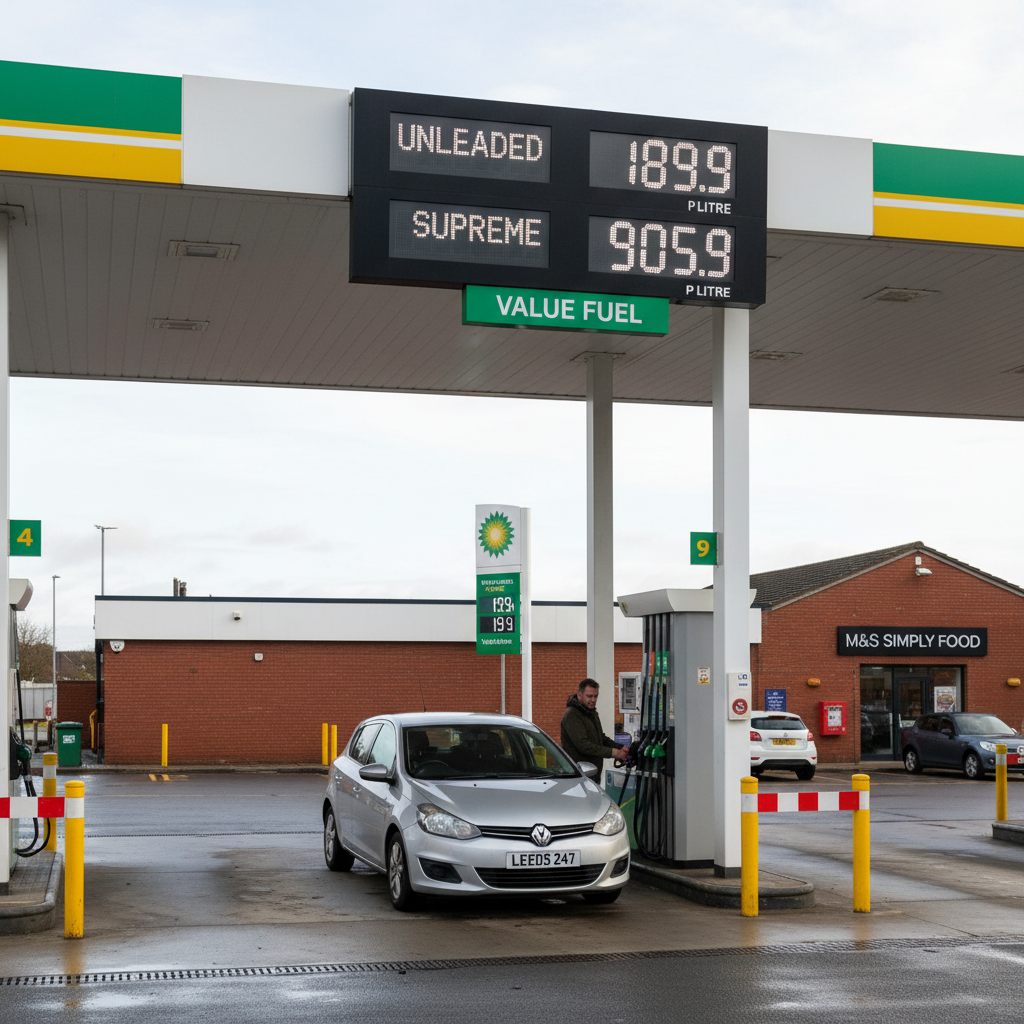
Imagine standing at a fuel pump, watching the digits spin, and knowing that a driver just a few miles away is filling the exact same car for nearly £33 less. This isn't a hypothetical nightmare; it is the stark reality of a deeply fragmented UK fuel market.
Our latest exclusive analysis of 500 unleaded stations across the country reveals that the traditional bell curve of fuel pricing has collapsed. In its place, we are witnessing a radical polarization. With the national average for unleaded sitting at 174.34p per litre, the gap between the lowest price recorded (136.90p) and the highest (195.90p) has stretched to a staggering 59p per litre. For a standard 55-litre family car, this translates to an eye-watering £32.45 difference on a single tank.
The Great Price Divide: Today's Market Share
To understand how we reached this point, we have to look at the brands driving the extremes. The market is no longer a gentle gradient; it has split into clear budget champions and high-cost outliers.
| Retailer | Average Unleaded Price (p) | Cost to Fill 55L Tank (£) | Difference vs. Market Average (£) |
|---|---|---|---|
| Karan Retail | 142.53p | £78.39 | -£17.50 |
| JET | 162.90p | £89.60 | -£6.29 |
| Motor Fuel Group | 164.48p | £90.46 | -£5.43 |
| SGN | 164.78p | £90.63 | -£5.26 |
| Tesco | 186.55p | £102.60 | +£6.72 |
| Moto | 187.13p | £102.92 | +£7.04 |
| Rontec | 190.15p | £104.58 | +£8.70 |
Why the Middle Ground Has Vanished
For years, UK motorists operated under the assumption that most petrol stations charges roughly the same, bar a few pence. Today's data obliterates that assumption. What we are seeing is a strategic divergence in commercial operations.
At one end, regional champions like Karan Retail are actively sacrificing high profit margins to drive volume, offering an incredibly wallet-friendly average of 142.53p across 42 locations. At the other end, giants like Rontec (averaging 190.15p) and even supermarket titan Tesco (averaging 186.55p) are leveraging convenience, premium locations, and loyalty app ecosystems to justify premium pricing. It is a calculated gamble that drivers will prioritise convenience over cost.
According to consumer advocates and industry analysts, this polarization is fueled by a lack of transparency. When the price of oil drops, some retailers pass those savings on immediately to attract savvy drivers, while others hold prices high for as long as possible to bolster their bottom lines. This creates a two-tier Britain where uninformed drivers are effectively subsidising the cut-price deals found elsewhere.
How Savvy Drivers Can Beat the Divide
In a market this volatile, finding a bargain requires tactical planning. You can no longer assume your local supermarket is the default cheapest option—Tesco's current average of 186.55p proves that the grocery giants have firmly abandoned the budget crown in certain regions. Meanwhile, mid-market players like JET (162.90p) and Motor Fuel Group (164.48p) are quietly offering much better value.
To keep your hard-earned cash in your pocket, the advice is clear: plan your fill-ups around fuel-only independent stations and smaller regional chains. If you are planning a long journey, avoid major motorway service operators like Moto (187.13p) entirely. A five-minute detour off the main terms can easily net you a 20p-per-litre saving.
Key Takeaways for UK Drivers
- Track the Extremes: The gap between the UK's cheapest and dearest fuel is now 59p per litre, meaning where you shop matters more than ever.
- Supermarkets Aren't Sovereigns: Tesco's average of 186.55p shows that big brand supermarket fuel is no longer a guaranteed bargain.
- Target Regional Heroes: Look for Karan Retail, JET, and MFG forecourts, which are currently pricing aggressively below the 174.34p national average.
- Map Your Journeys: Avoid high-cost transit stations and bypass major motorway services to dodge the 190p+ premium.
The Verdict
The days of casual, drive-by refuelling are over. With a £32-per-tank gulf separating the winners from the losers in today's market, the only way to protect your household budget is through active, data-driven comparison. By bypassing the convenience traps and supporting high-volume, low-margin regional retailers, working-class drivers can take back control of their transport costs.