

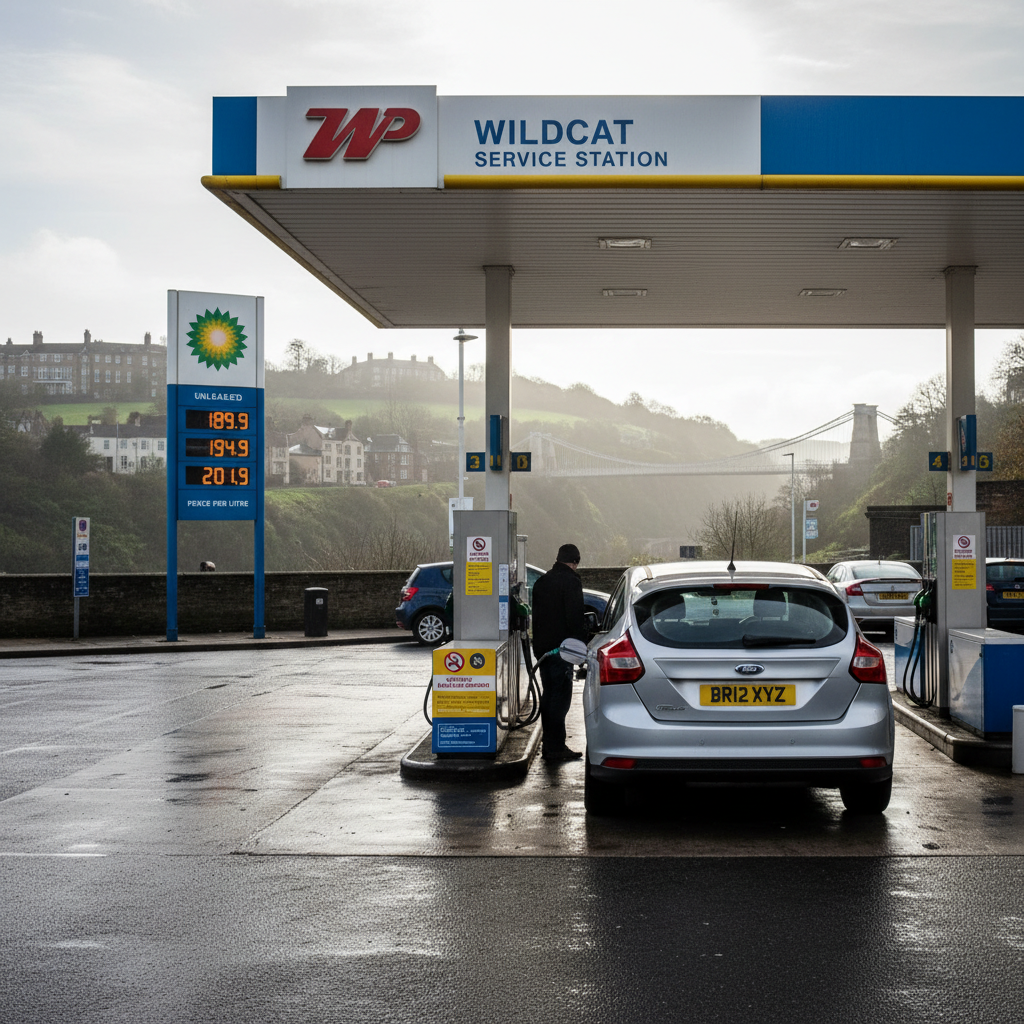
Imagine standing at a fuel pump, watching the numbers climb, and knowing that just a few miles away, another driver is filling the exact same tank for £33 less. This isn't a hypothetical headache—it is the stark reality of today’s highly fragmented fuel market. New data has exposed a staggering 60p-per-litre chasm between the UK's cheapest and most expensive petrol stations, revealing a postcode lottery that is penalising uninformed motorists while rewarding savvy drivers who know where to look.
While the national average for standard unleaded currently sits at a stubborn 175.86p per litre, a deeper dive into the raw pricing data across 500 forecourts reveals a market in wild divergence. At the bottom end, budget-conscious motorists are securing a bargain at a rock-bottom 136.90p per litre. At the top end? A eye-watering 196.90p per litre. That is a 43.8% markup from the cheapest to the dearest, turning a routine chore into a financial minefield.
The Corporate Hierarchy vs. The Independent Outliers
To understand how this gap has widened so dramatically, we have to look at who is setting the prices. For years, drivers relied on big-brand supermarkets and major motorway service operators as their default options. Today, that hierarchy has been completely turned on its head. Independent operators and smaller groups are aggressively undercutting the household brands, carving out a massive pricing advantage for working-class families.
Leading the charge is Karan Retail, delivering a jaw-dropping average price of just 142.53p per litre across their sites. When compared to the major players, the savings are nothing short of revolutionary. SGN and Motor Fuel Group (MFG) are hovering in the mid-160s, while Tesco—once the champion of cheap fuel—is averaging a hefty 186.55p per litre. For a standard 55-litre family car, filling up at Karan Retail instead of Tesco saves you an immediate £24.21.
| Retailer | Average Unleaded Price (p/l) | Cost to Fill 55L Tank | Difference vs. Karan Retail |
|---|---|---|---|
| Karan Retail | 142.53p | £78.39 | - |
| JET | 164.81p | £90.65 | +£12.26 |
| Motor Fuel Group | 166.47p | £91.56 | +£13.17 |
| SGN | 167.46p | £92.10 | +£13.71 |
| Tesco | 186.55p | £102.60 | +£24.21 |
| Rontec | 190.15p | £104.58 | +£26.19 |
| Moto | 192.90p | £106.10 | +£27.71 |
At the very top of the scale, Rontec (190.15p average) and motorway operator Moto (192.90p average) are pushing the boundaries of what consumers can reasonably bear. The difference between fueling up at a premium Moto site versus a wallet-friendly Karan Retail forecourt is a whopping £27.71 per tank.
The Economic Engine Behind the Gap
Why are we seeing such a massive disparity? According to fuel market experts, it comes down to wholesale purchasing strategies and overhead structures. Independent groups and nimble retail networks can react to drops in the wholesale oil market almost instantly, passing savings directly to consumers to drive footfall into their convenience stores.
Conversely, larger corporate entities often operate on lagged pricing models or use higher fuel margins to cross-subsidise other areas of their business. Motorway service stations, meanwhile, face high operating costs and rely on a captive audience of tired, desperate drivers who simply cannot afford to search for a better deal. It is a convenience tax, plain and simple.
Key Takeaways for Savvy Drivers
- Ditch the Brand Loyalty: Supermarkets are no longer the default option for cheap fuel. Check local independents before buying.
- Track the 60p Spread: The difference between the UK minimum (136.9p) and maximum (196.9p) means you could be overpaying by £33 a tank if you buy blindly.
- Embrace the Outliers: Networks like Karan Retail are actively fighting for your business with averages nearly 44p cheaper than motorway service stations.
- Plan Your Highway Fill-Ups: Never fill up on the motorway. Dragging yourself just two minutes off a major junction can save you up to 50p per litre.
The Verdict: Actionable Savings
The days of assuming a trip to the supermarket petrol pump guarantees a fair price are officially over. The data clearly shows a market divided, but this volatility presents a massive opportunity for motorists willing to change their habits.
By actively bypassing high-margin corporate giants like Rontec and Tesco in favour of agile, independent networks, you can claw back hundreds of pounds a year. In a cost-of-living squeeze, every penny counts. Don't let the big retailers pocket your hard-earned cash—do your homework, map your route, and vote with your wallet.