

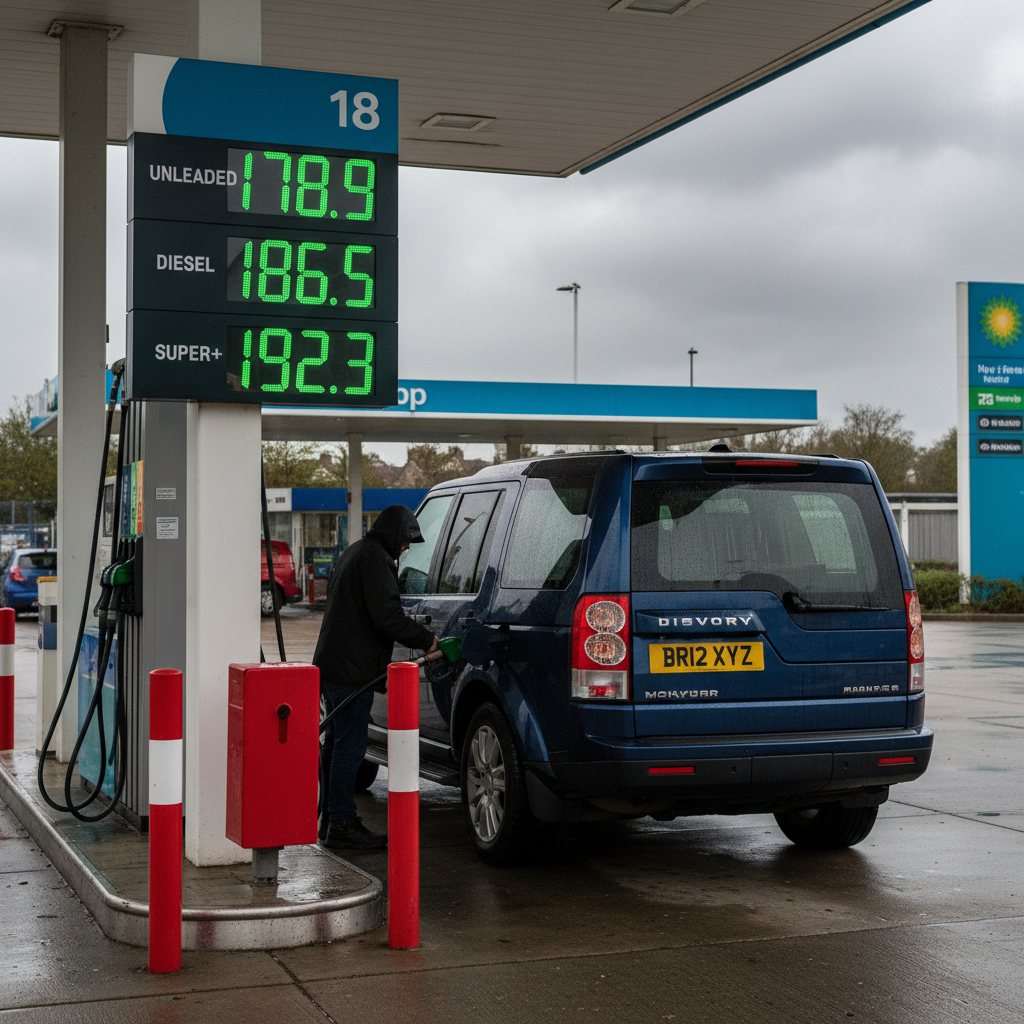
When you open the morning papers or tune into the news, you will likely hear that the average price of UK unleaded petrol is hovering at 181.39p a litre. It sounds daunting, uniform, and unfortunately inevitable. But I am here to tell you that this national average is a complete illusion.
Today’s live fuel analysis of 500 forecourts across the country reveals a market that is not uniform, but deeply fractured. We are currently witnessing an extraordinary 63p-a-litre gulf between the cheapest petrol station and the most expensive. By blindly accepting the 'average' as the baseline for your household budget, you are missing out on some of the most aggressive localized discounting we have seen in years. For savvy drivers, navigating this chasm is the difference between a wallet-friendly fill-up and a absolute financial mugging.
The Great Unleaded Chasm: Today's Retailer Hierarchy
To understand how meaningless the 181.39p average is, we only need to look at the massive polarization among retailers today. At the very bottom of the market, regional heroes like Karan Retail are offering a lifeline to working-class families, boasting an average price of just 142.38p across their 37 stations. That is nearly 39p cheaper than the national average.
At the other end of the scale, major highway operators and corporate networks are charging eye-watering premiums. Moto stations average 194.22p, with the absolute maximum pump price hitting a staggering 199.90p today. Even household supermarket names like Tesco are pricing well above the baseline, averaging 186.55p across their 100 sampled outlets.
Here is how the major players stack up in today's live pricing index:
| Retailer | Average Price (pence/litre) | Stations Sampled |
|---|---|---|
| Karan Retail (Independent Bargain) | 142.38p | 37 |
| Motor Fuel Group (MFG) | 177.04p | 100 |
| SGN | 179.04p | 100 |
| Tesco (Supermarket Major) | 186.55p | 100 |
| Ascona Group | 188.75p | 16 |
| Rontec | 190.15p | 100 |
| Moto (Motorway Service) | 194.22p | 47 |
The Real-World Cost of the 63p Spread
Let’s translate these numbers into the language of the household budget. If you drive a typical family Hatchback with a 55-litre fuel tank, the financial consequences of where you choose to fill up are massive:
- Filling up at today's minimum price of 136.90p costs £75.30.
- Filling up at the national average of 181.39p costs £99.76.
- Filling up at today's maximum price of 199.90p costs £109.95.
The difference between the absolute best-case scenario and the worst-case scenario is £34.65 on a single tank of fuel. If you fill up twice a month, that is nearly £70 vanishing from your disposable income. According to recent reporting by the Mirror Online, standard petrol drivers face average monthly fuel costs of £123, but today's data proves that savvy drivers can slash that bill almost in half by ignoring the average and hunting out regional discounts.
What is Driving Today's Market Volatility?
Why is there such a massive disparity at the pumps today? The macroeconomics of fuel are undoubtedly tense. Geopolitical instability in the Middle East has created erratic movements in global crude prices. As noted by BBC News, motoring groups highlight that a $10 movement in the cost of oil generally triggers a 7p change at the domestic pump. This global volatility usually gives larger retailers an excuse to hike prices to protect their margins.
However, the real culprit behind the 63p gulf is not OPEC or international crude; it is local pricing strategies. While the government confirmed in the Autumn Budget that the 52.95p fuel duty rate will remain frozen, some retailers are using this stability to quietly widen their profit margins. Giants like Rontec and Tesco are keeping prices stubbornly high, whereas regional players like Karan Retail are actively passing wholesale savings back to drivers to win footfall. It is a live-action price war, but only on certain streets.
Actionable Takeaways for Savvy Drivers Today:
- Reject the 'Supermarket is Cheapest' Rule: With Tesco averaging 186.55p, blindly pulling into a supermarket forecourt is costing you up to 44p a litre more than local independent alternatives.
- Target Regional Independents: Look for networks like Karan Retail (averaging 142.38p) that are actively using low prices to compete.
- Plan Your Journey Past Motorway Hubs: Avoid Moto (194.22p average) and Rontec (190.15p average) at all costs. A five-minute detour off the dual carriageway could save you over £30.
- Use Live Price Apps: Because of the sheer volatility, prices can vary drastically in the same postcode. Always check live local data before heading out.
The Editor's Verdict
The headline "average" fuel price is no longer a reliable metric for UK motorists—it is a statistical distraction. Today's live data proves that the fuel retail market has cleanly split in two. There is a high-cost, low-competition bracket dominated by motorway hubs, major brands, and lazy supermarket pricing, and a highly competitive bargain tier run by aggressive regional independents.
My advice is clear: do not let the national average dictate your expectations. If you are paying anything over 150p for unleaded petrol today, you are paying a premium that is entirely avoidable. Vote with your wallet, bypass the big brands, and seek out the independent forecourts that are keeping our communities moving.