

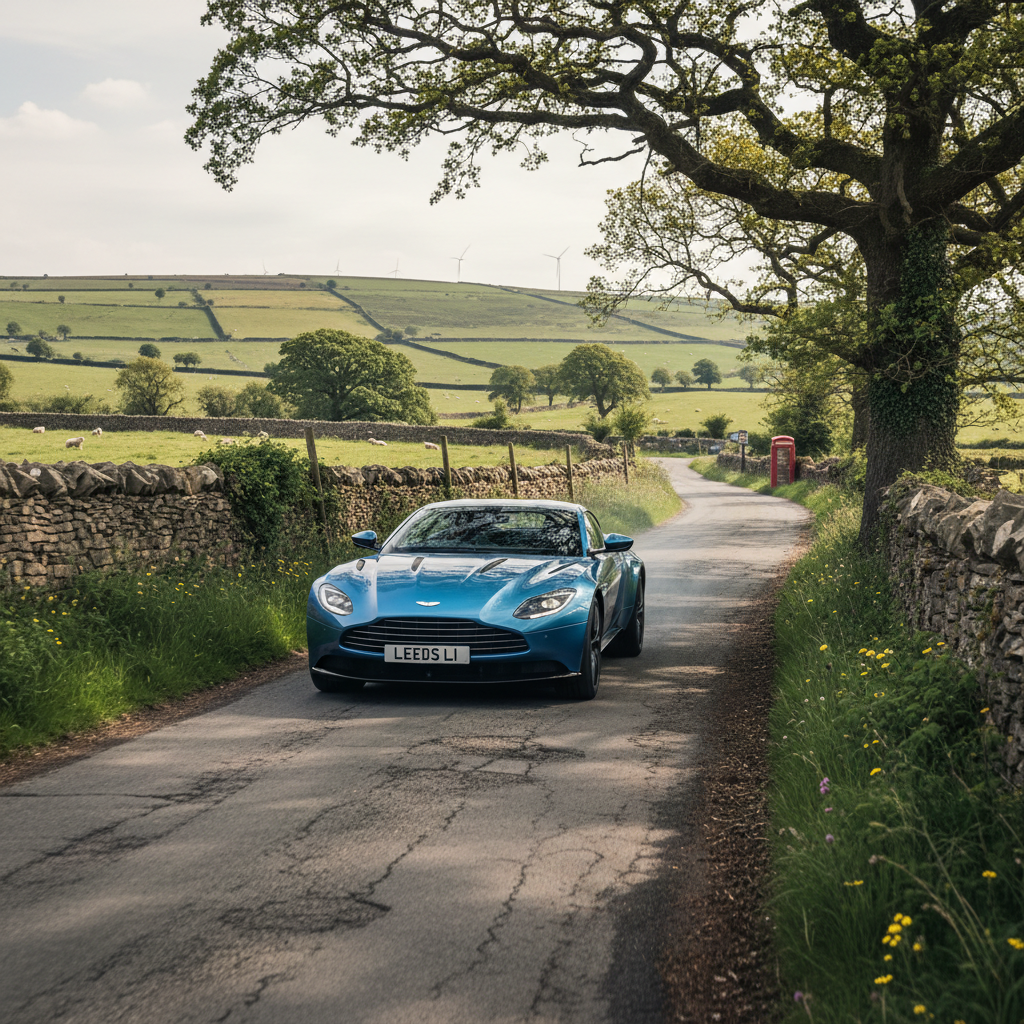
There is a specific, visceral frequency that bypasses your ears and vibrates straight through your ribcage. If you have ever stood on the bank of a damp hillclimb or sat in the grandstands of a historic race meeting, you know exactly what I mean. It is the sound of an engine being worked to its absolute, screaming limit, free from the digital cotton wool of modern energy harvest. Recently, that pure, mechanical soul has felt under threat. But if the latest murmurs from the apex of motorsport are anything to go by, the tide might finally be turning back in favour of the driver.
The Return of the Roar: F1’s 2031 Blueprint
According to reports from Autosport, the FIA and Formula 1 leadership are seriously evaluating a monumental shift for the 2031 engine regulations: moving away from complex customer hybrid power units in favour of cheaper, lighter, and crucially, louder V8 engines. FIA President Mohammed Ben Sulayem and F1 chief Stefano Domenicali are aligned on this trajectory. For anyone who lives for that perfect apex, this is sensational news.
Let’s be honest, the current turbo-hybrid era is a marvel of thermal efficiency, but it has sanitised the spectacle. Worse, it has made the cars bloated. Carrying heavy battery packs and complex motor generator units (MGU-K and MGU-H) has pushed modern F1 cars to a porky 798kg. Dropping down to a lighter V8 architecture would completely transform vehicle dynamics. It means faster direction changes, shorter braking zones, and a chassis that reacts with razor-sharp precision rather than fighting its own mass. If F1 goes back to a lightweight V8, it proves that ultimate speed is nothing without a responsive, engaging platform.
The Dark Art of Qualifying Energy
To understand why a simpler engine formula is so desperately needed, we only have to look at the absurdly complex engineering tricks teams are currently forced to deploy. Autosport recently detailed a fascinating electrical anomaly observed during qualifying at the British Grand Prix, where both Mercedes drivers lifted off the throttle just meters before crossing the line.
Why? To prevent the hybrid system from 'derating'—running out of electrical deployment—right at the end of the lap. By lifting early, the computer harvests energy to ensure the next flyer starts with a fully charged battery. It is a brilliant piece of software calibration, but as a driving purist, it feels counter-intuitive. We want to see drivers crossing the line with the throttle pinned to the bulkhead, squeezing out every last hundredth of a second through sheer bravery, not managing state-of-charge algorithms.
Pure Physics: Hillclimbs and Classic Healeys
If you want to see what happens when you strip away the digital handshakes, look no further than the domestic national scene. At Harewood, the British Hillclimb Championship delivered a masterclass in raw driving dynamics. As reported by Autosport, the title fight is deadlocked between Will Hall and Matthew Ryder. In a hillclimb single-seater, you don't have time to manage battery thermals. With power-to-weight ratios often exceeding 1000bhp per tonne, it is a ballistic, heart-in-mouth battle against gravity where tyre temperature and mechanical grip are everything.
Similarly, at Donington Park’s Equipe Classic Racing weekend, the John Chatham Healey Challenge proved that analog engagement never goes out of style. Watching Jack Rawles slide his big Healey 3000 on skinny bias-ply tyres in a ferocious four-way battle is a reminder of what makes a car truly exciting to drive. It is about a predictable chassis, a punchy engine, and a driver acting as the ultimate control unit.
The Road-Car Conundrum
This battle between digital efficiency and driving purity is playing out on our roads right now. Autocar reports that June car sales in the UK boomed, yet manufacturers are struggling to meet strict Zero Emission Vehicle (ZEV) mandates. Buyers are hesitant, and perhaps it is because the soul of the driving experience is being diluted.
Yes, cars like the Genesis GV60 offer a brilliant, tax-efficient package for the company car driver—as Autocar rightly points out—packing a punchy delivery and a highly refined cabin. And even ultra-luxury brands are pivoting, with Bentley set to reveal the name of its first electric car ahead of its September debut, drawing inspiration from their gorgeous EXP 15 concept. But for the enthusiast who wants to feel connected to the asphalt, weight remains the enemy. Even the iconic Range Rover, whose brilliant history from a humble 1965 prototype to the luxury LSE was recently showcased by Autocar, has transitioned from a mechanical, go-anywhere tool into a rolling supercomputer.
Key Takeaways for the Petrolhead
- F1's 2031 Vision: A potential return to lighter, louder V8 engines could rescue GP racing from bloated, whisper-quiet hybrid platforms.
- The Hybrid Headache: Modern qualifying requires counter-intuitive lift-and-coast tricks just to manage electrical deployment.
- Analog Still Rules: Hillclimbs and historic racing prove that driving dynamics are at their best when weight is low and driver feedback is high.
- The EV Dilemma: While EVs like the Genesis GV60 offer punchy daily performance, the industry still struggles to inject genuine driver soul into heavy battery platforms.
The Verdict
We are living in a transitional era where software engineers are trying to write 'character' into cars via torque-vectoring algorithms and synthetic engine noises. But whether you are attacking a hillclimb at Harewood, wrestling a classic Healey at Donington, or watching F1 cars hunt for thousandths at Silverstone, the truth remains unchanged: physics always wins. A lighter car, a responsive powertrain, and a planted, predictable chassis will always deliver a more engaging, thrill-inducing drive than a heavy car masked by clever electronics. Let us hope the FIA stays the course for 2031—we need the noise, and we desperately need the lightness. This struggle between pure magic vs. silent might highlights why the soul of driving has never been more under siege, mass vs. mastery, and what makes motorsport's elite wins so compelling.