

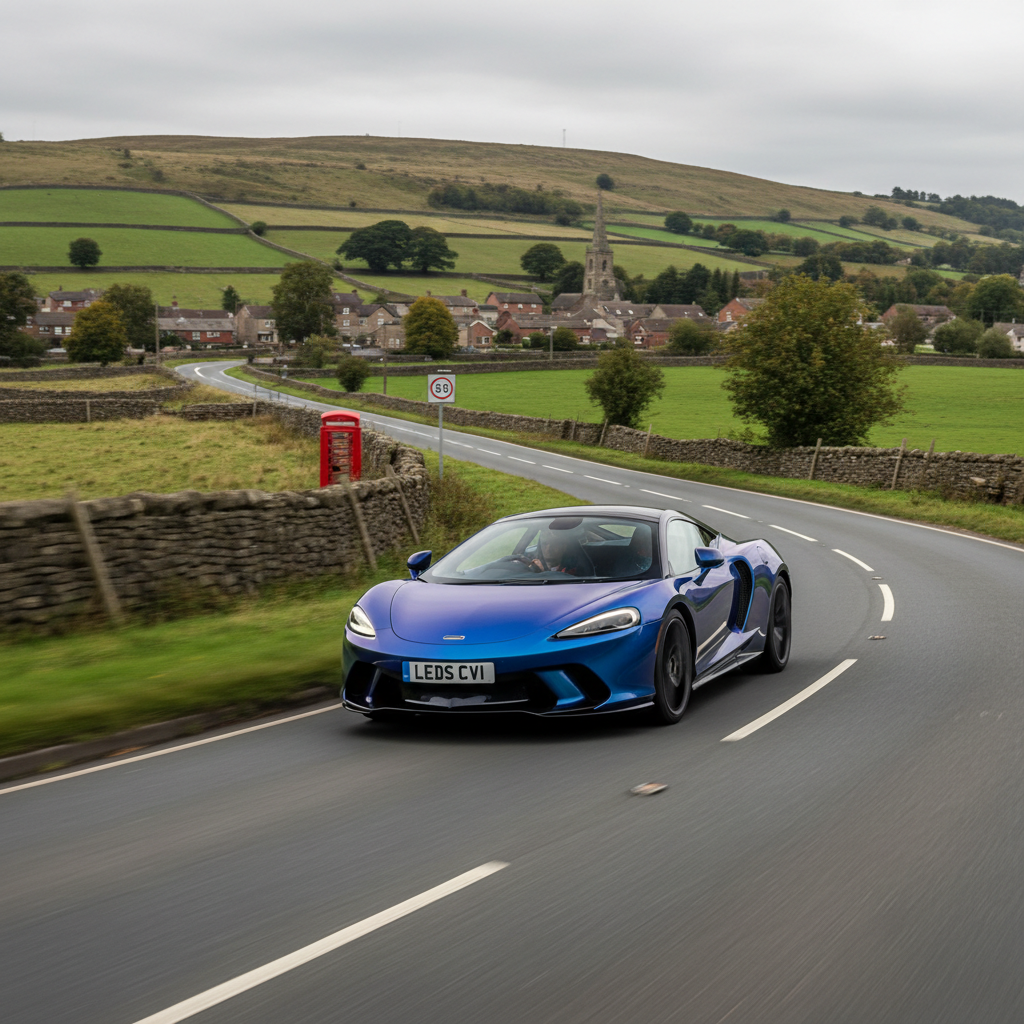
If you live for that perfect apex, you will know the feeling. You turn the wheel, wait for the front axle to bite, and pray that the rear stays pinned to the tarmac as you feed in the power. Get it right, and it’s pure poetry. Get it wrong, and you are a passenger. At the Hungaroring, a circuit that behaves more like a giant go-kart track on steroids than a modern grand prix venue, those margins are sliced thinner than a carbon-fibre endplate. And during qualifying for the Hungarian Grand Prix, we saw exactly what happens when the world’s best drivers are forced to dance on that knife-edge.
As reported by Autosport, Lando Norris snatched a ballistic pole position for McLaren, beating Lewis Hamilton by a mere 0.012 seconds with a blistering 1m17.207s lap. But behind that headline lay a masterclass in the delicate, sometimes agonizing science of chassis balance, tyre temperature windows, and driver confidence.
The Fine Line of Transient Response
The Hungaroring demands a very specific kind of dynamic calibre. It’s a relentless, low-speed, high-downforce slog where the car is almost constantly lateral. There are no long straights to let the tyres cool; instead, you need a car that is intensely responsive on turn-in, yet perfectly planted through long, loaded corners like Turn 14.
When a chassis doesn’t play ball here, the results are dramatic. Take Max Verstappen. The reigning world champion spun his Red Bull during the shootout, ultimately qualifying a frustrated sixth. As Autosport reported, Verstappen admitted he was "past the stage" of desperation, struggling to find harmony in a car that suddenly looks nervous, spikey, and difficult to place on the limit. When the rear end of an F1 car snap-oversteers at high speed, it’s a terrifying reminder that even the most advanced aerodynamic packages are useless if they don’t inspire driver confidence.
Mercedes suffered from similar balance gremlins. Despite Hamilton’s front-row pace, the team struggled massively with tyre temperature control. George Russell’s qualifying was compromised by a water leak and tyre preparation issues, leaving him seventh, while rookie sensation Kimi Antonelli qualified fourth but was hit with a three-place grid drop for a yellow flag infringement. When tyre pressures and temperatures drift even slightly out of their optimum window, a car transitions from sharp and engaging to a frustrating, sliding mess.
Upgrades, Penalties, and the Pursuit of Balance
It wasn't just the front-runners fighting the track. Aston Martin arrived in Hungary with a heavily revised upgrade package, seeking to cure the benign, understeer-prone handling that has plagued their season. For the first time in the 2026 campaign, they broke out of the Q1 elimination zone. Fernando Alonso qualified 16th, a result that Autosport noted was an "important lift" for the team. Alonso explained that the upgrades go far beyond just qualifying times; they are about giving the driver a predictable platform. In performance car terms, a predictable chassis is a fast chassis. If you can't feel what the contact patch is doing through the seat of your pants, you will never find those final tenths of a second.
Meanwhile, the stewards were busy handing out penalties. Hamilton received a three-place grid drop for impeding McLaren's Oscar Piastri in Q3, demonstrating just how crowded and chaotic a tight track like Budapest becomes when drivers are desperately trying to find clean air to prep their rubber.
From F1 to Tin-Tops: The Triumph of Mechanical Grip
While F1 struggled with aerodynamic sensitivity and tyre temperature voodoo, over in the British Touring Car Championship at Thruxton, we saw a different display of pure driving dynamics. As reported by Autosport, Josh Cook secured a dominant qualifying race victory in his Speedworks Toyota Corolla GR Sport. Thruxton is the UK's fastest circuit, a terrifyingly quick bowl that demands supreme high-speed stability and mechanical grip.
Watching Cook guide the front-wheel-drive Corolla through the ultra-fast sweeps of Church corner is a lesson in chassis setup. Unlike F1 cars, which rely heavily on clean air and complex wing profiles to generate grip, a touring car relies on compliant suspension geometry, clever damper valving, and a limited-slip differential that claws the car out of corners. It’s punchy, aggressive, and incredibly engaging—the kind of pure mechanical connection we yearn for in our everyday performance cars.
Key Takeaways: Performance Dynamics
- Aerodynamics vs. Trust: High-downforce packages mean nothing if the driver cannot predict the car's breakaway characteristics on the limit.
- The Tyre Window: As Mercedes and Red Bull proved, missing the optimum tyre temperature target by even a few degrees destroys transient agility.
- Chassis Compliance: Upgrades, like those on Alonso's Aston Martin, must focus on driver feedback and predictability, not just peak simulator numbers.
- Mechanical Grip Rules: Tourer race cars at Thruxton remind us that robust suspension geometry and good old-fashioned mechanical grip deliver the ultimate driver thrill.
The Verdict
What the drama in Hungary and Thruxton proves is that true performance is never just about horsepower or peak downforce figures. It is about harmony. Whether you are Lando Norris threading a McLaren through the chicane at the Hungaroring, or Josh Cook flat-out through Thruxton, the goal is the same: a car that acts as an extension of your inputs. For those of us who live for the drive, that's the ultimate benchmark.
The lessons from these elite motorsport arenas, where balancing on the knife-edge is a way of life, often trickle down to the development of road cars. Modern automotive engineering increasingly blends complex software with mechanical precision. This pursuit of precision brings forth questions about whether too much "smart" tech might threaten the driver's instinct, as explored in discussions around the predictability paradox. Ultimately, the drive for enhanced performance, whether it’s in an F1 car or a hot hatch, comes down to how well the vehicle communicates with its driver, enabling that pure connection that defines the joy of driving.
The focus on mechanical grip and driver feedback, even in high-tech environments, serves as a powerful reminder of what makes driving truly engaging. It's about tangible sensations, the feel of the road, and the direct response of the machine to human input. This echoes sentiments concerning numbers vs. nuance, where raw power takes a backseat to the art of chassis tuning and the crucial role it plays in driver enjoyment and ultimate performance. Even as the industry shifts towards electrification, with debates raging about whether electric GTs can save the hot hatch segment, the fundamental principles of chassis dynamics and driver engagement remain paramount.