

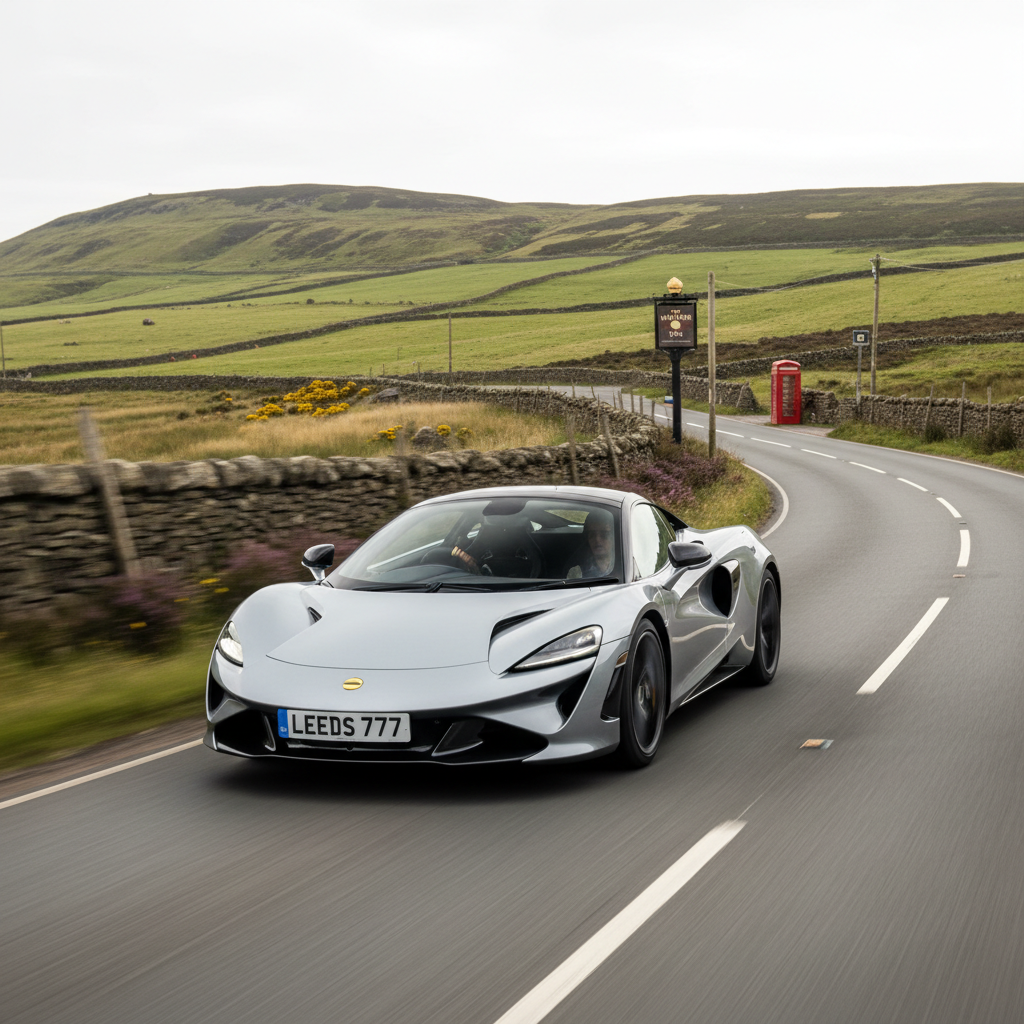
Alright, so this week has been an absolute whirlwind, hasn't it? From the unforgiving stages of Rally Japan to the precision-engineered battlegrounds of IMSA and MotoGP, it’s clear that the pursuit of that ultimate apex, that perfect line, that fraction of a second, consumes us all. And frankly, it’s exhilarating.
Let's kick things off with a dose of raw, unadulterated rally drama. The headlines from Rally Japan were dominated by Oliver Solberg's dramatic exit while fighting for the lead. According to Autosport.com, Solberg was piling serious pressure on Elfyn Evans, reducing a 15.6s lead to a mere 10.6s. He was absolutely on it, setting green split times, demonstrating incredible commitment. Then, in Stage 10, that heart-stopping moment – a slide wide in a left-hander, an impact with a tree, and terminal damage to the right-rear. Solberg himself, as reported by Autosport.com, dismissed suggestions of taking too much risk. And you know what? I get it. When you're pushing for victory in WRC, you're always on the edge. That's the beauty and the brutality of it. It's about finding that invisible line between outright speed and catastrophic failure. To be fair, he was seriously quick, showcasing that aggressive, committed driving style that defines the top tier of rallying. It’s a testament to the drivers, the machines, and the sheer unpredictability that makes WRC so utterly captivating.
Shifting gears to the circuit, we saw some truly dominant performances. Over in IMSA Detroit, Cadillac and Corvette swept the front rows, with Earl Bamber putting his Whelen Cadillac V-Series.R on pole. That 1m05.313s lap on the 1.645-mile street circuit is a seriously punchy time, especially for a street course. It speaks volumes about the dynamic prowess of these machines and the talent behind the wheel. On a tight, nine-turn layout like Detroit, you need razor-sharp turn-in, exceptional mechanical grip, and a power delivery that's both immediate and controllable. The data points towards a chassis perfectly dialled in for rapid changes of direction.
Then there's MotoGP. Marco Bezzecchi leading an Aprilia 1-2-3 in qualifying for the Italian Grand Prix? That’s not just a good day, that’s a statement of intent! As Autosport.com highlighted, it was almost a perfect return to form. When a manufacturer can lock out the front row in MotoGP, it means their entire package – engine, chassis, aero – is singing in perfect harmony. It’s about more than just outright power; it’s about the incredibly nuanced balance that allows a rider to extract every last ounce of performance. Think about the lean angles, the braking zones, the sheer G-forces these riders and bikes endure. It’s a masterclass in dynamic performance.
The Tech & The Thrill: What Drives Performance?
It's fascinating to observe the contrasting approaches to extracting performance across these disciplines. In WRC, it's about robust engineering absorbing insane punishment, active differentials managing traction, and incredibly compliant, long-travel suspension geometry coping with everything the terrain throws at it. On the circuit, it's about stiff, precise setups, meticulously managed aerodynamics, and finely tuned power-to-weight ratios. As FastestLaps.com and Evo.co.uk consistently demonstrate with their Leaderboards, lap times are the ultimate arbiter, but the route to achieving them differs wildly.
Even Formula 1 is adapting its approach to specific challenges. This year, the FIA is limiting F1 cars' top speed at the Monaco GP with new engine maps and by disabling active aerodynamics throughout the lap to minimise risks, according to Autosport.com. It’s a fascinating dynamic, forcing teams to rely even more on intrinsic mechanical grip and driver skill rather than pure aero dominance. For enthusiasts like us, the thought of drivers wrestling these beasts through the principality with slightly less digital assistance is pure theatre.
Beyond the Track: Performance for the People
But what does all this high-octane motorsport tell us about the cars we crave for the road? It’s a continuous feedback loop. Innovations from the track inevitably trickle down. The need for responsive steering, exceptional braking, and a chassis that communicates directly with the driver – these are universal truths for any performance car, whether it’s a hypercar designed to smash lap times, as Autocar.co.uk highlights with the Adrian Newey-conceived Valkyrie, or a supremely engaging track day weapon like the McLaren 765LT, lauded by Auto Express for its hydraulic steering feel.
If you live for that perfect apex, if you crave the sensation of a chassis rotating precisely under throttle, if the growl of a well-engineered engine sends shivers down your spine, then the future, as Trackdays.co.uk’s infographic suggests, is still thrillingly bright. From the raw, accessible joy of a bespoke sports car like the Wells Vertige mentioned by Evo.co.uk, to the sophisticated brutality of a modern supercar available for a Silverstone Driving Experience, the options for driver engagement are only growing.
The spirit of competition, the drive to be faster, to be better, is what fuels this incredible industry. And as long as there are engineers pushing boundaries and drivers willing to explore the absolute limits of adhesion, we'll have machines that genuinely stir the soul.
Key Takeaways:
- High Stakes, High Drama: WRC continues to deliver edge-of-the-seat action, where the line between hero and zero is razor-thin.
- Circuit Dominance: Cadillac, Corvette, and Aprilia showcase masterclasses in vehicle setup and driver skill on asphalt.
- F1 Innovation: Monaco's unique regulatory tweaks promise a more mechanically focused driving challenge.
- Performance Trickle-Down: Motorsport R&D directly influences the handling, responsiveness, and sheer thrill of road-going performance cars.
- Driver Engagement Reigns: Despite technological advances, the core desire for a communicative, involving driving experience remains paramount for enthusiasts.
Ultimately, whether it’s the ballistic pace of a rally car on a gravel stage, the planted stability of a prototype racer, or the pure, unadulterated joy of a carefully crafted road car on a winding B-road, the essence of performance motoring remains the same: the exhilarating connection between driver and machine. And for me, that's what it's all about. Every single time.