

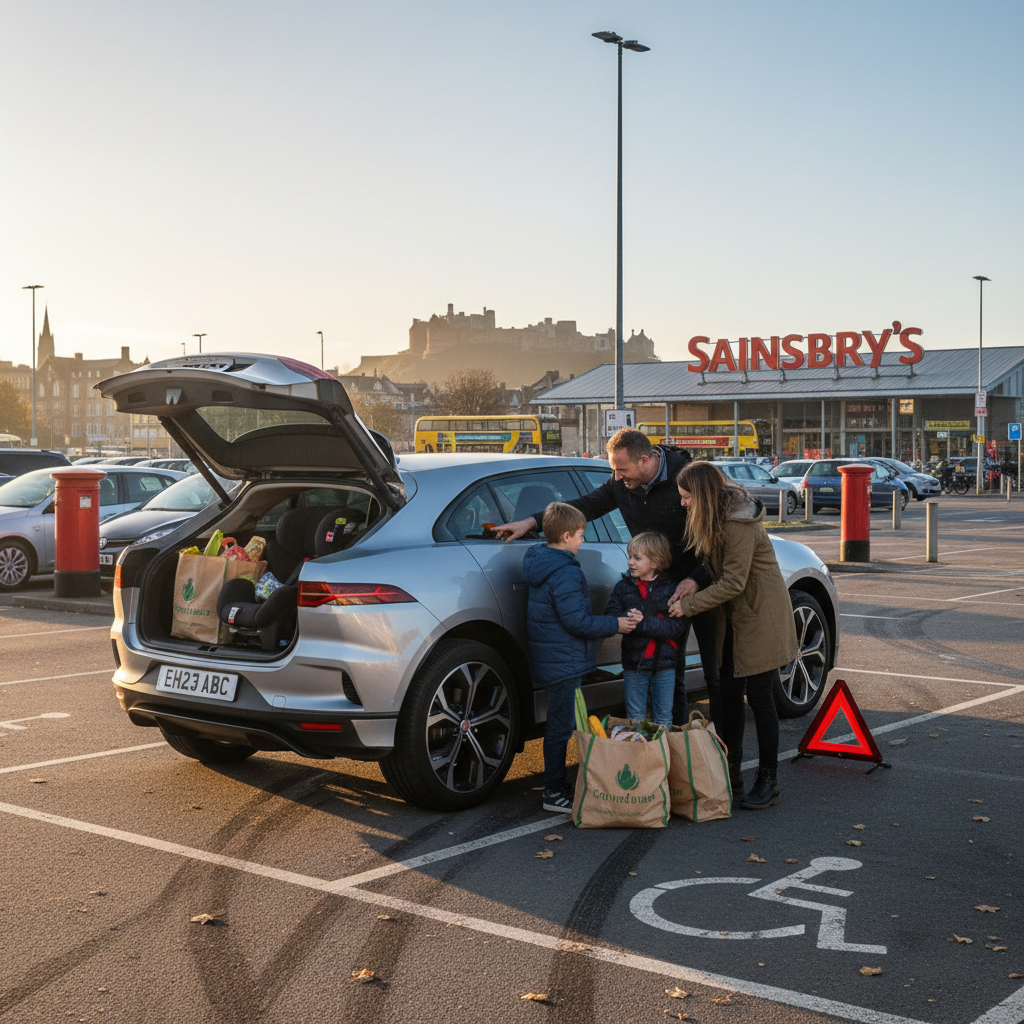
If you have ever tried to wedge a double buggy, three school bags, and a weekly food shop into the back of a standard family hatchback, you will know that every single millimetre of boot space is precious. For decades, car design has been a game of compromises—balancing the bulky mechanical components under the bonnet with the space we actually need for our kids to stretch out in the back.
But behind the scenes, a quiet engineering revolution is underway. Car manufacturers are finding clever ways to shrink the invisible mechanical parts of electric vehicles (EVs). For busy mums and dads, this isn't just dry industry news; it is a massive win that promises to banish cramped rear seats for good, while keeping our families in safer hands than ever before.
The Shrinking Engine: More Legroom for the Kids
When we think of electric cars, we tend to think of giant batteries. However, the motors and control units that actually drive the wheels can also take up a surprising amount of room. In a fascinating development reported by Electrive, automotive giant Geely has unveiled a breakthrough '16-in-1 Intelligent E-Drive' system. By integrating 16 key drive components into one single, highly compact unit, they have dramatically reduced the physical footprint of the car's propulsion system.
If you've got kids in the back, this is music to your ears. When engineers don't have to carve out massive spaces under the chassis for separate components, that space is handed straight back to the cabin. This means deeper footwells, a more practical layout, and a larger boot for scooters, football kit, and the family dog. Furthermore, consolidating these parts makes the vehicle lighter and more efficient, translates into lower running costs, and energy-saving peace of mind for the household budget.
The Electric-First Family SUV
We are also seeing this space-saving philosophy move into the premium family market. Mercedes-Benz has confirmed that the upcoming third generation of its popular GLA compact SUV will transition to an electric-first line-up, built at their Rastatt plant, as detailed by Electrive.
Why does 'electric-first' matter to a parent? In the past, many electric family cars were simply petrol models awkwardly stuffed with batteries. This often meant losing boot depth to accommodate the electrical gear. Designing a compact SUV from the ground up as an electric vehicle means there is no transmission tunnel running through the middle of the cabin. The result? A perfectly flat floor in the back, meaning no more sibling squabbles over who has to sit in the middle seat with their knees tucked up to their chin.
Balancing the Family Budget
Of course, as a motoring editor and a parent, I always keep a sharp eye on the bottom line. While highly integrated drive systems will eventually make EVs cheaper to build, global trade shifts could temporarily impact the family purse. As reported by Electrive, China is introducing a consumption tax on lithium-ion batteries starting this autumn, ending a decade-long tax exemption.
While this might put brief upward pressure on the price of entry-level electric cars sourcing batteries from the region, the long-term trend remains positive. The savings gained from highly efficient, reliable, and durable motor systems—like Geely's new platform—will help shield family budgets from high energy costs over the lifetime of the vehicle.
A Cleaner, Safer Environment for Our Children
It is not just our personal cars that are getting a family-friendly upgrade. The push for cleaner air where our children play and travel to school is gathering pace. Right here in the UK, Leicester City Council has ordered ten more battery-electric buses from Yutong to clean up local municipal routes, according to Electrive. Knowing that local councils are active in reducing roadside emissions gives parents real reassurance about air quality during the daily school run.
At the same time, the fear of running out of charge on family day trips is quickly becoming a thing of the past. Global charging networks are expanding at a rapid rate, with major players like Pilot Travel Centers and ChargePoint opening hundreds of new fast-charging sites, as reported by Electrive. This rapidly expanding safety net means you can plan a summer holiday road trip with absolute confidence, knowing a reliable charge is always just around the corner. For more on this, check out our insights on road trip relief.
Key Takeaways for Busy Parents
- Clever Packaging: New integrated drive systems shrink mechanical parts to unlock maximum cabin legroom and boot space.
- Flat Cabin Floors: Upcoming 'electric-first' models, like the next-generation Mercedes GLA, eliminate the annoying central floor hump.
- Clean School Runs: Rising investment in zero-emission municipal buses in cities like Leicester means cleaner air for our kids.
- Charging Confidence: Massive global expansions in public rapid chargers are making family road trips entirely stress-free.
The Verdict
The latest motoring developments show that the next generation of family-friendly EVs will not just be cleaner—they will be fundamentally more practical and comfortable. By shrinking the hidden components under the metal, car manufacturers are finally putting the spatial needs of busy families first. For parents looking for a safe, reliable, and spacious upgrade, the future of the family hatchback looks incredibly bright.