

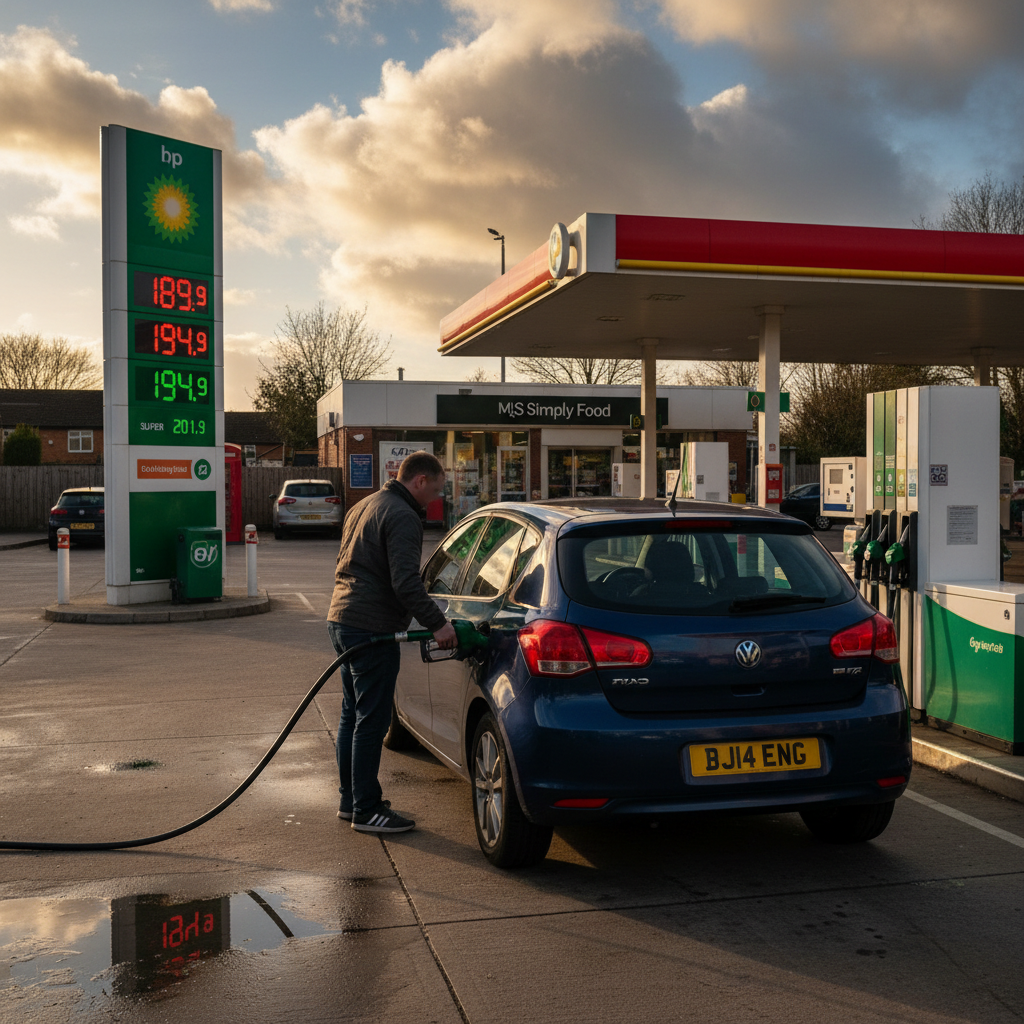
When you pull up to a petrol pump, you probably have a rough figure in your head of what a litre of unleaded should cost. Perhaps you have glanced at recent headlines stating that the average price of petrol is hovering around 182.10p. But I am here to tell you that this "average" is a mathematical mirage—one that is quietly draining the wallets of hard-working drivers who trust it.
According to today's live fuel analysis of 500 stations across the country, the spread between the cheapest and most expensive unleaded in the UK stands at an eye-watering 63p per litre. The absolute minimum price recorded today is a highly competitive 136.90p, while the maximum has surged to a punitive 199.90p. For a typical family hatchback with a 55-litre tank, that represents a whopping £34.65 difference for the exact same fuel. That is not just a marginal saving; it is a weekly grocery shop.
The Mirage of the National Average
The danger of relying on a national average of 182.10p is that it makes a 185p pump price look reasonable. It is not. This statistical lie, which we have previously explored in more detail in The Unleaded Average Illusion, is being dragged aggressively upward by corporate giants and motorway operators, hiding the genuine bargains available on our high streets. If you are blindly filling up at the nearest convenient signpost, you are likely subsidising these massive corporate margins.
To see how this plays out, we only need to look at how different retail networks are pricing their fuel today. The data exposes a massive rift between consumer-champion brands and those taking advantage of captive audiences.
Today's Fuel Price Landscape
The table below outlines the average price per litre of unleaded across key UK retailers today, ranked from the most wallet-friendly to the dearest:
| Retailer | Average Price (Unleaded) | Stations Tracked |
|---|---|---|
| Karan Retail | 142.00p | 29 |
| Motor Fuel Group (MFG) | 177.04p | 100 |
| SGN | 179.04p | 100 |
| Tesco | 186.55p | 100 |
| Ascona Group | 188.63p | 24 |
| Rontec | 190.15p | 100 |
| Moto (Motorway) | 194.22p | 47 |
Behind the Pixels: Why the Gulf is Widening
Why are we seeing such a vast disparity? In the wider economic picture, fuel prices are heavily influenced by international oil markets and domestic policy. According to reports from the House of Commons Library, while wholesale prices have generally eased from their historical peaks, the benefits of these drops are not being passed down equally by all retailers.
Furthermore, experts at the RAC have pointed out that a ten-dollar movement in the global cost of crude oil typically prompts a 7p change at the domestic pump. However, this rule of thumb assumes a competitive retail market where cost cuts are passed on quickly. What our data shows is a highly fragmented market. While independent micro-networks like Karan Retail are operating on razor-thin margins to offer a staggering average of 142.00p, supermarkets like Tesco are sitting on an average of 186.55p—well above the overall market average. This phenomenon of Supermarket Price Betrayal highlights a significant shift in the fuel retail landscape.
With domestic fuel duty remaining frozen at 52.95p, there is no policy-based excuse for the massive price tags we are seeing at some forecourts. It is a choice. For brands like Rontec (190.15p average) and Moto (194.22p average), high prices are a calculated gamble that drivers will prioritise convenience over cost.
The Real-World Cost for Working-Class Families
For working-class families, high fuel prices are not just an inconvenience—they are a threat to the household budget. Recent data published by Mirror Online suggests petrol drivers face average monthly running costs of £123 just to cover typical mileage. But if you are filling up at the higher end of today's price spectrum, that monthly bill could easily top £150.
By switching your loyalty away from major supermarkets and motorway service stations toward competitive regional players, you can instantly claw back a substantial portion of that outlay. Filling up at Karan Retail rather than Tesco saves you an average of 44.55p per litre—saving you over £24 on a single fill-up. This stark difference underscores the importance of being aware of the Great 63p Pump Chasm.
Actionable Checklist for Savvy Drivers
- Ignore the 'Average': Treat any price over 180p as a premium rate. Seek out the regional operators pushing prices below 145p.
- Avoid Supermarket Complacency: Do not assume your local supermarket is the cheapest option. Tesco's average of 186.55p is currently being beaten by several independent chains.
- Locate Independent Champions: Seek out smaller regional brands like Karan Retail, which are currently offering the lowest averages in the study.
- Never Fill Up on the Motorway: With Moto averaging 194.22p, a motorway fill-up is a guaranteed way to overpay. Plan your route to find off-network alternatives.
The Verdict
Today's live market data proves that the UK's fuel sector is not a single, cohesive market—it is a postcode lottery. Relying on the "national average" is a luxury working-class drivers can no longer afford. The real bargains are out there, but they require us to change our habits. By rejecting high-priced corporate forecourts and actively hunting down local value, we can collectively force retailers to bring down their margins. Shop around, drive past the expensive signs, and keep your hard-earned money in your pocket.