

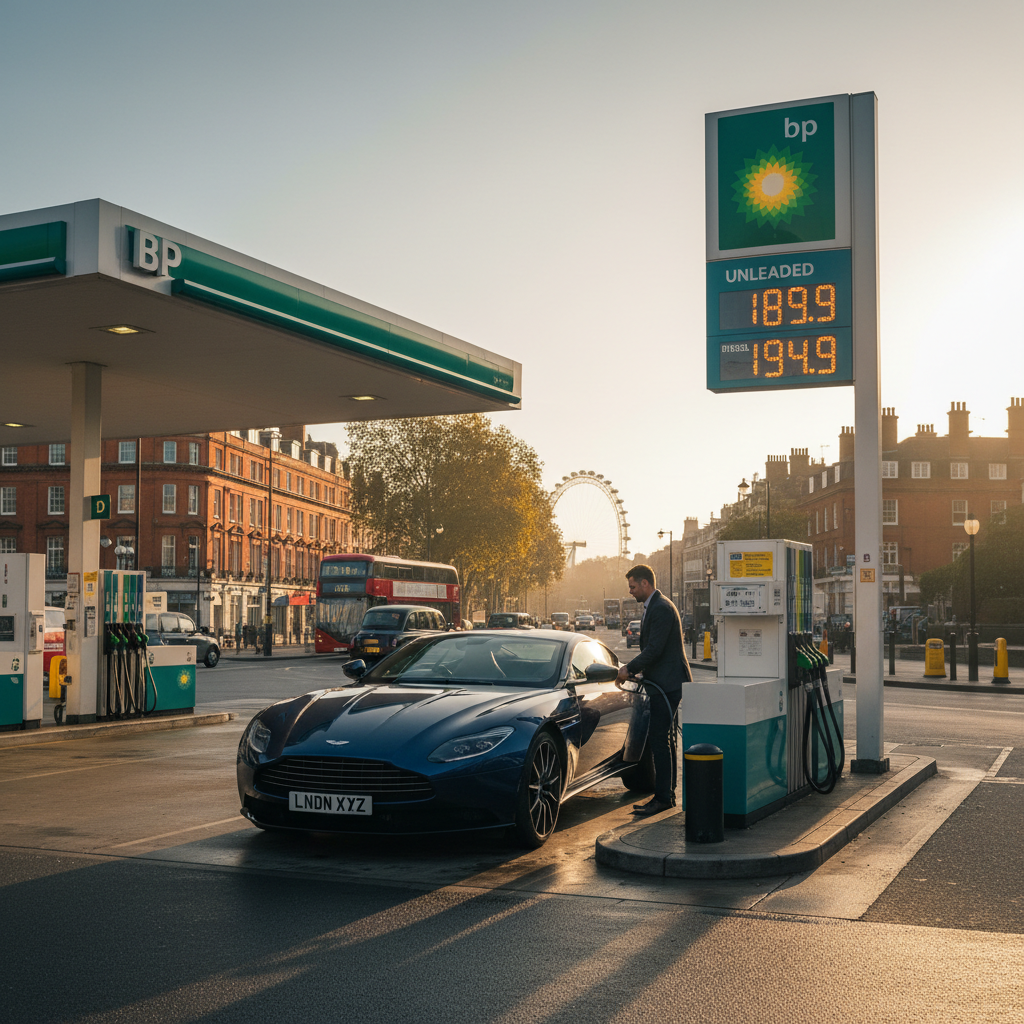
If you still believe that petrol is priced relatively consistently from one postcode to the next, today’s live fuel data is about to shatter that illusion. We are currently witnessing an unprecedented polarisation in the UK fuel market—a widening chasm between agile, localized independent networks and heavy-footed corporate giants.
According to the latest pump analysis from the Motoring News Live Fuel Tracker, the average price of standard unleaded has settled at 178.98p per litre. But this statistic is highly misleading. Beneath this national average lies a staggering 63p-per-litre spread between the cheapest station in the country (136.90p) and the most expensive (199.90p). More importantly, it exposes a massive 48p-per-litre average price gap between the UK’s most aggressive discounters and its highest-priced corporate forecourts.
The 48p Retailer Schism
At the very bottom of the pricing ladder sits Karan Retail. Across 32 analyzed stations, this independent operator is offering a wallet-friendly average of just 142.30p per litre. At the opposite end of the spectrum, corporate giant Rontec—which operates 100 stations in this dataset—is charging a premium average of 190.15p per litre.
For a driver pulling up to the pumps in a standard 55-litre family hatchback, the financial implications of this divide are eye-watering:
- A full tank of unleaded at a Karan Retail station costs an average of £78.27.
- The exact same fill-up at a Rontec station costs £104.58.
- That represents a direct saving of £26.31 per tank just by switching brands.
This is no longer about saving a few pennies or hunting down a minor bargain; this is a fundamental structural split in how fuel is retailed in the UK.
Today’s Fuel Price Landscape
To understand how deep this division goes, we need to look at how different brands are positioning themselves. Traditional supermarket giants like Tesco are no longer the consumer champions they once claimed to be. With an average price of 186.55p, Tesco is now pricing its fuel closer to motorway service operator Moto (187.97p) than to the affordable independent sector.
| Retailer / Brand | Average Unleaded Price (p) | Station Count | Cost to Fill 55L Tank |
|---|---|---|---|
| Karan Retail | 142.30p | 32 | £78.27 |
| Motor Fuel Group | 172.11p | 100 | £94.66 |
| SGN | 172.48p | 100 | £94.86 |
| Tesco | 186.55p | 100 | £102.60 |
| Moto | 187.97p | 14 | £103.38 |
| Ascona Group | 188.42p | 54 | £103.63 |
| Rontec | 190.15p | 100 | £104.58 |
The Mechanics of the Price Gap: Why is This Happening?
This massive disparity is driven by two very different business models. Small, nimble independent networks like Karan Retail operate on what is known as a "spot-market" purchasing strategy. They buy fuel frequently in smaller batches, allowing them to instantly pass wholesale price drops on to local drivers. They treat fuel as a footfall driver, keeping margins razor-thin to get motorists into their shops.
Conversely, corporate chains like Rontec and Ascona Group manage massive inventories and often lock into longer-term supply contracts. When wholesale prices fall, these larger networks are slower to react—either because they are holding higher-priced stock, or because they are actively choosing to pad their retail margins to offset declining sales in other parts of their business. According to analysis from the Competition and Markets Authority (CMA) in recent fuel market studies, weakened competition has allowed larger retailers to sustain significantly higher margins than they did historically.
The result is a two-tier fuel economy where savvy drivers who track local prices are rewarded handsomely, while those who rely on convenience or brand familiarity are penalised at every turn.
Actionable Advice for Motorists
For working-class families looking to protect their hard-earned cash, changing your fuel-buying habits is one of the easiest ways to claw back money. Here is how you can beat the corporate markup:
Key Takeaways for Savvy Drivers
- Ditch the Supermarket Habit: Do not automatically assume your local supermarket offers a bargain. At 186.55p, Tesco is currently averaging 44p per litre higher than top-performing independents.
- Target Agile Independents: Seek out nimbler regional networks and independent forecourts like Karan Retail, which are actively undercutting the larger corporations.
- Use Live Price Apps: Before you set off, consult live price-tracking tools to find the cheapest fuel on your daily commute. Even a five-minute detour can save you over £25.
- Avoid the High-Street Giants: Be wary of major corporate forecourts like Rontec and Ascona, which are currently pricing unleaded dangerously close to motorway services.
The Verdict
Today’s fuel data proves that the historic rules of buying petrol are dead. The high street is no longer a safe haven of standardized pricing. When the difference between the cheapest independent and the most expensive corporate brand stands at £26 a tank, blindly pulling onto the nearest forecourt is a luxury few of us can afford. By actively seeking out locally-owned, agile independent stations, working-class drivers can bypass the corporate retail markup entirely and keep their hard-earned money where it belongs: in their wallets.