

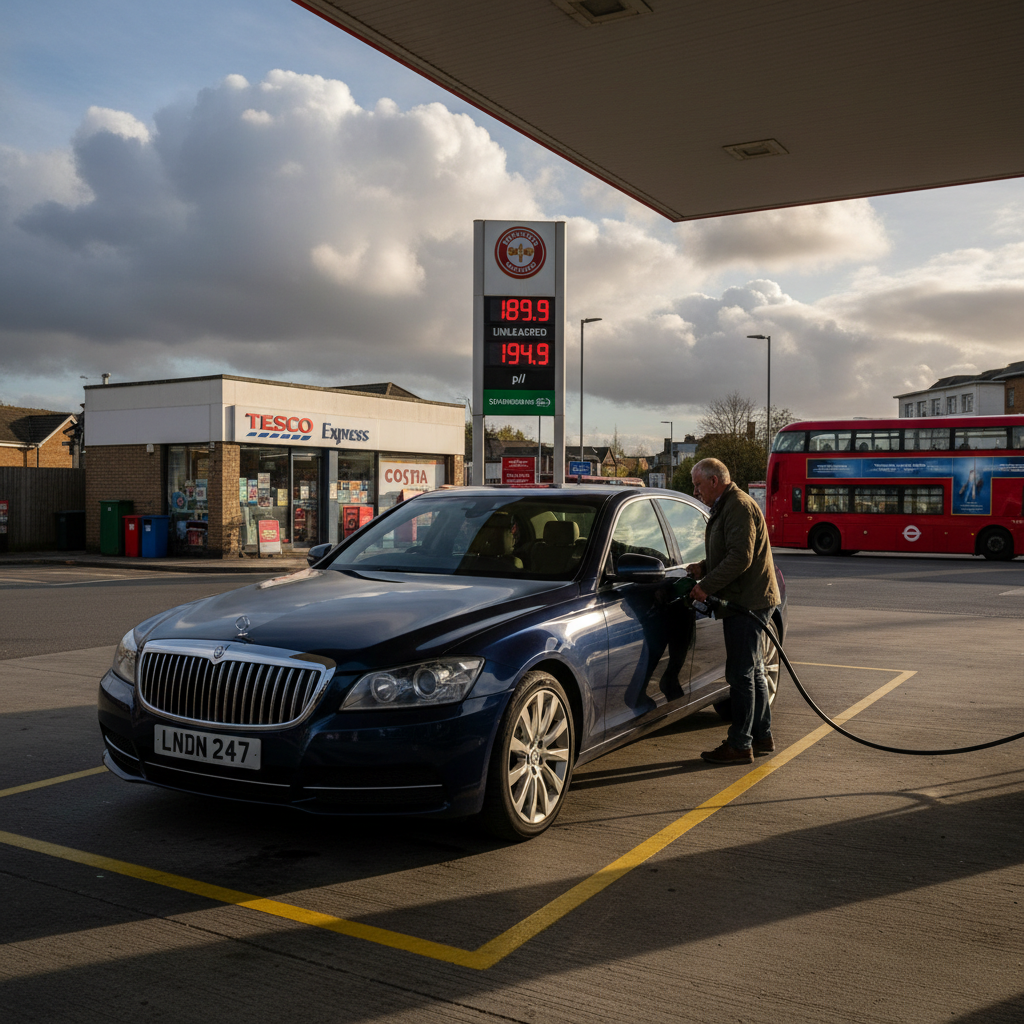
For decades, the golden rule of motoring economy was simple: if you want cheap petrol, buy it where you buy your groceries. It was an unchallenged British tradition. Savvy drivers would eagerly collect their supermarket loyalty points, confident that the towering signs at the edge of the store car park represented the absolute floor of the fuel market.
Today, that rule hasn't just been broken—it has been entirely demolished. Our latest analysis of 500 forecourts across the UK reveals a startling inversion of the traditional fuel hierarchy. The big supermarkets, once the champions of budget-friendly motoring, are now charging premium prices, while a new breed of lean, aggressive independent operators are quietly offering the real bargains.
The 44p Per Litre Shock
To understand how dramatic this shift has been, we only need to look at the massive gap between the market's current extremes. The national average for a litre of standard unleaded now sits at 175.35p. However, the difference between the cheapest and most expensive fuel on our roads has stretched to an astonishing 60p per litre, ranging from a rock-bottom minimum of 136.90p to a dizzying high of 196.90p.
But the real story lies in who is charging what. Tesco, traditionally a safe haven for the budget-conscious motorist, is currently averaging a steep 186.55p per litre across the 100 sites tracked. Compare that to Karan Retail, an independent operator aggressively expanding its footprint, which is averaging just 142.53p per litre across its 42 sites.
That is an incredible 44p per litre difference. For a family hatchback with a standard 55-litre tank, filling up at Tesco rather than Karan Retail will cost you an extra £24.21 per single fill-up. Over a year of twice-monthly motoring, that is a £581 premium just for the convenience of buying your fuel near a supermarket checkout.
How the Major Brands Stack Up
The data paints a fascinating picture of a highly fragmented market where mid-tier brands and independents are working much harder to win your custom than the established giants:
| Retailer / Brand | Average Price (Unleaded) | Sample Size (Stations) |
|---|---|---|
| Karan Retail | 142.53p | 42 |
| JET | 164.81p | 11 |
| Motor Fuel Group | 165.63p | 100 |
| SGN | 165.88p | 100 |
| Tesco | 186.55p | 100 |
| Rontec | 190.15p | 100 |
| Moto | 192.62p | 47 |
While motorway operators like Moto (192.62p) and highway networks like Rontec (190.15p) remain predictably expensive, it is the positioning of the supermarket giant that should make working-class drivers sit up and take notice. Tesco is currently averaging more than 20p per litre higher than independent networks like Motor Fuel Group (165.63p) and SGN (165.88p).
Why Has the Market Flipped?
What is driving this change? Historically, supermarkets used fuel as a 'loss leader' — accepting razor-thin margins, or even a loss, on petrol to lure shoppers through the supermarket doors. However, industry analysts note that supermarket business models have shifted under intense pressure from German hard-discounters who don't sell fuel. With supermarket profit margins squeezed on groceries, the fuel forecourt has been quietly transformed from a promotional tool into a major profit centre.
Meanwhile, lean, independent retailers are using ultra-competitive fuel pricing as their primary weapon to steal footfall. They know that in a cost-of-living crisis, saving 20p to 30p a litre is a massive draw, and they are betting that drivers will spend their savings on in-store coffee and snacks instead.
How to Navigate the New Fuel Landscape
For working-class families trying to keep their cars on the road, these dynamics require a complete change of habit. Here is our actionable advice for navigating the new normal at the pumps:
- Ditch the supermarket loyalty bias: Do not assume your shopper points make up for a higher pump price. If the supermarket is charging 15p more per litre than the independent down the road, no amount of loyalty vouchers will bridge that gap.
- Seek out regional independents: Keep an eye out for brands like Karan Retail, JET, and local independent dealer groups. They are consistently undercutting the national average.
- Use price-tracking apps before you travel: Since the price gap between forecourts is wider than ever, a five-minute check on your phone before you leave the house can quite literally save you £20 on a single tank.
The verdict is clear. The era of the cheap supermarket fill-up is over. The power has shifted to the nimble, aggressive independents. If you want to keep your hard-earned money in your wallet rather than pouring it into a corporate fuel tank, it's time to break old habits and shop around. For more insights into how independent stations are changing the game, read about the Petrol Price Pyramid and how mid-market fuel brands are undercutting supermarkets by £24 a tank. You might also be interested in how brand loyalty is costing drivers £29 a tank, or our analysis on the supermarket sell-out and the 44p 'convenience premium' UK drivers are paying.