

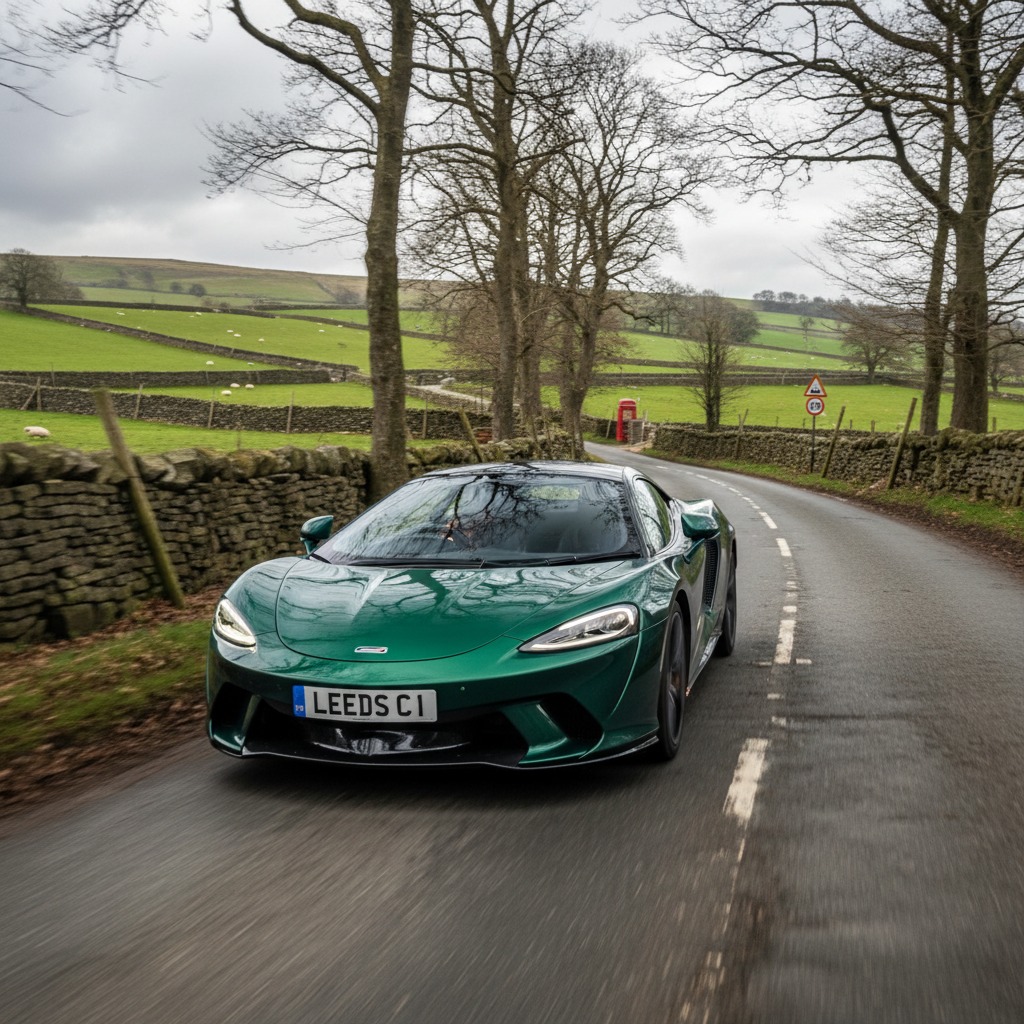
Forget the beige boxes and the mundane commutes for a moment. Pull up a chair, because we're talking about the cars that stir the soul, the machines engineered not just to move, but to move you. This week, the news cycle has been a glorious kaleidoscope of automotive passion, from exquisite tributes to unbridled, track-devouring powerhouses. It’s a testament to the fact that even as the automotive landscape evolves, the sheer, intoxicating thrill of driving remains utterly central.
A Blast from the Past, Reimagined for Tomorrow
Let's kick things off with a proper nod to heritage, but with a thoroughly modern twist. Dutch firm Autoforma has unveiled a restomod that pays homage to the radical 1995 Audi TTS concept, complete with its iconic primer-grey paintwork. This isn't just a nostalgic trip; it's a statement. Taking cues from a concept that originally defined a generation of design, Autoforma is reminding us that sometimes, the best way forward is to look back, extract the essence, and then inject it with contemporary engineering. What makes a restomod truly sing isn’t just the aesthetic; it’s about refining the underlying dynamics. We're talking improved chassis rigidity, uprated suspension geometry, and a drivetrain that offers genuinely responsive power delivery. It’s about taking a great idea and making it perform even better than its original creators could have dreamed. If done right, these cars can be incredibly engaging on the road, marrying classic charm with modern capability.
The Hypercar Horizon and the Quest for Ultimate Performance
Speaking of unbridled performance, the news that the 1200bhp Red Bull RB17 is ready to hit the track has me absolutely buzzing. This Adrian Newey-designed hypercar, of which only 50 will be built, is not just a car; it's a purist's dream, a testament to pushing the boundaries of what's possible on four wheels. AutoCar reports that final assembly has begun, and honestly, the thought of a V10 powering a machine designed by one of F1's most brilliant minds for the sole purpose of smashing lap times? That's pure theatre. This isn't about everyday usability; it's about the pinnacle of driving dynamics. We’re talking about a car built to exploit every single ounce of grip, every millisecond of acceleration, every degree of steering input. According to Autocar's own best hypercars list, such creations exist solely to deliver the 'ultimate in outright performance, with nothing coming between it and its goal of smashing lap times.' This is where performance car engineering becomes art.
But the pursuit of speed isn't limited to multi-million-pound hypercars. The track is the ultimate proving ground, and McLaren's LMDh prototype hitting the track for the first time is a clear signal of intent for endurance racing. This kind of development filters down, pushing boundaries in aerodynamics, lightweight construction, and hybrid power delivery. Meanwhile, we're seeing the next generation of John Cooper Works hot hatches from Mini priming for launch. The JCW badge has always stood for punchy performance and a truly engaging, go-kart-like feel. Expect these new models to build on that legacy, delivering razor-sharp handling and ballistic acceleration in a compact, usable package.
Why Driving Dynamics Still Rule
It's fascinating to see this blend of old and new. While electrification and fleet challenges are certainly at the forefront of the general automotive industry, as Autocar highlights with UK fleets seeking partners for electrification, the enthusiast market remains fiercely dedicated to the pure driving experience.
Take, for instance, the compelling case of swapping an MX-5 for a Toyota MR2. Autocar recently published a piece detailing just such a swap, where the author found themselves won over by the mid-engined sportster. This isn't just a preference; it's a dive into the nuanced world of chassis balance and weight distribution. A mid-engined layout, with its centralised mass, often provides a more neutral handling characteristic, allowing a driver to feel more connected to the car's pivot point. It's often more challenging to extract its full potential, but incredibly rewarding when you get it right. It’s about that visceral connection, that feeling of the car rotating beneath you. If you live for that perfect apex, that precise throttle modulation mid-corner, then you understand this appeal.
Even in the world of rallying, the focus on driver feedback and precise car development is paramount. Ott Tanak joining Toyota to develop their 2027 WRC car, as reported by Autosport, highlights how crucial expert driver input is to honing a competition machine. It's about translating that raw, on-the-limit feedback into tangible engineering improvements. This is the very essence of driving dynamics – the art and science of making a car respond instinctively to its pilot. And for us enthusiasts, that's what truly matters.
So, whether it's a meticulously crafted restomod, a future-is-now hypercar, or a finely tuned hot hatch, the pursuit of the ultimate driving feel is alive and well. It's about the tangible, the responsive, the engaging. It’s about being truly *connected* to the machine.
Key Takeaways for the Driven Enthusiast:
- Restomods are more than just looks: They offer a blend of classic aesthetics with modern, enhanced driving dynamics.
- Hypercars push boundaries: Machines like the Red Bull RB17 redefine what's possible in terms of speed, grip, and overall performance.
- Mid-engined magic: A well-engineered mid-engined car can offer unparalleled balance and driver engagement.
- Driver input is paramount: From rallying to road cars, expert drivers are crucial in honing a car's dynamic capabilities.
At the end of the day, a performance car isn't just about numbers on a spec sheet. It's about how it feels when you push it, how it communicates with you through the steering wheel, through the seat of your pants. It's about the grin it puts on your face when you nail that corner, when the engine sings its song, and the chassis feels utterly planted and responsive. That’s the real verdict, and on that front, the future of driving looks absolutely ballistic.