

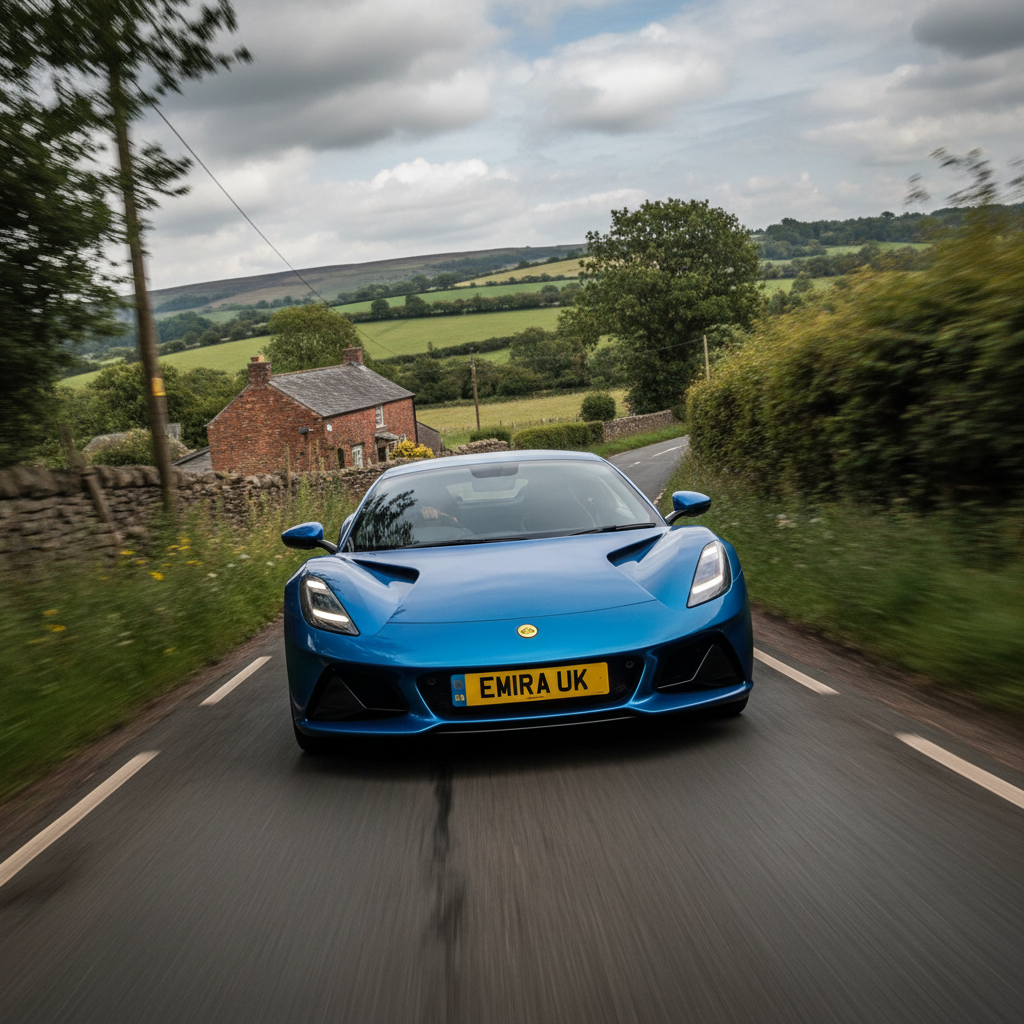
If you live for that perfect apex, you know that great handling used to be a purely mechanical love affair. It was about the cold, hard physics of spring rates, anti-roll bars, and the tactile feedback pulsing through a hydraulic steering rack. But make no mistake: we have entered an era where software code dictates the contact patch just as much as damper valving. From the pinnacle of motorsport to the utility vehicles parked in your local paddock, digital calibration is the new frontier of driver engagement.
The Software Symphony: Leclerc’s Secret Weapon
Take Charles Leclerc’s recent resurgence at the British Grand Prix. As reported by Autosport, the Ferrari driver secured a crucial victory after a frustrating slump, and the turnaround wasn’t down to a revised front wing or a trick floor. Instead, Leclerc took the unprecedented step of rewriting his steering wheel software for the first time since joining Scuderia Ferrari.
By altering how the digital interface translates his inputs to the front tyres, Leclerc regained the front-end bite and granular feel he had lost with the SF-26’s recent setup changes. In modern performance machinery, software is the bridge between a driver's hands and mechanical grip. When a system is calibrated perfectly, the car feels like an extension of your synapses—allowing you to lean on the front axle with absolute confidence, hunting down the apex with razor-sharp precision.
The Digital Tightrope of 2026 and the Aerodynamic Grey Area
This digital dependency will only amplify as we head toward the 2026 Formula 1 regulations. Autosport highlights a growing concern that these highly complex power units will severely disadvantage customer teams. While the FIA guarantees identical petrol-burning hardware, the real magic lies in the energy-management software. If you don't have a works team's army of engineers optimizing how the electrical deployment deploys out of a corner, you are dead in the water. We are already seeing the cracks in current setups; Red Bull and Max Verstappen struggled at energy-starved Silverstone—and expect similar headaches at Spa—due to electrical deployment deficits when the battery runs dry.
Even aerodynamics are bending to the digital will. The FIA is currently investigating Red Bull and Ferrari over highly sophisticated, rotating 'Macarena' rear wings following Verstappen’s high-speed incidents. It proves that whether it is aeroelasticity or code, teams are pushing the boundary of physics to keep cars planted at 190mph.
Enter the Heavyweights: 430bhp and a New Breed of Utility
But this software-driven performance revolution isn't reserved exclusively for single-seaters. Look at what is happening to the humble utility vehicle. The arrival of the BYD Shark in the UK market is a massive wake-up call for the traditional guard. As detailed by Autocar, this plug-in hybrid pick-up lands with a ballistic 430bhp, courtesy of an electric motor on each axle paired with a 1.5-litre turbocharged petrol engine.
With a 0-62mph time of just 5.7 seconds, this dual-motor setup delivers Golf GTI-rivalling acceleration in a chassis designed to haul a tonne. What makes the Shark fascinating from a chassis dynamics perspective is how it uses its dual-motor setup. By utilizing intelligent torque vectoring across the front and rear axles, the electronics can actively pivot this massive truck mid-corner, mimicking the agility of a punchy hot hatch. It offers a pure 56-mile electric range, though performance buyers should note that its passenger-car focus means it misses out on commercial vehicle VAT relief.
For those demanding traditional diesel dependability without the high-voltage complexity, there are still analogue alternatives. The KGM Musso Rhino, highlighted by Autocar, offers a rugged, body-on-frame approach to tackle the Ford Ranger and Toyota Hilux. If you want to go fully green, its sibling, the KGM Musso EV, brings car-like refinement and near-silent operation to the segment, making it a highly responsive, tax-busting lifestyle cruiser.
The Enthusiast Verdict: Can Code Have Soul?
It raises a crucial question for the modern petrolhead: can digitally managed dynamics ever deliver the soulful connection of an analogue icon? Sometimes, the answer lies in looking back. In an era of heavy, over-complicated EVs, Autocar recently revisited the original BMW i3 as a sub-£10,000 used buy. With its carbon-fibre tub, rear-wheel-drive layout, and ultra-skinny tyres, the i3 remains a masterclass in lightweight engineering and low-speed agility. It proved that electric cars could have a distinct soul when engineered with driver engagement in mind.
Key Takeaways
- Software is Steering: Charles Leclerc’s British GP turnaround proves that digital steering calibration is just as critical to front-end feel as physical geometry.
- The 2026 F1 Divide: Customer teams face a massive hurdle as electrical energy management software, rather than engine hardware, becomes the key performance differentiator.
- PHEV Performance: The BYD Shark brings 430bhp and active torque vectoring to the pick-up class, delivering 0-62mph in 5.7 seconds.
- Analogue vs. Digital: While heavy-duty options like the KGM Musso Rhino stick to proven mechanical layouts, the future of performance belongs to those who write the best code.
Whether you are clipping curbs at Silverstone or seeking a responsive daily driver, we have to embrace the digital handshake. When software is tuned by engineers who love to drive, it doesn't mask the chassis—it unlocks its ultimate potential. This echoes the sentiment that chassis engineering is the ultimate battleground for driver joy, often enhanced by digital precision. Ultimately, the goal is always to maximize driver engagement, a topic we've previously explored in depth. We've seen how manufacturers like Hyundai are even faking gears to save the electric driver's car, bridging the gap between digital and tactile feedback. Moreover, the debate between traditional powerplants and electrified ones for driver's cars is ongoing, reminding us of why Formula 1’s V8 revival is the wake-up call modern performance cars desperately need to rekindle that sensory overload, even as software takes a larger role.