

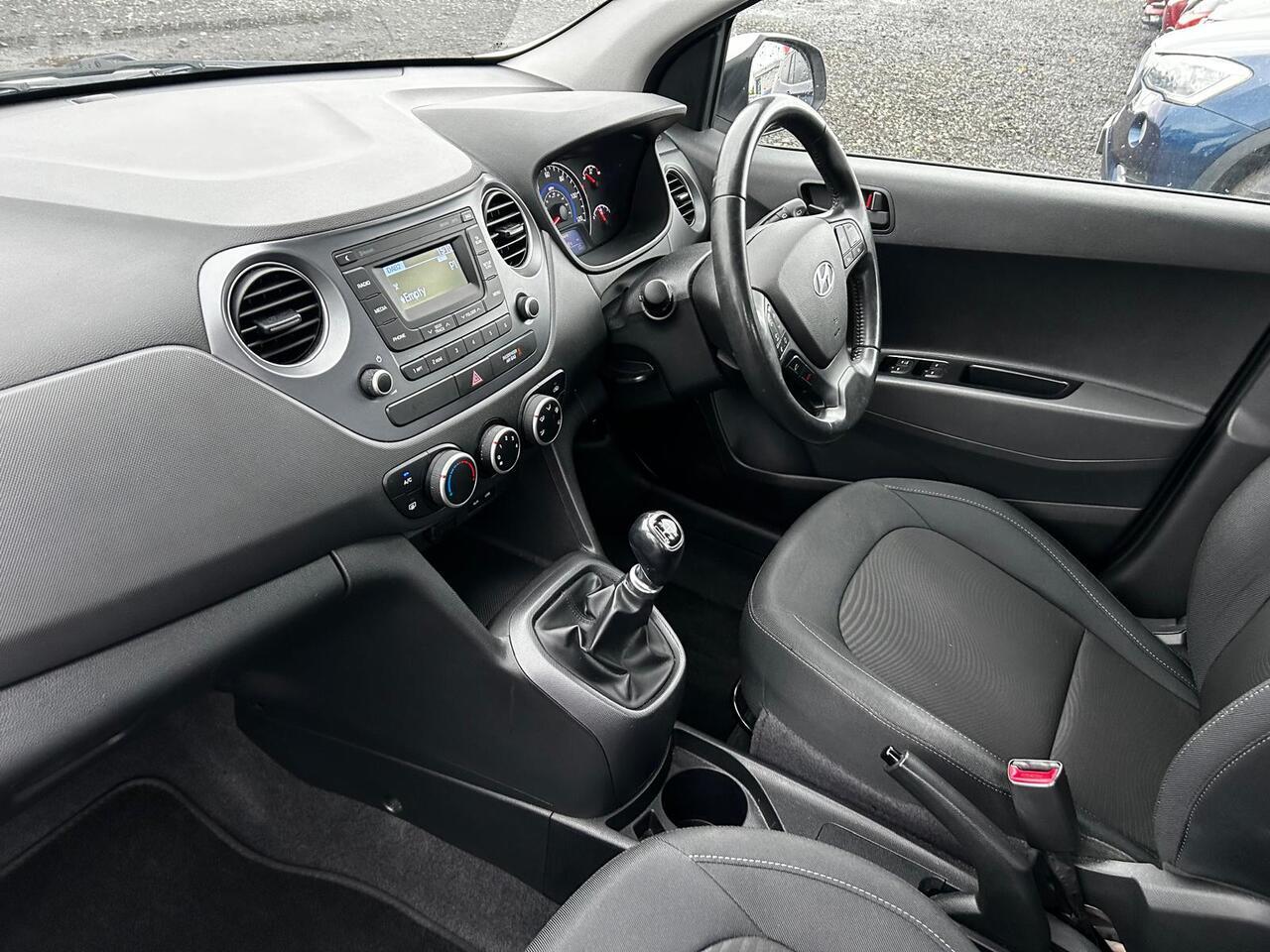
Fair price
Hyundai i10
2018 Se
PetrolManual56,751 mi2018
£200/yr
Finance available on request
£5,980
cash
Cobalt Motors·4.5 (153)· Gosforth
How much is Vehicle Excise Duty (VED) on a Hyundai I10? 100% of the 4 in stock pay the flat £200/yr standard rate.
Reviewed by the Motoring Today Editorial team · methodology in our editorial standards.
How much is road tax on a Hyundai I10?
Most used Hyundai I10 in stock pay the flat standard rate of £200 a year — 100% were first registered on or after 1 April 2017, when road tax became a single annual rate regardless of CO₂. Figures are for the 2026/27 UK tax year.
There are 4 used Hyundai i10 models currently available on Motoring Today, ranging from 2013 to 2019. Understanding the Vehicle Excise Duty (VED), commonly known as road tax, for any of these used cars requires checking the specific details of each vehicle, as the amount due can vary significantly based on its first-registration date and CO2 emissions. For used cars registered before 1st April 2017, VED is calculated purely on CO2 emissions, with different bands corresponding to varying annual costs. Cars registered from 1st April 2017 onwards follow a different system: a first-year rate is applied, typically built into the purchase price of a new car, followed by a standard flat rate for subsequent years. An additional surcharge is levied on cars that had a list price exceeding £40,000 when new, for five years from the second time the car is taxed. It's also important to note that the long-standing exemption for fully-electric vehicles is changing, and they will soon become liable for VED. Because road tax depends on the individual car's first registration and specific CO2 output, we cannot state a general VED figure here. Each listing on Motoring Today provides comprehensive details for the Hyundai i10, including its full MOT history, and you should always check the exact VED details for any specific vehicle you are considering.
Cars registered from 1 Apr 2017 (2026/27)
100% of Hyundai I10
If over £40k new · years 2–6
| CO₂ | Petrol / EV / RDE2 diesel | Non-RDE2 diesel |
|---|---|---|
| 0 g/km | £10 | £10 |
| 1–50 g/km | £115 | £135 |
| 51–75 g/km | £135 | £280 |
| 76–90 g/km | £280 | £365 |
| 91–100 g/km | £365 | £405 |
| 101–110 g/km | £405 | £455 |
| 111–130 g/km | £455 | £560 |
| 131–150 g/km | £560 | £1,410 |
| 151–170 g/km | £1,410 | £2,270 |
| 171–190 g/km | £2,270 | £3,420 |
| 191–225 g/km | £3,420 | £4,850 |
| 226–255 g/km | £4,850 | £5,690 |
| Over 255 g/km | £5,690 | £5,690 |
Rates shown are for the 2026/27 UK tax year (source: DVLA / GOV.UK). Check the exact figure for a specific car by its registration on the GOV.UK vehicle-tax service.
2018 Se
Cobalt Motors·4.5 (153)· Gosforth

2019 Go Se
NG9 Motors·4.5 (92)· Nottingham
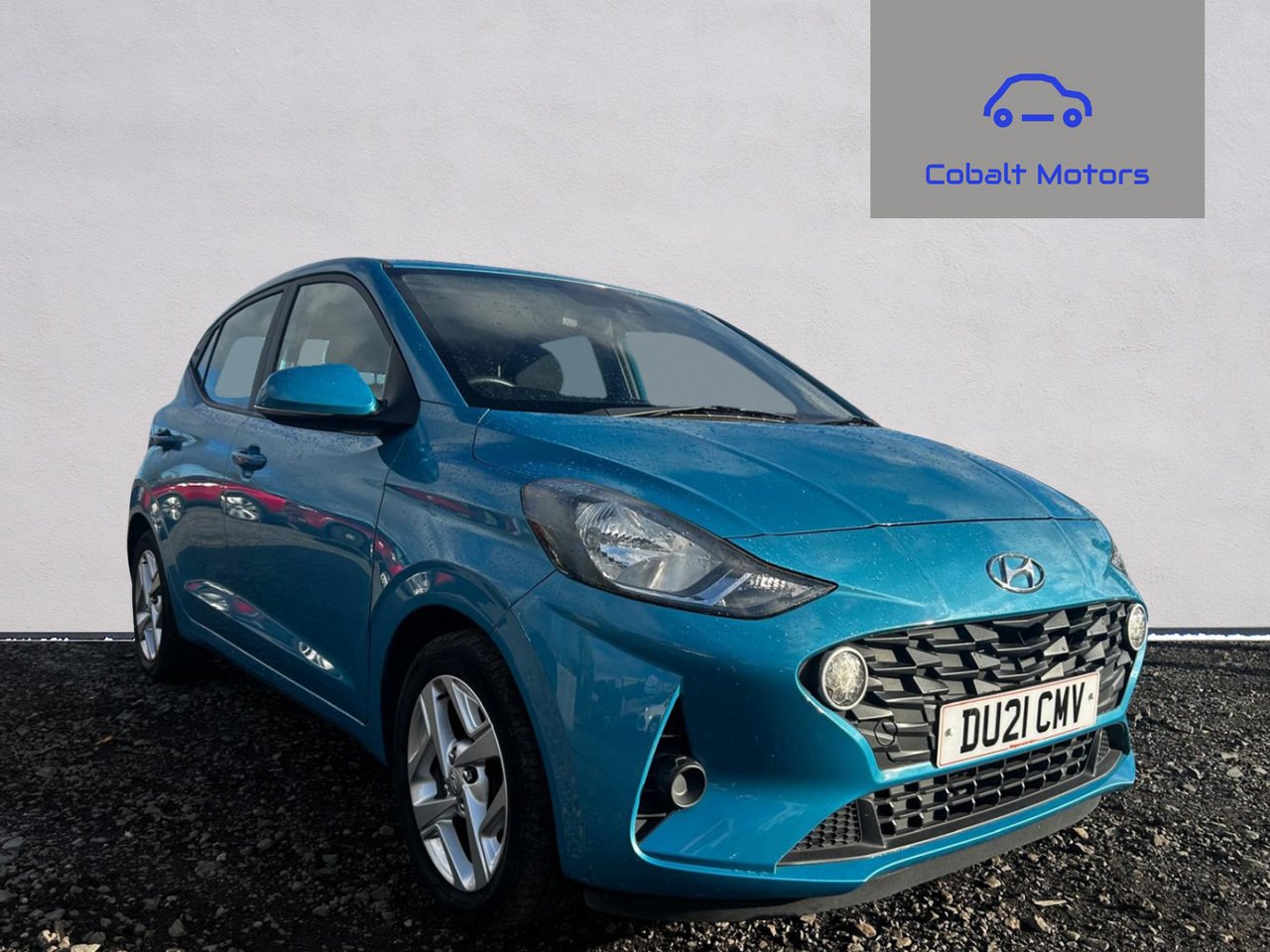
2021 Se Connect Mpi Auto
Cobalt Motors·4.5 (153)· Gosforth

2024 Advance
Albar Autos·4.1 (22)· Loughborough
Trim-level specifications for the Hyundai i10 (Petrol), across 81 recorded variants.
The Hyundai i10 Hatchback (08-13) was tested by Euro NCAP in and received the following safety ratings:
| Trim | Fuel | Power | MPG | CO₂ | Ins. |
|---|---|---|---|---|---|
| 1.0T [90] N Line 5dr [Nav]Manual | Petrol | 88 bhp | 52.3 mpg | 123 | 10 |
| 1.2 [79] Premium 5dr [Nav]Manual | Petrol | 77 bhp | 52.3 mpg | 125 | 6 |
| 1.0 [58] Advance 5dr [Nav]Manual | Petrol | 62 bhp | 55.4 mpg | 116 | 3 |
| 1.0 [58] Advance 5dr Auto [Nav]Automatic | Petrol | 62 bhp | 53.3 mpg | 126 | 2 |
| 1.0 T-GDi N Line 5dManual | Petrol | 98 bhp | 52.3 mpg | 123 | 10 |
| SE Connect 1.2 MPi 84PS 5dManual | Petrol | 82 bhp | 52.3 mpg | 124 | 8 |
| SE Connect 1.2 MPi 84PS AMT auto 5dAutomatic | Petrol | 82 bhp | 49.6 mpg | 129 | 4 |
| SE Connect 1.0 MPi 67PS 5dManual | Petrol | 66 bhp | 54.3 mpg | 119 | 4 |
| SE Connect 1.0 MPi 67PS AMT auto 5dAutomatic | Petrol | 66 bhp | 50.4 mpg | 126 | 3 |
| SE 1.2 87PS 5dManual | Petrol | 87 bhp | 46.3 mpg | 138 | 6 |
| SE 1.2 87PS auto 5dAutomatic | Petrol | 87 bhp | 41.5 mpg | 155 | 6 |
| S 1.0 66PS 5dManual | Petrol | 66 bhp | 50.4 mpg | 127 | 2 |
Manufacturer specifications aggregated across recorded trims; individual cars vary by options and age. Figures are a guide — confirm exact spec with the seller.