

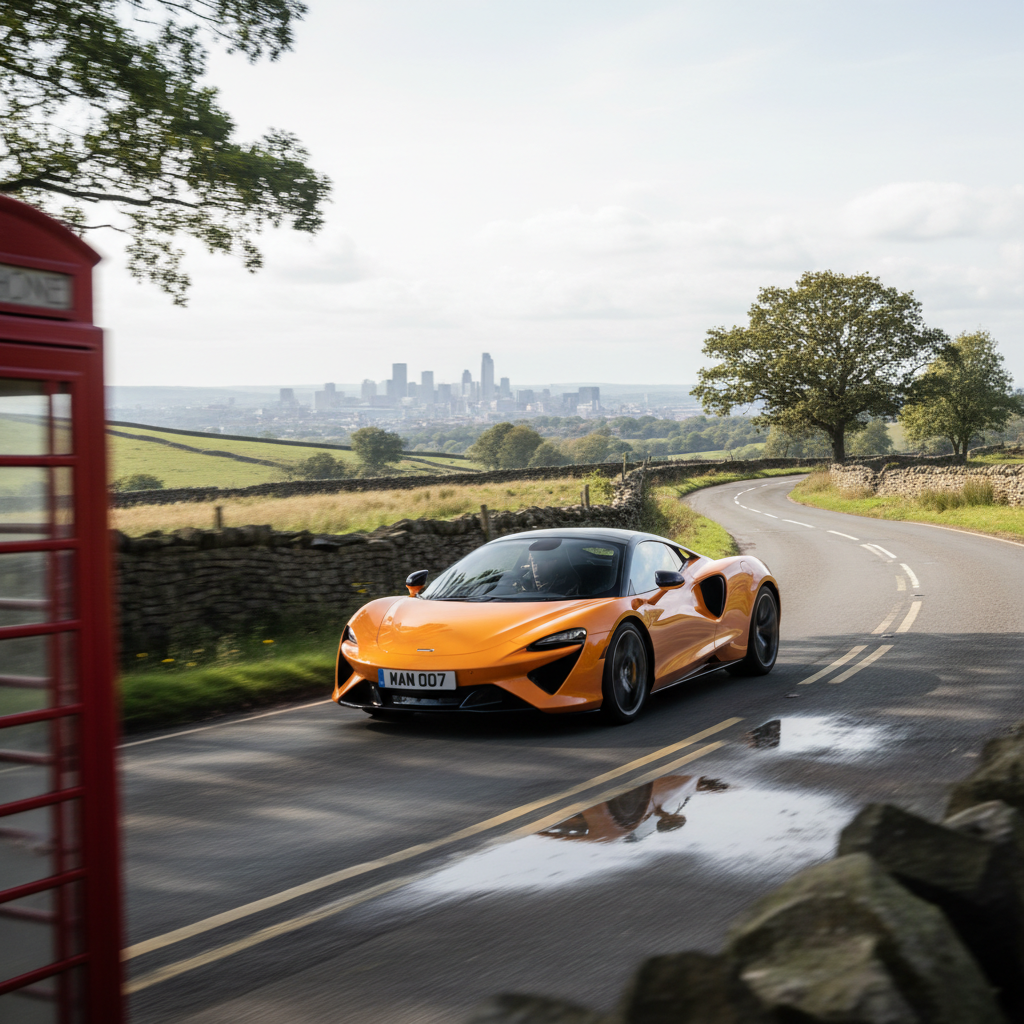
Right, hands up if you've ever watched an F1 race and dreamt of that razor-sharp throttle response or the ballistic cornering grip transferring directly to your weekend warrior? Good, because you're not alone. The spectacle of Formula 1, for all its high-tech wizardry and occasionally Byzantine regulations (don't even get me started on penalty points – do they even serve a purpose anymore, as Autosport asks?), remains the ultimate proving ground. And right now, the buzz around the grid is electrifying, hinting at a fascinating convergence with the performance cars we cherish.
It's not just about the big manufacturer names turning up on the Sunday. We've got massive news this week with Gucci, yes, Gucci, stepping in as title partner for Alpine F1 in 2027, as reported by Autocar and Autosport. Now, a fashion house sponsoring an F1 team might seem a million miles from blistering lap times, but bear with me. This move, spearheaded by Luca de Meo, former Renault boss, signals a heightened commercial interest that ultimately fuels technological advancement. More investment, more innovation, more trickle-down tech for us driving enthusiasts. It's a virtuous cycle.
Think about it: the relentless pursuit of speed, aerodynamic efficiency, and power delivery in F1 filters down. Those lessons learned at speeds that warp reality eventually inform the suspension geometry of a track-focused supercar, the responsiveness of a high-performance EV, or even the sheer driving engagement of a hot hatch. When we talk about "driving dynamics," we're often talking about the fruits of this top-tier motorsport labour.
The Unseen Influence on Driving Dynamics
For purists like us, it's the raw numbers and the feeling they deliver that truly matter. When Adrian Newey dreams up a hypercar (as detailed by Autocar when ranking the greatest hypercars), his F1 pedigree is etched into every curve and every air channel. We're talking about cars built to smash lap times, where every millimetre of chassis tuning and power delivery is meticulously engineered. Similarly, the rise of GT3 racing, which Autosport celebrated for its unexpected success over the last 20 years, shows how a carefully regulated platform can deliver incredible, accessible performance. These cars, while perhaps not F1-spec, offer a driving experience that’s utterly absorbing, demanding precision and rewarding commitment.
And what about those cars that should have been stars, but weren't (as Autocar regrettably highlighted)? Often, it comes down to a lack of genuine driving engagement, a disconnect between the engineering intent and the driver's seat sensation. That's where F1's influence is subtle but profound. It teaches us what real driving feel is. When a car has truly transparent, confidence-inspiring hydraulically-assisted power steering, like the McLaren 765LT praised by Auto Express as a top track day car, you can bet that philosophy has roots in the unforgiving world of single-seater racing.
The Future is Fast, and Always Evolving
The F1 driver market is a constant ebb and flow, as Autosport eloquently describes, with teams like Haas considering their 2027 line-up years in advance. This long-term planning isn't exclusive to F1; it reflects the deep R&D that underpins the entire performance car industry. The "new generation of sports cars coming from 2025 onwards," highlighted by Trackdays.co.uk, promises thrilling, innovative, and deeply rewarding experiences. Whether it's the immense power of a supercar or the seamless acceleration of cutting-edge electric performance, the DNA of high-octane competition runs through it all.
Even historic perspectives remind us of the enduring appeal of the driver. Autosport's look at the "Top 10 F1 drivers of the 1970s" underscores that while the machinery evolves, the human element, the talent to extract every ounce of performance, remains paramount. And that, fundamentally, is what performance driving is all about: the connection between man and machine, pushing limits, chasing that perfect lap. Whether you're on a Silverstone driving experience in a supercar, or attacking Anglesey Circuit in a Wells Vertige (as Evo details), that thrill is universal.
Key Takeaways for the Performance Enthusiast:
- F1 Innovation Drives Road Car Excellence: Advanced aerodynamics and power delivery philosophies filter directly from the grid to the garage.
- The Human Element is Key: Despite technological leaps, the skill and engagement of the driver remain at the core of true performance.
- GT3's Enduring Appeal: This genre showcases how accessible, yet utterly thrilling, track-focused driving can be.
- Future-Proofing Performance: New generations of sports cars are promising to continue the legacy of exhilarating driving, regardless of powertrain.
So, the next time you hear about a fashion brand sponsoring an F1 team, or regulations shifting, remember it’s not just noise. It’s part of the rich tapestry of motorsport that ultimately pushes the boundaries of what’s possible, shaping the very cars we dream of, and indeed, get to drive. Because if you live for that perfect apex, for that punchy acceleration out of a bend, for the planted feel through a high-speed sweep – you’re living the F1 dream, one road car blast at a time. And frankly, it’s a brilliant time to be a petrolhead!