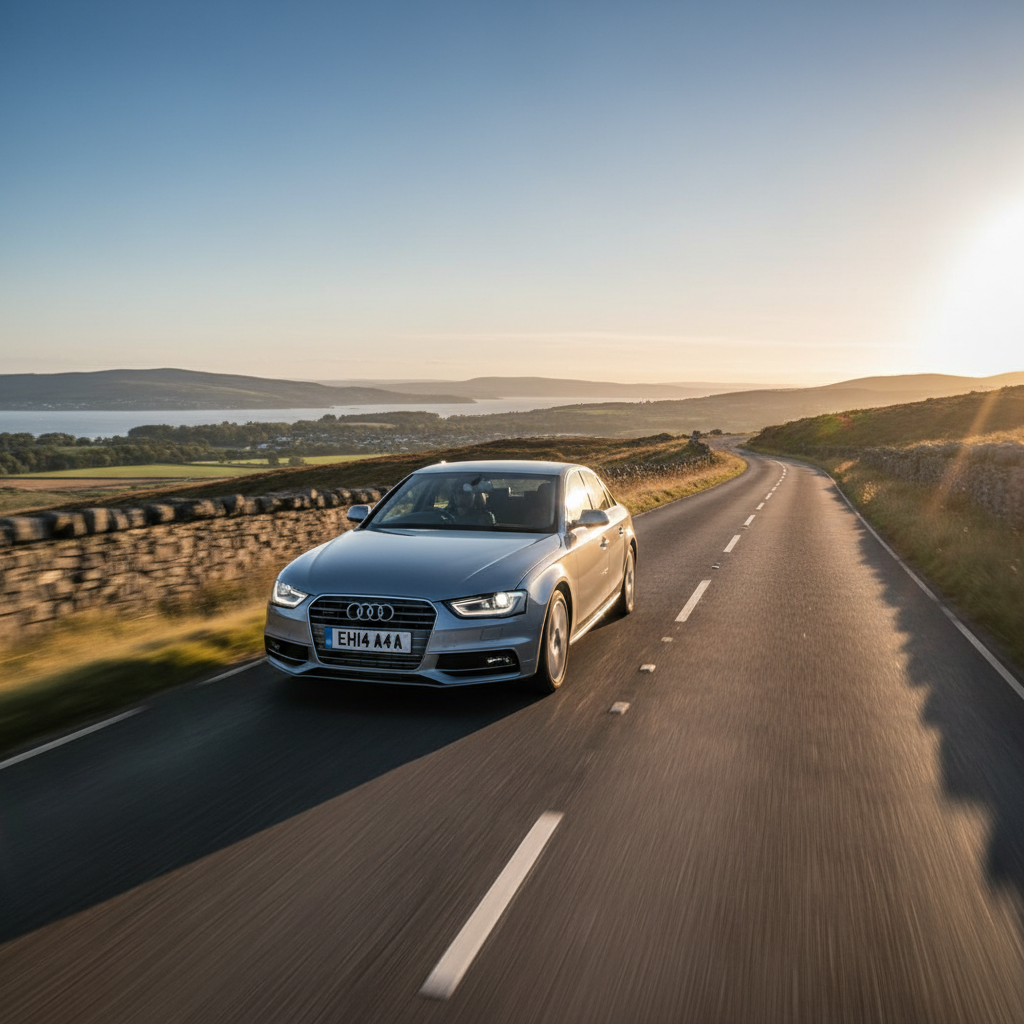



Close your eyes and picture your ultimate motoring happy place. If you live for that perfect apex, chances are your mental soundtrack isn’t the sterile hum of an appliance, but the hair-raising, mechanical shriek of a high-revving internal combustion engine. Loud engines aren’t just about making noise; they are the feedback loop that connects our right foot to our soul.
The Symphonic Battle at the Pinnacle of Motorsport
Lately, there has been a fascinating shift in the wind at the very top of the racing world. According to reports from Autosport, Formula 1 bosses Stefano Domenicali and Mohammed Ben Sulayem are actively pushing for a return to naturally aspirated V8 engines from 2030 or 2031. While power unit manufacturers are currently aligned on sustainable synthetic fuels and clever, lower-cost electrification, the sport’s powerbrokers have realised something vital: modern hybrid V6 units, for all their ballistic efficiency, lack the raw, emotive drama that makes spectator hairs stand on end.
It’s a debate that mirrors what we’re seeing on the road. We are constantly promised that synthetic noise-generators and digital trickery can replace a real exhaust note. But as any petrolhead who witnessed the recent Historic Sports Car Club Superprix at Brands Hatch will tell you, nothing compares to the real thing. As reported by Autosport, the Kentish venue celebrated its centenary with classic 500cc single-seaters and thunderous Formula 5000 giants shaking the earth. Those historic racers don’t need simulated soundtracks; they rely on pure mechanical vibration and razor-sharp, unassisted throttle response to deliver a sensory overload.
The Engineering Behind the Sensation
When you wind out a naturally aspirated performance engine, the acoustic profile is a direct mathematical result of its mechanical layout. In a V8 spinning past 8,000rpm, the exhaust pulses merge into a triumphant, metallic howl. This isn’t just theatre; it’s vital driver telemetry. A highly responsive engine allows you to judge rear-axle traction by ear long before the tyres lose grip. When you hear the engine note flare by even 50rpm, your brain registers it instantly, allowing you to modulate the throttle and keep the chassis planted on the limit.
This pursuit of ultimate mechanical connection is happening at a microscopic level in modern motorsport. Autosport recently detailed Pirelli’s ongoing battle with F1 wheel rim development. In the quest to master tyre temperature and grip, even the rigid interaction between the rubber, the 18-inch wheel rims, and the heat transfer from the carbon brakes is treated as a critical performance variable. It proves that in high-performance driving, every fraction of a millimetre and every haptic frequency matters.
From the Track to the B-Road: The Quirky Rebels
Of course, you don’t need a multi-million-pound F1 budget or a historic racer to appreciate a car with a distinct voice and personality. Look at Saab. As Autocar recently pointed out in a nostalgic look back at the Swedish brand, Saab had plenty of corporate struggles, but they never made a boring car. Why? Because they dared to be different. From the punchy, turbocharged rush of the 99 Turbo to the quirky, characterful growl of their three-cylinder two-strokes and V4s, Saabs were packed with mechanical soul. They proved that a car with character will always triumph over a flawless but sterile competitor.
Even today’s mainstream brands are trying to inject some of that old-school madness into the electric age. Take Genesis, which Autocar reveals has just shown off the 'Box Buggy' concept—a quad-motor, open-sided luxury buggy inspired by 1970s design. Boasting over 200bhp and the ability to crabwalk sideways, it’s a whimsical reminder that driving should, above all else, be fun. Yet, whilst a 200bhp golf kart sounds like a riot, we must protect the pure, unadulterated sports cars that feed our passion on proper roads.
The Verdict: Noise is More Than Sound
As we navigate an era of self-driving Tokyo taxis—like the Nissan Leaf pilot scheme highlighted by Autocar’s recent feature—and looming fleet emissions regulations, the space for pure, loud, mechanical driving machines is shrinking. If F1 returns to V8s, it sends a powerful message to the automotive industry: efficiency is crucial, but human emotion is irreplaceable. Give us a car that sings, a chassis that communicates, and a gearbox we can work ourselves. That is where true driving magic lives.
Key Takeaways for Petrolheads
- The Battle for Sound: F1 is seriously considering a return to naturally aspirated V8s for 2030/2031 to bring back the visceral noise missing from modern hybrid V6s.
- Sensory Connection: Engine noise acts as immediate driver feedback, allowing you to hear traction limits and throttle position instantly.
- Historic Drama: Events like the HSCC Superprix at Brands Hatch prove that mechanical simplicity and raw noise still deliver the ultimate spectator and driver thrill.
- Soul Over Stats: Quirky icons like classic turbocharged Saabs remind us that character and driving dynamics always beat sterile performance figures.