

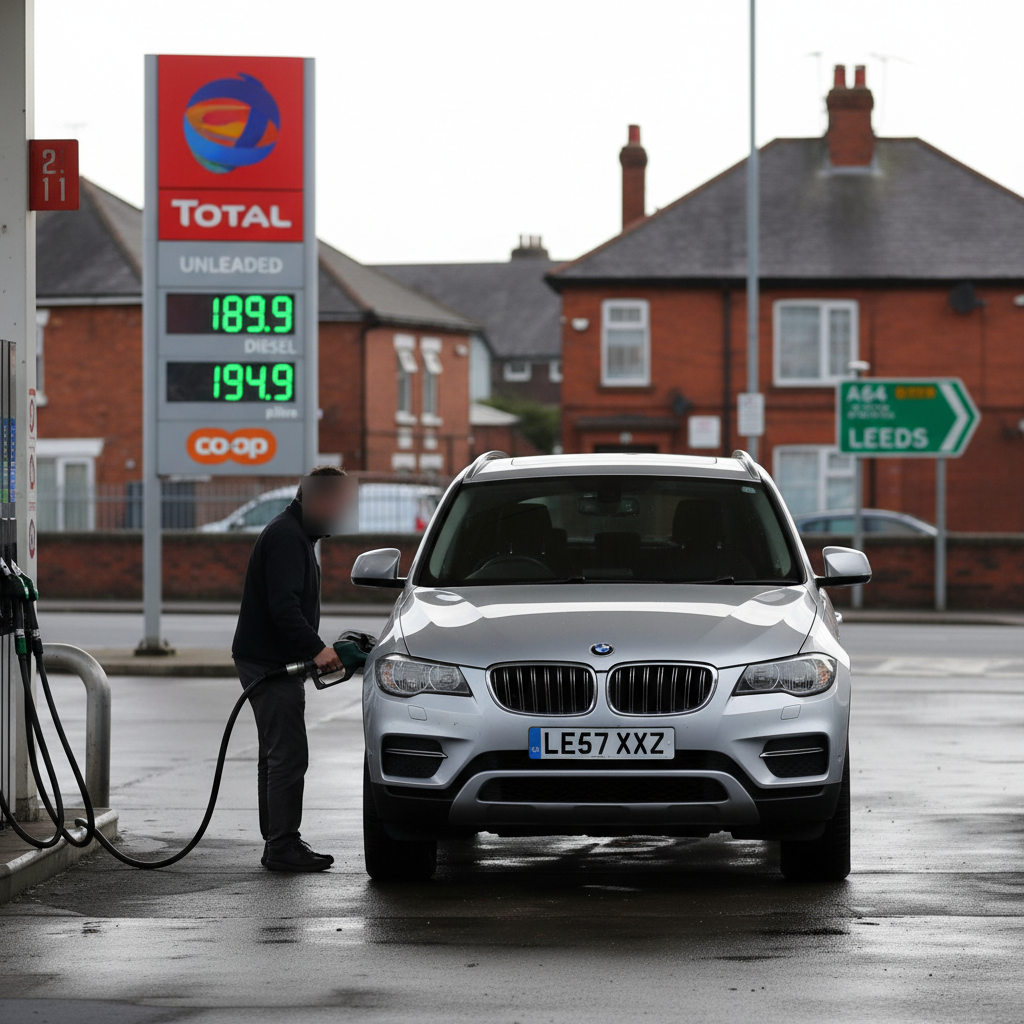
When you hear that the average price of unleaded petrol in the UK has settled at 177.08p, your natural instinct might be to feel a sense of stability. Don't fall for it. Behind this single, seemingly calm national average lies a highly volatile, deeply polarized market that is actively penalising drivers who rely on brand loyalty.
Our latest analysis of 500 filling stations across the country reveals that the national average is a statistical mirage. In reality, the market has split into two extremes: a hyper-aggressive budget tier quietly offering genuine bargains, and a corporate high-ground where prices are being held artificially close to motorway rates. If you are simply pulling into your local station assuming you are paying a fair "average" price, you could be losing up to £34 every single time you fill up.
The 63p Chasm: Anatomy of a Fractured Market
The headline figure from today's pump data is the staggering 63p-per-litre spread between the cheapest and dearest unleaded petrol in the UK. At the bottom end of the scale, agile independent networks are offering fuel at a wallet-friendly 136.90p. At the top end, premium motorway sites are pushing right up to the 199.90p mark.
To put that into perspective for a typical family hatchback with a 55-litre tank:
- A fill-up at the UK minimum (136.90p) costs £75.30.
- A fill-up at the UK maximum (199.90p) costs £109.95.
- The penalty for choosing the wrong pump is a whopping £34.65.
But the real story isn't just about the motorway extreme. It’s about who is dragging the national average up—and who is pulling it down to earth.
The Disruptors vs. The Corporate Comfort Zone
The data shows a fascinating divergence among major retailers. Leading the charge for budget-conscious motorists is Karan Retail, averaging an astonishingly low 142.53p across 42 sites. That is more than 34p below the national average, proving that lower operational costs can be passed directly to the consumer when a retailer chooses to compete on price.
Even larger independent networks like JET (166.81p average) and Motor Fuel Group (167.88p average) are comfortably undercutting the national average, offering highly competitive pricing for savvy drivers who know where to look.
The real shock, however, lies in the corporate comfort zone. Tesco, traditionally seen by many working-class families as a safe haven for weekly savings, is averaging a massive 186.55p across the 100 stations tracked. That is 44p per litre dearer than Karan Retail. Paying an extra £24 per tank just for the convenience of a supermarket forecourt is no longer a minor convenience tax—it is a major drain on household budgets.
Today's Fuel Price Landscape
| Retailer | Average Unleaded Price (p/litre) | Market Positioning |
|---|---|---|
| Karan Retail | 142.53p | Ultra-Budget Champion |
| JET | 166.81p | Competitive Independent |
| Motor Fuel Group (MFG) | 167.88p | Mid-Market Value |
| SGN | 170.67p | Mid-Market Standard |
| Tesco | 186.55p | Premium Supermarket |
| Rontec | 190.15p | High-Street Premium |
| Moto | 195.62p | Motorway Service Area |
Why Are We Paying a 'Loyalty Tax'?
According to fuel market analysts at the Competition and Markets Authority (CMA), historic supermarket pricing structures have fundamentally shifted. Where supermarkets once used cheap fuel as a loss-leader to get shoppers through the doors, many have pivoted to using fuel margins to bolster overall balance sheets.
By contrast, agile regional champions and independent operators buy fuel on highly dynamic wholesale schedules, allowing them to rapidly pass wholesale drops on to motorists to steal market share. The result is a two-track recovery where legacy giants hold prices high for as long as possible, while nimbler brands dive to the bottom.
Key Takeaways for Savvy Drivers
- Ignore the 'Average': Treat the 177.08p national average as a worst-case benchmark, not a fair price. Your target should be under 165p.
- Ditch Supermarket Loyalty: Tesco's average of 186.55p means blindly filling up during the weekly shop is costing you up to £24 more per tank than local independents.
- Seek Out Local Champions: Look for regional players like Karan Retail (142.53p average) and JET (166.81p) to secure the best pump bargains.
- Plan Your Route: Avoid high-street premium operators like Rontec (190.15p) which are currently priced uncomfortably close to motorway services.
The Verdict: Play the Field to Protect Your Pocket
The era of the predictable, uniform pump price is officially over. Today’s fuel market rewards the active, cynical shopper and punishes the loyal, passive driver.
If you want to keep your hard-earned money in your wallet rather than handing it over to legacy corporate giants, you must change your driving habits. Take five minutes before you set off to map out independent stations along your commute. Bypass the supermarkets, ignore the household-name convenience forecourts, and actively seek out regional champions. In today's economy, actionable data is your best weapon against rising costs.