

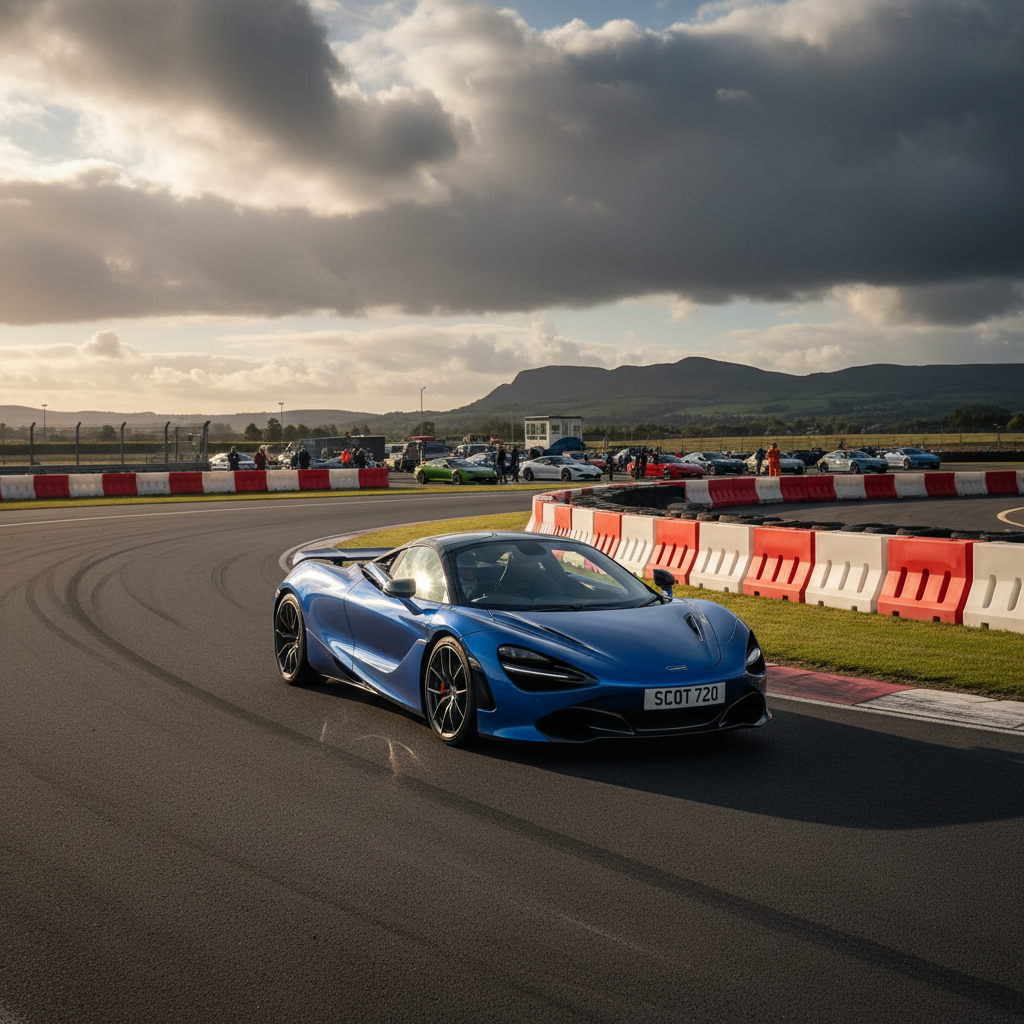
Picture this: you are hurtling towards the tightest apex at your favourite circuit. You trail the brakes, turn the wheel, and prepare for the nose of the car to push wide under the immense force of physics. But instead of understeer, an invisible hand grabs the chassis and rotates it perfectly onto your line. It feels incredibly fast, almost supernatural. What you are experiencing is modern torque vectoring—the ultimate digital band-aid for the heavy, modern performance car.
But here is the question that keeps me awake at night: does this digital trickery actually make you smile, or does it just make you feel like a passenger in a very fast video game?
The Illusion of Agility: The Torque Vectoring Dilemma
In a fascinating piece by Autocar exploring whether torque vectoring actually makes EVs more fun to drive, the publication highlighted how electric motors have opened up wild new possibilities for agility. Because an electric motor can react in milliseconds, engineers can overspeed the outside wheels in a corner to force the car to yaw. On paper, it is a revelation. It makes a 2.2-tonne electric GT feel punchy, responsive, and utterly planted. The cornering speeds are ballistic, and the outright grip limits are staggering.
But when you peel back the layers of code, the reality is far less romantic. True driving engagement is a dialogue between the driver, the steering rack, and the contact patch of the tyres. When a central ECU is making ten thousand micro-calculations a second to mask the vehicle's true mass, that dialogue is severed. You aren’t managing the weight transfer with your inputs; the software is doing it for you. It is incredibly effective, but it can feel synthetic—like playing a simulation rather than wrestling with physics on a cold, damp British B-road.
Honda's Counter-Revolution: Putting Smiles First
Thankfully, there is another way. In stark contrast to the heavy, high-tech arms race, some manufacturers are remembering that driving pleasure comes from simplicity. According to recent reports from Autocar, Honda is actively betting on "quirky" and unique new cars designed specifically to "put smiles on faces" as they seek to recapture the hearts of enthusiasts.
Look no further than the stunning Honda Prelude Concept, which made a silent but highly significant dynamic debut at the Goodwood Festival of Speed under the Honda Racing Corporation (HRC) banner. The Prelude doesn't boast a 1,000 bhp quad-motor setup, nor does it rely on heavy batteries and torque-vectoring wizardry to simulate a sporty feel. Instead, it is a sleek, front-drive hybrid coupe focusing on lightweight construction, razor-sharp front-end geometry, and a chassis tuned for organic, predictable, and engaging feedback. It prioritises how the car makes you feel at 50 mph, not just how fast it can go from 0-60 mph.
The Physics of Feel: Mass vs. Math
When you boil it down, no amount of clever software can truly cheat physics. If a car weighs two tonnes, those tyres still have to work incredibly hard to change its direction. A torque-vectoring EV might use its motors to pivot the car, but you still feel that immense mass loading up on the outside suspension. Under heavy braking, or when tackling a sequence of rapid S-bends, that weight eventually makes itself known.
Now compare that to a naturally agile, lightweight setup. When you turn into a corner in a car with a low center of gravity and well-sorted mechanical suspension geometry, the response is immediate and natural. The steering load builds progressively, telling you exactly how much grip you have left. There is a sweet, mechanical harmony in a car that is naturally balanced, and that is a sensation no digital ECU can ever truly replicate.
Key Takeaways for the Petrolhead
- Torque Vectoring Benefits: Delivers supernatural cornering speeds and ballistic grip, making heavy EVs feel shockingly responsive.
- The Drawback: It creates a synthetic barrier between the driver and the road, masking natural weight transfer.
- Honda's New Ethos: Moving away from pure numbers to focus on "quirky", lighter, and emotionally engaging driver's cars like the Prelude HRC.
- The Verdict: True driving thrills come from mechanical balance and lightweight engineering, not clever software overriding physical mass.
The Verdict: What Makes a Real Driver's Car?
If you live for that perfect apex, the choice is clear. Torque vectoring is an engineering marvel, and it is a necessary tool to make heavy, high-voltage EVs tolerable on a track. But it should never be confused with genuine mechanical soul.
Honda’s return to quirky, smile-inducing sports cars proves that the industry is beginning to realise what we purists have known all along: speed is nothing without feel. Give me a punchy, lighter, naturally balanced sports car over a heavy, digitally managed rocket ship any day of the week. After all, the best drives are the ones where you are doing the driving—not the computer. Perhaps this is why many enthusiasts still champion the analogue antidote found in cars with less digital intervention.