

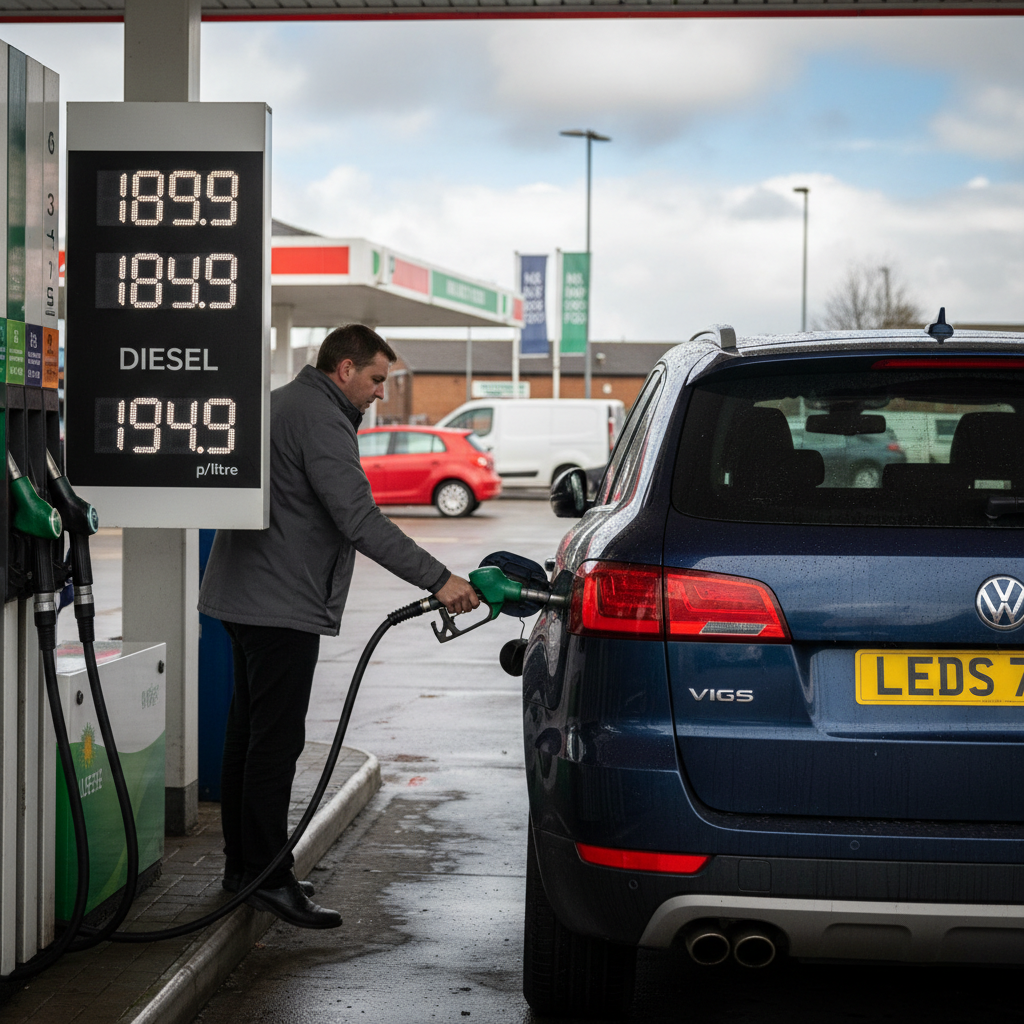
Imagine standing at a forecourt, watching the pence counter spin on the pump, knowing that another driver just a short journey away is filling the exact same family car for nearly £30 less. This isn’t a hypothetical headache; it is the stark reality of today’s highly fractured UK fuel market.
Our latest exclusive analysis of 500 fuel stations across the country reveals a market operating at two completely different speeds. While the national average for standard unleaded petrol sits at an uncomfortable 176.65p per litre, a quiet revolution is happening at the bottom end of the pricing spectrum. Agile regional retailers are aggressively undercutting corporate giants, creating a staggering 63p-per-litre chasm between the cheapest and dearest pumps in the country.
The New Fuel Hierarchy: Winners and Losers
For decades, British motorists have been conditioned to believe that the path to a bargain lay either at the supermarket forecourt or through massive national chains. Today’s data completely dismantles that assumption. Instead, we are seeing the emergence of highly competitive regional networks that are actively shielding cash-strapped motorists from inflated wholesale costs.
Leading the charge is Karan Retail. Across their stations, they are offering an astonishing average price of just 142.53p per litre. To put that into perspective, that is more than 34p cheaper than the national average, and only a fraction above the absolute rock-bottom price of 136.90p recorded in our dataset.
In contrast, the middle of the market is held by independent networks like JET (166.81p), Motor Fuel Group (167.76p), and SGN (168.64p). While these brands offer relatively competitive pricing compared to the national average, they are still being comfortably outperformed by the ultra-budget regional operators.
The real shock for savvy drivers, however, lies at the top end of the scale. Traditional supermarket powerhouse Tesco is averaging a hefty 186.55p per litre—meaning drivers are paying a premium of over 44p per litre compared to fuel from regional discounters. Meanwhile, corporate giant Rontec averages 190.15p, and motorway operator Moto stretches wallets to the limit with a painful average of 195.62p per litre, pushing perilously close to the absolute maximum recorded price of 199.90p.
Today's Fuel Price Landscape: How Brands Compare
The table below outlines the average prices across major fuel retailers, based on our analysis of today's live pump data. It highlights the massive divergence in pricing strategies currently active on UK roads.
| Retailer / Network | Average Unleaded Price (p) | Cost to Fill a 55L Tank (£) | Difference vs. Lowest Average (£) |
|---|---|---|---|
| Karan Retail | 142.53p | £78.39 | - |
| JET | 166.81p | £91.75 | +£13.36 |
| Motor Fuel Group | 167.76p | £92.27 | +£13.88 |
| SGN | 168.64p | £92.75 | +£14.36 |
| Tesco | 186.55p | £102.60 | +£24.21 |
| Rontec | 190.15p | £104.58 | +£26.19 |
| Moto | 195.62p | £107.59 | +£29.20 |
The Math That Matters to Your Wallet
To understand the real-world impact on working-class household budgets, we have to look past the pence-per-litre figures and calculate the actual cost at the till.
If you drive a standard family hatchback with a 55-litre fuel tank, a fill-up at a Karan Retail station will cost you £78.39. Opting for a standard supermarket run at Tesco instead will set you back £102.60—representing an extra £24.21 out of your pocket for the exact same journey.
If you are unfortunate enough to have to fill up at a motorway service station run by Moto, that same tank will cost you £107.59. That is a jaw-dropping £29.20 difference for one single tank of fuel. Over a year of twice-monthly fill-ups, avoiding the high-cost chains in favour of regional discounters could easily save a household over £700.
Why is the Market Splitting?
According to fuel market analysts, this extreme divergence is driven by differing corporate objectives and overhead structures. Smaller, regional independent operators often run incredibly lean business models. They can buy fuel dynamically on the spot market, passing wholesale savings directly to the consumer within hours to drive high footfall into their forecourt convenience stores.
Larger, national chains operate on much longer procurement cycles. Furthermore, many major grocery retailers have shifted their business models, choosing to absorb lower margins on food and drink by inflating their fuel margins. They rely on the convenience factor, betting that busy families won't bother to check local independent prices before pulling in.
Key Takeaways for Savvy Drivers
- Ditch brand loyalty: The assumption that supermarkets or major national brands are always the cheapest option is officially dead.
- Track down regional heroes: Look out for local independent networks like Karan Retail, which are currently offering the most wallet-friendly prices.
- Avoid the motorway trap: Motorway service stations are charging up to £29 more per tank. Always fuel up before you hit the motorway network.
- Do the maths: A 10p price difference saves you £5.50 on a standard tank. If a cheaper station is within a three-mile radius, it is almost always worth the detour.
The Verdict
Today’s live data delivers an actionable, clear message to drivers: the UK fuel market is no longer uniform. We can no longer afford to pull into the nearest familiar corporate forecourt out of habit. By actively seeking out regional independent discounters and shunning overpriced national chains, everyday drivers hold the power to reclaim control of their driving costs, keeping hard-earned money exactly where it belongs—in their pocket.
For more insights into how grocery giants lost their fuel price crown to local heroes, explore how regional independent networks are defying the fuel giants, and understand why your weekly shop is no longer the cheapest place to fuel up.