

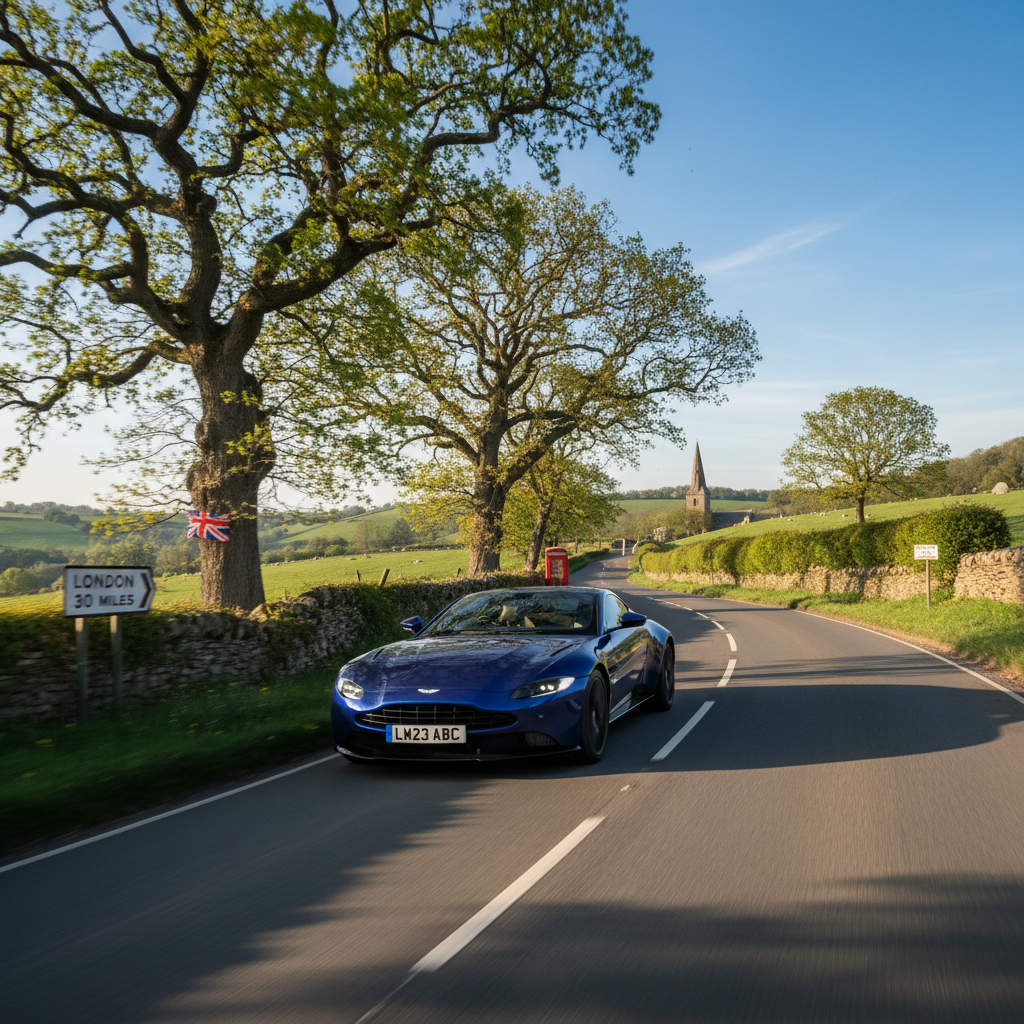
If you live for that perfect apex, you know the exact millisecond where physics, rubber, and tarmac strike a fragile, beautiful balance. It is a moment of pure intuition. You feel the steering wheel go light in your palms as the front tyres hunt for grip, your right foot modulating the throttle with micrometer precision. But to dance on this ragged edge, you need one crucial thing: absolute, unshakeable predictability from your machine.
Lately, however, the motoring world has been obsessed with making cars "smarter." From self-learning engine maps in motorsport to hyper-complex torque-vectoring algorithms on the road, our cars are doing more thinking than ever before. But as a performance editor who worships at the altar of driving dynamics, I have to ask: is this digital evolution actually robbing us of the connection that makes driving worth living for?
The Ghost in the Motorsport Machine
If you want to see where road car tech is heading in five years, look at Formula 1. And right now, the view is concerning. According to a recent report by Autosport, top-tier Grand Prix drivers have raised serious concerns over the rise of "self-learning" power units. McLaren team boss Andrea Stella admitted that the algorithmic complexity of modern powertrains has become so dense that even the engineers are left scratching their heads during debriefs.
When an engine’s ECU is constantly re-optimising energy deployment on the fly, the driver loses that direct, linear relationship between their right foot and the rear axle. It makes finding a consistent rhythm nearly impossible. We saw the high-stakes consequences of a confidence mismatch at the Belgian Grand Prix, where Lewis Hamilton took "full responsibility" for a high-speed FP3 crash at Turn 13, as reported by Autosport. When a car’s limit is a moving target controlled by software, even a seven-time World Champion can get caught out.
We are seeing this play out in driver dynamics, too. Autosport recently analysed why upcoming F1 regulations and complex power delivery profiles seem to suit young gun Kimi Antonelli’s highly adaptable, instinctual driving style over George Russell’s more structured, analytical approach. On two wheels, the story is the same; MotoGP champion Francesco Bagnaia has spent his season vocally battling a lack of predictable rear grip on his Ducati, proving that without a trustworthy connection to the asphalt, raw horsepower is useless.
From the Grid to the High Street
This battle for driver connection isn't just happening in the pitlane; it is raging on our local B-roads. Consider the new Vauxhall Mokka GSe. Reviewed recently by Autocar, this warm electric crossover represents Vauxhall’s attempt to resurrect the blue-collar, white-knuckle spirit of its iconic VXR performance sub-brand for the electric era.
On paper, the GSe formula looks punchy enough for an urban runabout, sending 154bhp and 192lb ft of instant electric torque to the front wheels. But at £40,000-plus, a performance car needs to be more than just a quick commuter. It needs to be engaging. While Vauxhall has lowered the ride height and retuned the dampers for a more planted stance, the digital calibration of its electric motor means the power delivery can feel sterilised. It lacks that raw, mechanical honesty of a classic petrol hot hatch.
When you chuck a great hot hatch into a bend, you want the front end to feel razor-sharp and responsive. You want to feel the weight transfer through the chassis. If the steering is heavily artificial and the traction control is micro-managing the electric motor's torque output to protect the tyres, the driver is relegated to a mere spectator. It’s the difference between playing a simulation and living the real thing.
Why Simple Mechanical Grip Still Wins
The best performance cars don't try to outsmart you. They work with you. A perfectly tuned mechanical setup—think MacPherson struts up front, a beautifully progressive limited-slip differential, and passive, well-valved dampers—will always deliver a more rewarding drive than a heavy chassis propped up by active anti-roll bars and self-learning lines of code.
We don't need cars that think for us. We need cars that communicate with us. Whether you are hunting tenths of a second on a track day or just taking the long way home on a wet Tuesday night, the ultimate driver's aid isn't artificial intelligence—it is absolute predictability. Pure Magic vs. Silent Might: Why the Soul of Driving Has Never Been More Under Siege is a question that applies to the changing landscape of modern performance.
Key Takeaways
- The F1 Warning: Self-learning engine maps are causing unpredictability for world-class drivers, proving that more data doesn't always equal better performance.
- Instinct Over Algorithms: Drivers like Kimi Antonelli show that adaptability is key when dealing with highly digitised, complex modern racing machinery.
- The Road Car Challenge: EVs like the Vauxhall Mokka GSe offer punchy off-the-line pace but struggle to replicate the raw, mechanical connection of classic combustion heroes.
- The Golden Rule: True driving dynamics rely on consistent, linear feedback—something that software-heavy setups often sanitise.
The Verdict
Technology has made modern cars undeniably faster, safer, and more efficient. But as we transition into an era dominated by electric powertrains and self-learning software, manufacturers must not forget the human element. The most memorable drives of our lives aren't the ones where the car did the work; they are the ones where we got it perfectly right ourselves. Let's keep the driver in charge of the computer, not the other way around.