

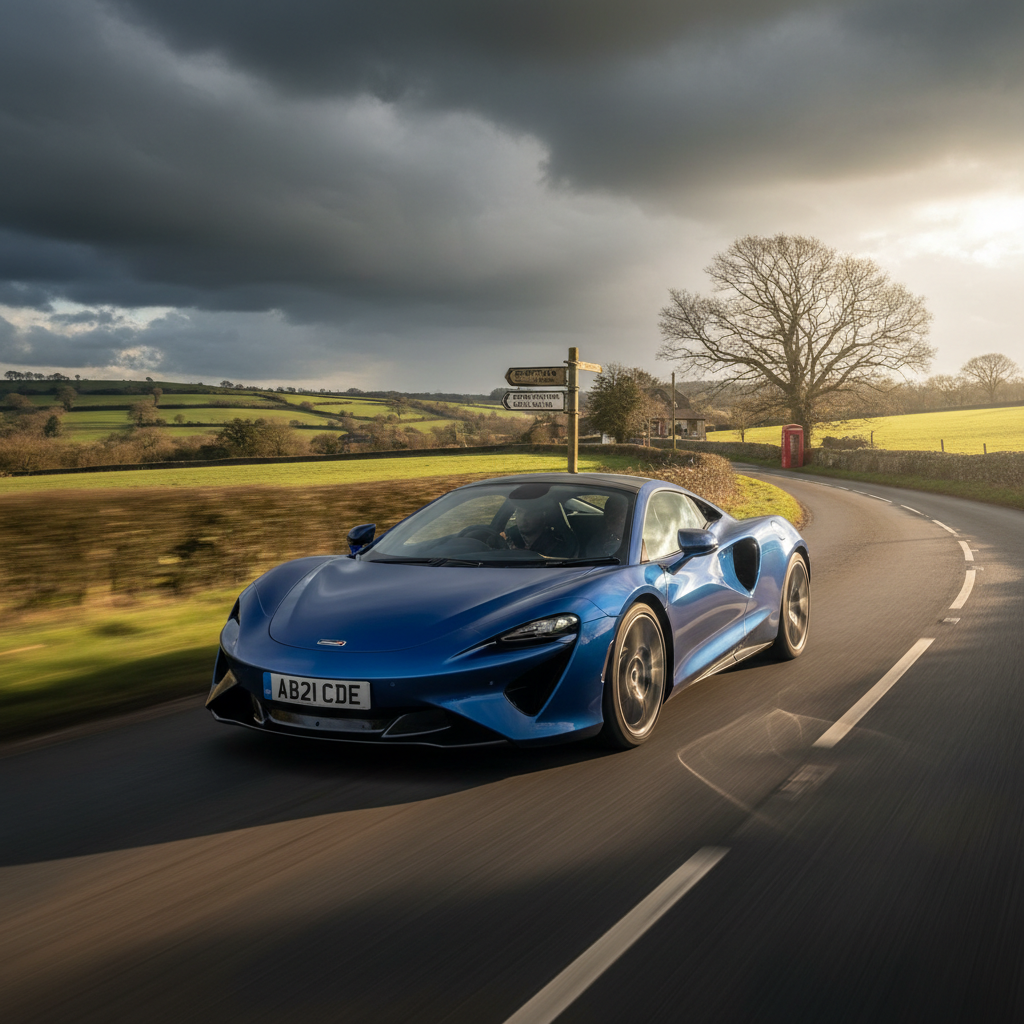
Picture this: you are cresting a blind brow at 120mph, the car’s weight floating for a heart-stopping second before gravity slams it back onto the earth. In that split second, your trust isn't in horsepower; it’s entirely in the kinematic genius of your suspension. That is the crucible of Findland’s legendary gravel stages, and it is where the boundaries of modern driving dynamics are being pushed to their absolute limits.
As enthusiasts, we live for that perfect apex. But we are also living in a challenging era. Cars are getting heavier, batteries are adding bulk, and SUVs are dominating the market. Yet, behind the scenes, a quiet revolution in chassis tuning, active roll control, and damper technology is keeping the soul of performance driving alive. From the high-speed gravel-spitting rally stages to ultra-luxury electric cruisers, the pursuit of a planted, communicative chassis has never been more competitive.
The Rally Cruicible: Finding Grip on the Infinite Edge
Take a look at the World Rally Championship. As reported by Autosport, Hyundai has been using its permanent test base in Finland to unlock the true potential of the i20 Rally1 car. Fast gravel is the ultimate litmus test for a car’s dampers and high-speed stability. When you are throwing a 500bhp hybrid rally car sideways between pine trees, the power delivery must be punchy yet perfectly metered, and the steering must be razor-sharp.
Hyundai’s secret weapon isn't just raw grunt; it is the meticulous tuning of their mechanical differentials and suspension travel to cope with massive vertical compressions. Capturing that level of composure is what separates a sterile, fast car from a truly engaging driver’s tool. It’s about how the car communicates through your backside, telling you exactly how much tyre contact patch you have left to play with.
The Trickle-Down Effect: From Le Mans to the Luxury Elite
This obsession with chassis compliance under pressure isn't restricted to rally stages. Over in the World Endurance Championship, Autosport reports that Ferrari and Peugeot are already testing updated hypercars for the 2027 season, focusing heavily on aerodynamic balance and mechanical grip. Why? Because a race car that is easy to drive at the limit for 24 hours is a winning race car.
And that bring us to the road. How do you translate this obsessive pursuit of vehicle dynamics into something you can actually buy? Look no further than the revised Rolls-Royce Spectre Series II. As highlighted by Autocar, this is a nearly three-tonne, 577bhp electric behemoth. On paper, a car of this mass shouldn't be able to corner without looking untidy. Yet, thanks to a highly sophisticated planar suspension system that decouples the anti-roll bars in a straight line and couples them under cornering, it defies physics.
The Spectre sprint to 60mph in just 4.4 seconds is ballistic, but the real magic is how responsive and flat it remains through the bends. It proves that even in the electric era, engineering can conquer weight.
High-Riders and Off-Road Ambitions
We are even seeing this chassis-first philosophy seep into the SUV market. Audi has recently revealed the mammoth Q9, a £100,000, high-status luxury SUV designed to rival the BMW X7, as reported by Autocar. While some may scoff at giant SUVs, the engineering underneath—featuring adaptive air suspension and rear-wheel steering—is designed to make these giants shrink around the driver on a twisting road.
Similarly, Mini is expanding its lineup with a rugged new Countryman variant complete with off-road chops and a roof tent. It’s a nod to the growing lifestyle accessory market, but Mini knows that if the car doesn't retain that signature go-kart feel on the asphalt, the badge means nothing.
Key Takeaways: The Evolution of Grip
- Chassis is King: Horsepower is nothing without compliance. Hyundai’s WRC success in Finland proves that dampening and suspension geometry are key to driver confidence.
- Weight Defiance: Heavy EVs like the Rolls-Royce Spectre Series II use active anti-roll tech to deliver a flat, engaging ride despite carrying substantial battery mass (0-60mph in 4.4s).
- Race to Road: Ferrari and Peugeot's proactive WEC hypercar testing for 2027 proves that optimizing tyre contact patches remains the holy grail of performance.
- Everyday Appeal: From rugged Minis to massive £100k Audi SUVs, manufacturers are relying on advanced chassis software to keep heavy vehicles feeling agile.
The Verdict: A Golden Era of Dynamics
Purists often lament the death of the lightweight sports car, but what we are witnessing right now is an engineering golden age. Whether it is a Dallara-designed IndyCar chassis preparing for its 2028 overhaul, or a luxury EV sweeping down a British B-road, the focus has shifted firmly back to how a car handles.
If you live for the thrill of driving, do not despair. The hardware is changing, but the pursuit of that perfect, connected, and thrilling driving experience is healthier than ever.
This shift emphasizes that numbers versus nuance in chassis tuning are paramount, especially when considering the intricate balance of modern vehicle dynamics. The pursuit of an endangered all-weather weapon, a truly democratic performance car, continues to evolve beyond raw horsepower figures. This ongoing evolution means that even with the rise of electric vehicles and sophisticated software, the core elements of driver engagement and vehicle feel are more critical than ever. The lessons learned from the track, such as what Thruxton and the Hungaroring teach us about pure driving dynamics, continue to influence the development of road cars, ensuring that the passion for driving endures.