

When we talk about the environmental credentials of electric vehicles, we usually point straight to the tailpipe. Zero emissions? Tick. Cleaner urban air? Absolutely. But as an EV specialist, I am always looking for the next frontier in green motoring. The elephant in the room has always been manufacturing: how do we build the cars themselves without costing the Earth?
The answer is unfolding right now in the world of high-performance engineering. We are witnessing a quiet shift where hypercars are behaving less like traditional machines and more like living organisms. By fusing biomimicry, volcanic minerals, and advanced 3D-printing, pioneering engineers are rewriting the rulebook on how future passenger EVs will be designed, manufactured, and recycled.
The Volcano and the Seawater: Demolishing Carbon-Heavy Composites
For decades, the automotive industry has relied on carbon fibre to make lightweight, efficient vehicles. The problem? Carbon fibre is incredibly energy-intensive to produce and notoriously difficult to recycle. Frankly, it is an environmental nightmare. Enter the T70S, a radical new track-to-road car highlighted by Ars Technica. This vehicle eschews traditional carbon in favour of a body made from natural flax fibres, volcanic basalt, and a resin cured using seawater.
This isn't just an eccentric science experiment. It is a masterclass in circular engineering. Basalt (essentially solidified volcanic lava) is incredibly abundant, and when spun into fibres, it offers astonishing strength and thermal resistance. By pairing it with natural plant fibres, manufacturers can create body panels that are just as light as carbon fibre but with a fraction of the manufacturing carbon footprint. When the car reaches the end of its life, these organic composites can be broken down far more easily, offering a truly sustainable, future-proof lifecycle.
3D-Printing and the Rise of Biomimicry
At the same time, we are seeing artificial intelligence change how structural components are designed. Consider the Czinger 21C, a hybrid hypercar detailed by Ars Technica. Instead of stamping out metal parts using heavy, energy-guzzling factory presses, Czinger utilizes proprietary AI algorithms to design components that look strikingly organic, resembling animal bones rather than traditional automotive chassis parts.
These parts are then 3D-printed using proprietary metal alloys. Because the AI only places material where structural loads actually demand it, the resulting components are significantly lighter and use far less raw material. For everyday EVs, where reducing weight is the ultimate key to unlocking longer battery range and faster charging, applying this organic 3D-printing technology to mass production could change everything. It means smaller, cheaper batteries could deliver the same range we expect from today’s heavy, resource-intensive packs. I reckon this weight-saving tech is where the real electric revolution will be won.
Connecting the Dots: From Hypercars to Your Driveway
If you're considering making the switch to an electric vehicle, you might wonder how these million-pound tech demonstrators affect you. The truth is, the technology pioneered at the absolute limit always trickles down. We are already seeing luxury brands embrace this new way of thinking. For instance, as reported by Ars Technica, Bentley is currently teasing the 'Torcal', its highly anticipated first EV set to debut in late September, which is expected to champion sustainable luxury materials in a similar vein. Even the micro-mobility sector is getting a premium, eco-friendly shakeup with the Amble One, a luxury street-legal EV buggy designed by former Apple and Audi alumni.
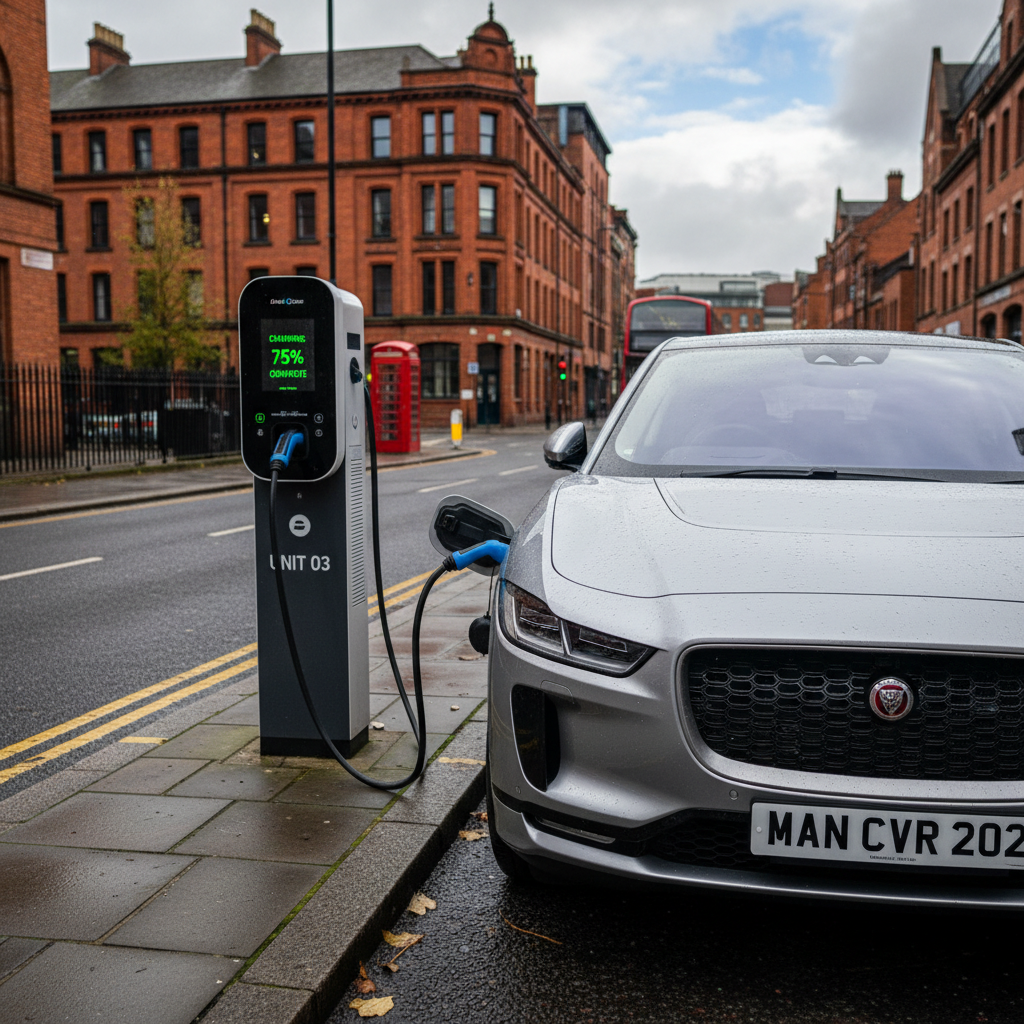
However, the transition to absolute sustainability faces real-world speed bumps. While the tech is ready, our infrastructure and political landscapes are still catching up. A recent report by Barbour ABI highlighted that the UK's EV charging rollout experienced a temporary plateau, largely due to bureaucracy surrounding the LEVI (Local Electric Vehicle Infrastructure) funding and delays in securing crucial substation upgrades from District Network Operators (DNOs). It is a bit of a faff, to put it mildly. Additionally, geopolitical trade barriers, such as the tariffs that impacted the rollout of the Volvo EX30 Cross Country in the US, remind us that global supply chains remain fragile.
Yet, the incentive to push through these teething problems remains overwhelmingly clear. According to a landmark study covered by Ars Technica, if the US alone transitioned to 100% electric vehicles by 2040, it would save more than 100,000 lives, largely by eliminating toxic diesel emissions from heavy-duty trucks and buses. By combining zero-emission powertrains with organic, low-carbon manufacturing methods, the automotive industry won't just be cleaning up our air. It will be actively healing the planet.
Key Takeaways for Future-Facing Drivers
- Volcanic Basalt & Flax: Natural, abundant materials are replacing energy-intensive carbon fibre to create ultra-low-carbon vehicle bodies.
- Organic 3D-Printing: AI-designed, bone-like structures reduce weight, directly translating to better EV range and lower resource consumption.
- Luxury Leading the Charge: Major luxury marques like Bentley are preparing to debut next-generation EVs focused heavily on circular design.
- Infrastructure Bottlenecks: UK charging expansion is shifting from rapid rollout to strategic scale-up as grid connection processes undergo optimization.
The Verdict
The future of sustainable motoring is no longer just about what comes out of the tailpipe. It is about what goes into the factory. By looking to nature, utilizing volcanic stone, and printing components with biological efficiency, the car of tomorrow will be lighter, cleaner, and infinitely more responsible. While grid upgrades and geopolitical policies still need to align, the technical blueprint for a truly green car has never looked more promising.