

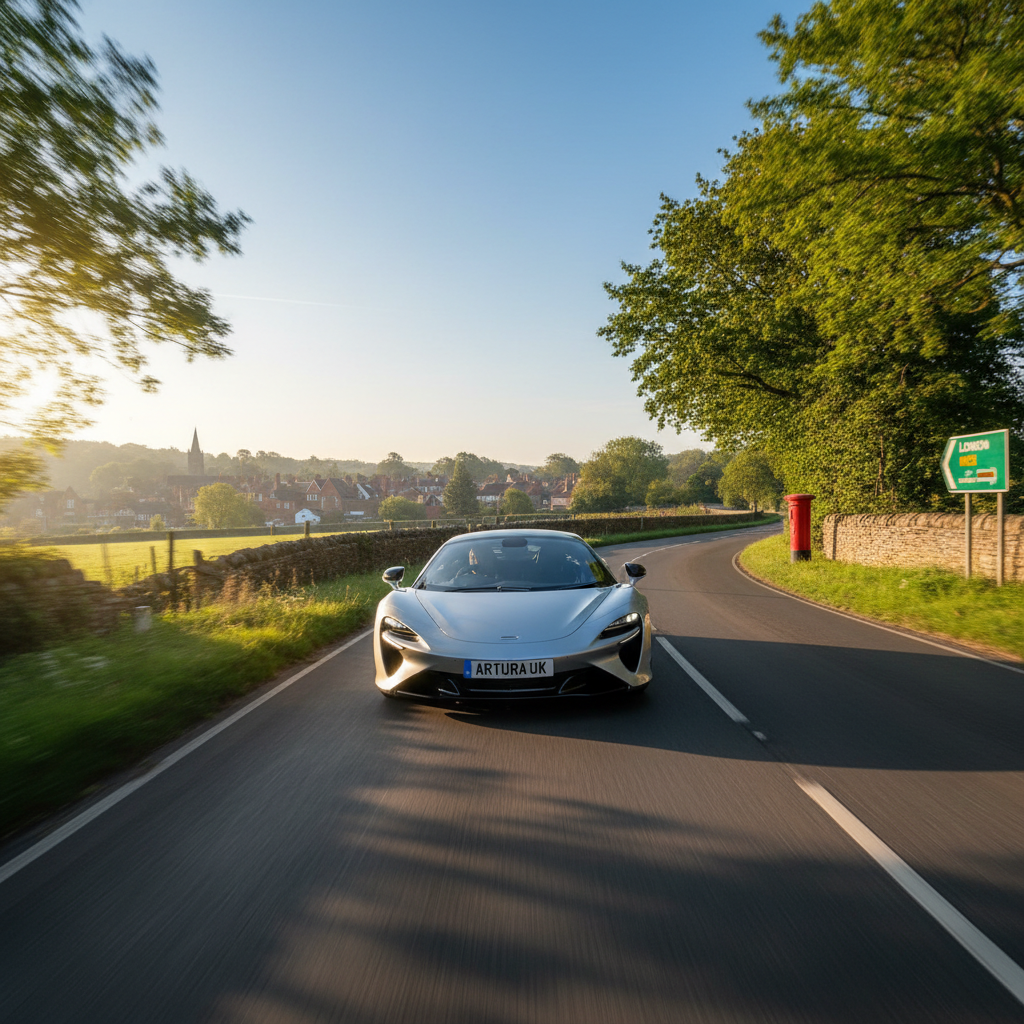
Right, gather 'round, petrolheads! This week, we're staring down a seismic shift, a moment that could redefine what a performance car truly *is*. We're talking about Ferrari, Maranello itself, plunging headfirst into the all-electric supercar arena with the jaw-dropping new Luce. 1036bhp, 536 miles of range, a cool £440k tag – it's a statement, alright. But beyond the eye-watering numbers, what does this mean for the very soul of driving dynamics?
Let's be clear, my obsession has always been with the visceral, the tactile, the unadulterated sensation of a machine responding to your every input. And while the thought of a silent Ferrari might send shivers down some spines (not always in a good way!), the sheer potential for instant, ballistic power delivery in an EV is undeniable. Autocar reports the Luce's staggering power output, and that kind of grunt, delivered without hesitation, can fundamentally alter the way we perceive acceleration and cornering Gs. Imagine a power curve that's less a curve and more a vertical ascent – that's the electric reality.
But power, as we all know, is only one part of the equation. What about the feel? The feedback? That delicate dance between tyre, tarmac, and driver that separates a fast car from a truly engaging one. This is where the engineering wizardry really comes into play. Ferrari, traditionally masters of weight distribution and chassis balance, will have had their work cut out for them managing the heft of a massive battery pack. We're talking sophisticated torque vectoring, advanced suspension geometry, and probably a steering rack so finely tuned it could read your thoughts. Auto Express, in discussing the McLaren 765LT, highlighted the crucial role of hydraulically-assisted power steering for 'transparent and confidence inspiring' feel. If Ferrari can replicate that level of connection in an EV, they'll have pulled off a miracle.
The F1 paddock is buzzing too, with discussions around evolving dynamics. George Russell, as Autosport highlights, is keen on the 2026 F1 rules largely staying put, suggesting a future where adaptable technical regulations can lead to exciting, if sometimes controversial, racing. This mirrors the challenge facing road-car manufacturers: how do you innovate without losing the essence of what makes a car thrilling? Lewis Hamilton, after finding his stride in Canada, as observed by Autosport, even suggested he's 'probably better without' the Ferrari simulator. That's a telling remark – it speaks to the importance of real-world feedback, of pushing the limits not in a virtual space, but on the very edge of adhesion. And that's what we demand from our performance cars. Indeed, finding the raw pursuit of perfection in track-focused machines is redefining driver engagement.
Now, let's not forget our roots. While the Luce stares into the future, the past is never far away. Mallory Park, as celebrated by Autosport for its 70th anniversary, reminds us of racing's enduring appeal, a pure, unadulterated passion for speed and skilled driving. It’s a testament to the fact that while technology marches on, the thrill of a well-driven car, be it a 500cc F3 or a 1000bhp EV, remains timeless. And speaking of timeless, the bespoke artistry of Zagato, as Autocar marvels, reminds us that aesthetic brilliance can elevate engineering to art. We'll be watching closely to see if the Luce's 'rule-breaking silhouette' can capture that same magic. This ongoing evolution, from track triumphs to road rockets, exemplifies the unrelenting quest for driving perfection.
The Ferrari Luce, then, isn't just another electric car; it's a litmus test. Can an EV deliver that unique, soul-stirring Ferrari driving experience that we performance enthusiasts crave? Will it be responsive, planted, and engaging in the way only a Ferrari can be? The numbers are ballistic, but the true measure will be on the track and on the open road. I'm itching to get my hands on it, to discover if this is the electric future we've been dreaming of, or merely a very fast, very expensive appliance. The emergence of such vehicles signals a thrill paradigm shift, where motorsport's adaptability is shaping our next-gen road warriors.
Key Takeaways for the Driven Enthusiast:
- Raw Power, Redefined: The Luce's 1036bhp promises instant, brutal acceleration that will redefine performance metrics.
- Dynamic Engineering Challenge: Ferrari’s ability to manage EV weight and deliver trademark handling will be crucial.
- The Quest for Feel: Can electric steering and advanced systems replicate the nuanced feedback of traditional performance cars?
- A New Era for Maranello: This isn't just an EV; it's a statement about Ferrari's future direction and commitment to driving pleasure.
My verdict? The Ferrari Luce represents a high-stakes gamble. It combines stratospheric performance figures with Maranello's legendary badge. If they've truly imbued this electric beast with the responsiveness and razor-sharp dynamics we demand, then it's not just a car, it's a new benchmark. If not, then it's merely a very powerful, very quiet, very expensive cruiser. The driving dynamics will tell the true story, and I, for one, can't wait to hear it.