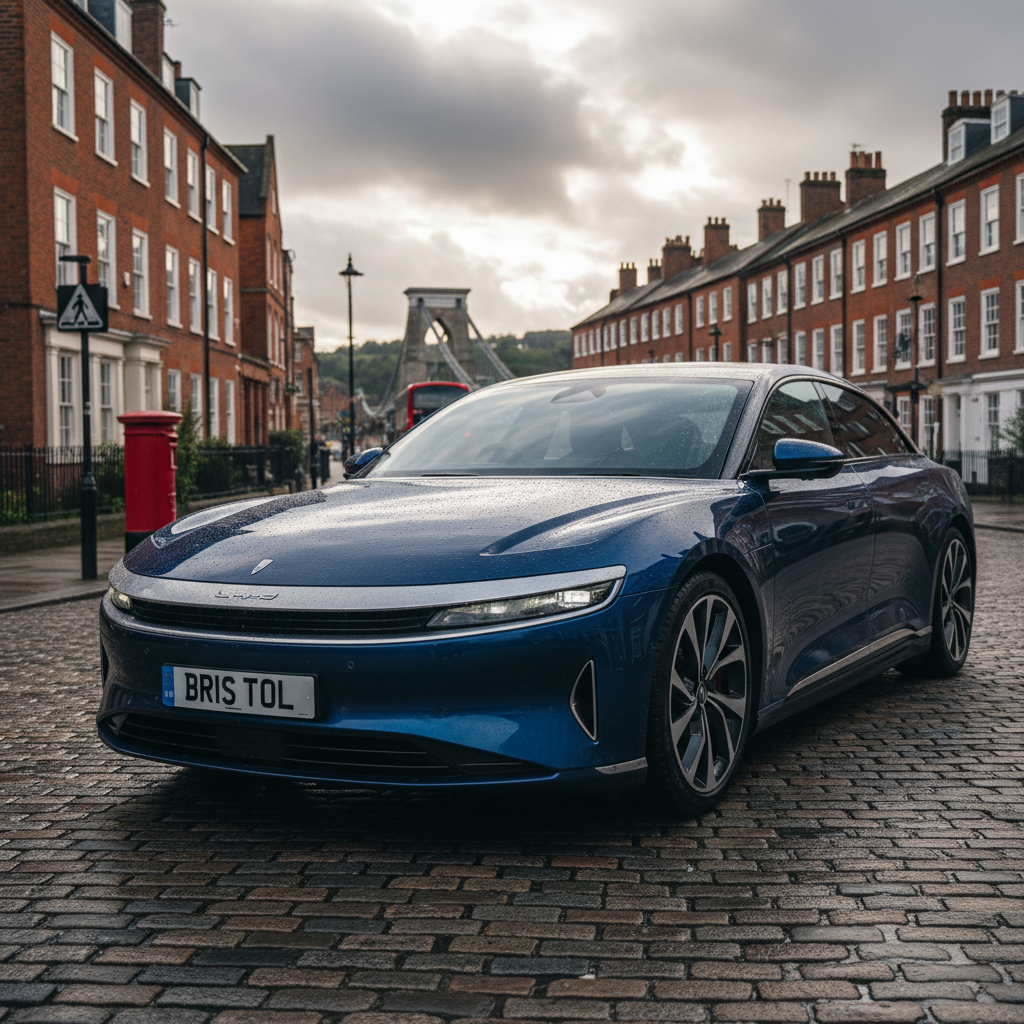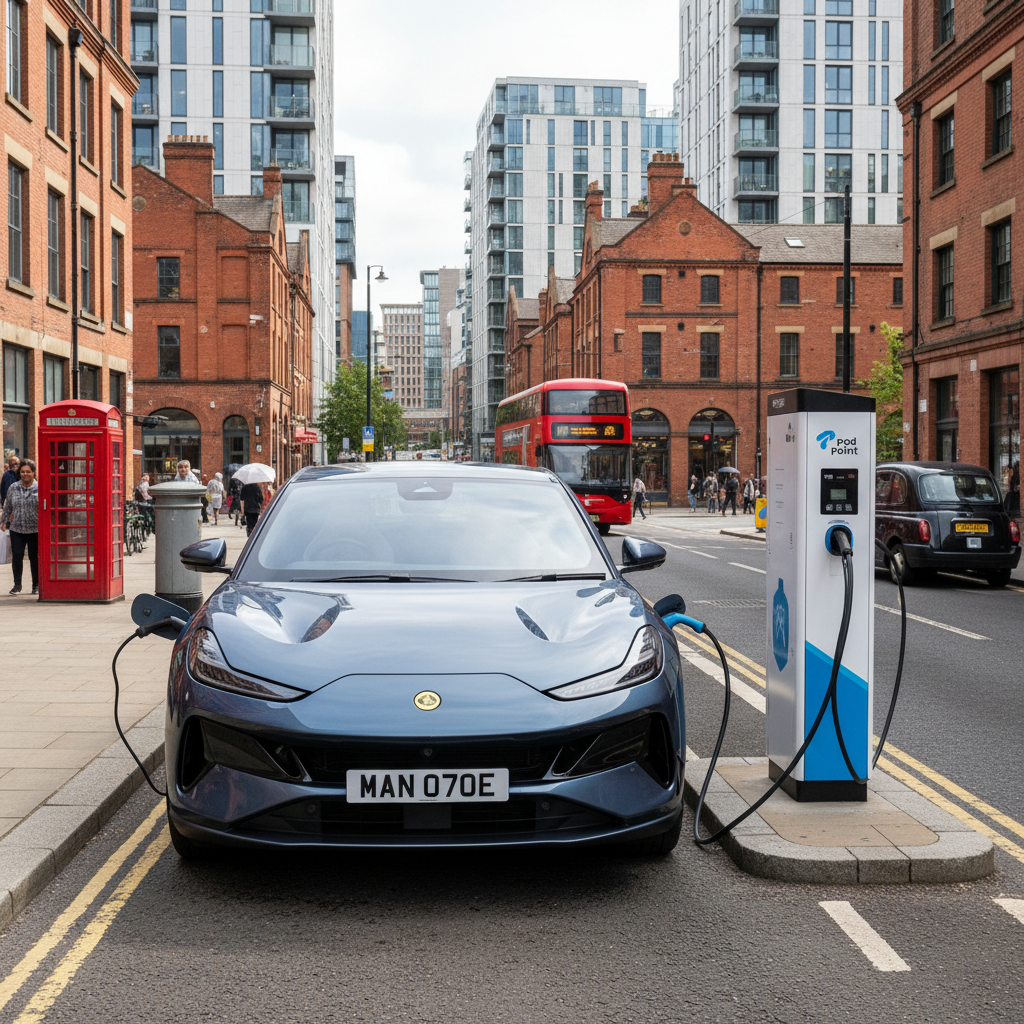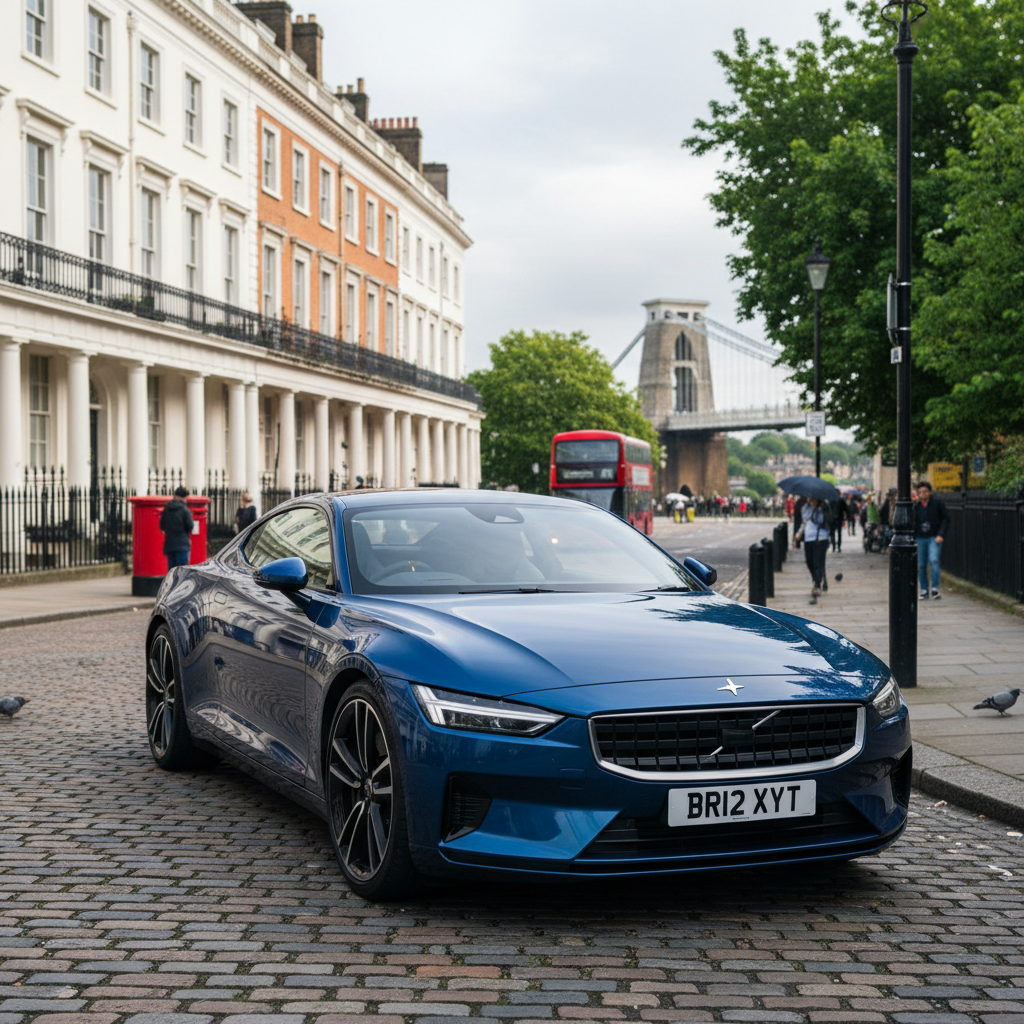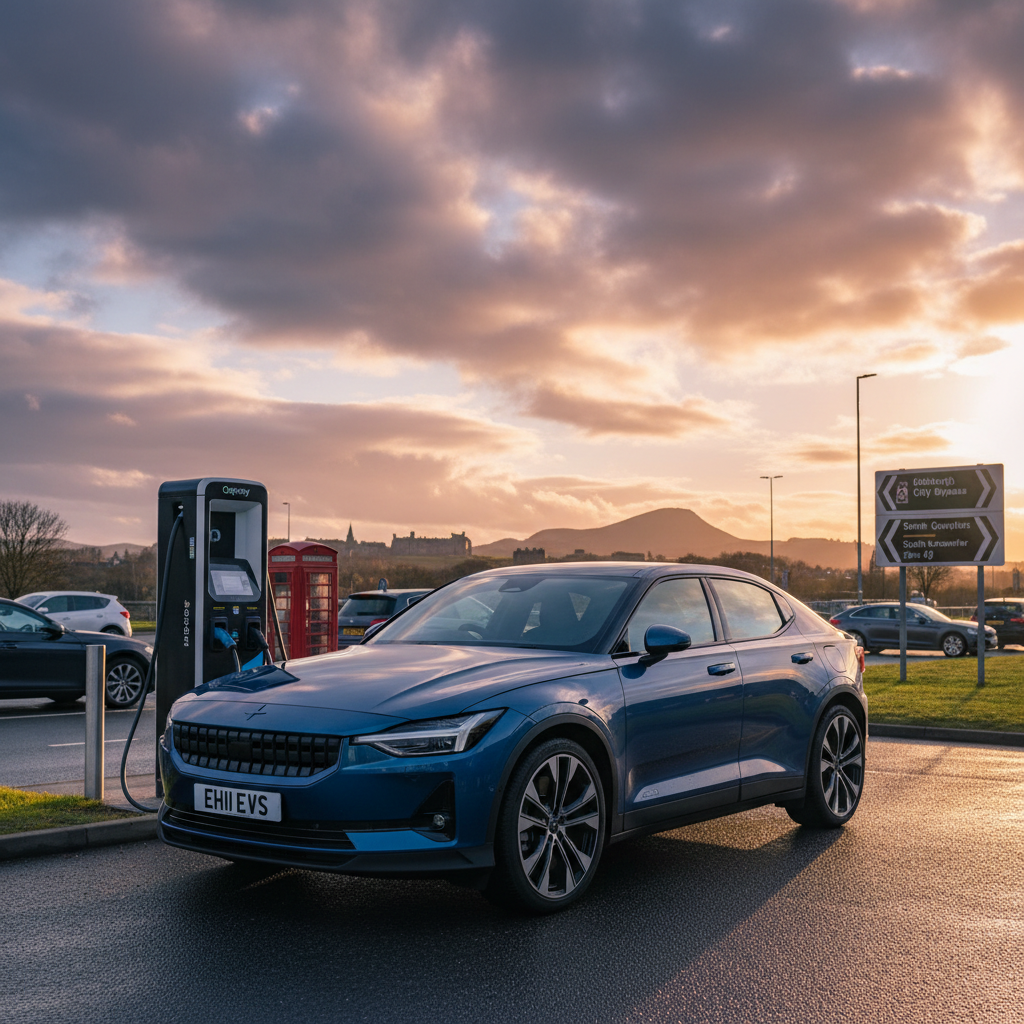



Greetings, fellow motoring enthusiasts! Tom Chen here, and I'm thrilled to pull back the curtain on the rapid-fire innovations defining our journey toward a truly sustainable future on wheels. No longer are we just talking about vehicles; we're talking about entire ecosystems, propelled by exciting tech and underpinned by crucial decisions about power and privacy.
The Intelligent Grid: Powering Our Electric Ambitions
Let's talk infrastructure – the very backbone of our EV revolution. The UK is making significant strides, and it's far beyond just installing more plugs in the ground. We're seeing a strategic, intelligent rollout. For instance, EZO (formerly EasyGo) has just secured a monumental £176 million, 15-year contract to deliver and manage EV charging infrastructure across four Midlands councils, as reported by EV Infrastructure News. This isn't just about volume; it's about reliable, long-term management.
The trend is clear: we're moving towards smarter, more resilient charging solutions. InstaVolt's £2.5 million investment in battery energy storage systems (BESS) at their charging sites, with plans for 20 more, is a game-changer. These systems, as reported by GB News, will help stabilise the grid, protect against rising energy costs, and ultimately pass savings onto drivers. This kind of innovation, alongside ultra-fast chargers delivering 100 miles of range in under 3 minutes at select locations by mid-2026 (The Electric Car Scheme predicts over 5,000 such chargers nationwide), is directly tackling range anxiety and making EV ownership genuinely practical for everyday drivers.
It’s not just about speed, it's about intelligence. Emerging technologies like smart charging systems, ultra-fast chargers, and Vehicle-to-Grid (V2G) solutions are enhancing grid efficiency and reliability, as highlighted by NextMSC. This interconnectedness is crucial for supporting mass EV adoption without overloading our existing power networks.
AI and the Art of Accelerated Innovation
Behind the sleek designs and impressive ranges of today's EVs lies another silent revolution: Artificial Intelligence and Machine Learning. GM, for instance, is dramatically accelerating its development cycle. Ars Technica reports that tasks which once took 15 hours can now be completed in a single minute, thanks to sophisticated CFD (Computational Fluid Dynamics) and FEA (Finite Element Analysis) simulations and digital twins. This isn't just a corporate efficiency gain; it means faster iterations, more robust designs, and ultimately, better and safer electric vehicles reaching us, the consumers, sooner.
Even the high-octane world of Formula 1, as Ars Technica recently detailed, is seeing incredible advancements in reliability and performance, much of which will inevitably cascade into road car technology. Think advanced battery management, sophisticated thermal control, and lightning-fast power delivery – all critical for our next-generation EVs.
And speaking of performance, Audi's move with the 2027 RS5, featuring an entirely new electric torque-vectoring rear differential (Ars Technica), demonstrates how electrified powertrains are enabling unprecedented levels of control and dynamic ability, even in performance PHEVs. Meanwhile, Porsche is pushing boundaries with beasts like their Cayenne Coupe Electric, boasting 1,139 horsepower and 400 kW charging, bringing Formula E tech to the autobahn, according to Ars Technica. These advancements are not just for the elite; they showcase the potential of electrification that will filter down to more accessible models.
The Privacy Paradox: Connected Cars vs. Personal Data
While most of the industry races towards ever-more connected cars, an intriguing counter-narrative is emerging. Slate, for instance, is making waves with their electric pickup, which Ars Technica highlights as the 'antithesis of today's connected cars' by intentionally omitting an embedded modem. Their promise? The Slate Truck will never track you. This raises a fascinating question for the future of motoring: how much data are we willing to exchange for convenience or advanced features?
The debate around connected car data is also intertwined with geopolitical issues, with the US government approving Volvo to bypass a ban on Chinese-connected cars (Ars Technica). This underscores the serious implications of vehicle data beyond just personal privacy, extending to national security and data sovereignty. As EVs become rolling computers, the question of who owns and accesses our data becomes increasingly pertinent for every driver.
The Future is Now: Practicality Meets Performance
If you're considering making the switch to an EV, or upgrading your current one, the landscape has never been more exciting. Battery ranges are now routinely offering almost 300 miles on a single charge for newer models, with the average EV in 2025 achieving around 300 miles on official WLTP tests, as reported by Imperial College London and Zest. This effectively erases much of the long-standing 'range anxiety.' Even Plug-in Hybrids (PHEVs) are proving highly effective, with Toyota reporting encouraging charging statistics (Ars Technica), indicating that drivers are indeed plugging them in more than skeptics once believed, maximising their eco-friendly potential.
The UK government is also playing its part, relaxing some ZEV mandate rules in April 2025 (House of Commons Library) and offering various grant schemes to support new EV chargepoints. While some installation slowdowns occurred in 2025 due to grid connection delays (EV Infrastructure News), local infrastructure funding is set to accelerate again from 2026 and 2027, according to The Guardian, painting a positive picture for accessibility.
KEY TAKEAWAYS FOR DRIVERS:
- Smart Charging Networks: Expect more resilient, cost-effective, and ubiquitous charging thanks to strategic investments and battery storage.
- Faster, Smarter EVs: AI and advanced engineering are dramatically speeding up vehicle development, leading to superior range, performance, and safety.
- The Privacy Question: Be aware of data collection in connected vehicles and consider options like the Slate Truck for a 'no-tracking' EV experience.
- Real-World Practicality: Current EVs and PHEVs offer excellent range and improving charging access, making them viable for a vast majority of drivers.
The road ahead is paved with impressive technological strides. From the seamless integration of our charging infrastructure to the silent, intelligent forces behind EV development, and even the emerging debate on digital privacy in our vehicles, every element is moving us towards a cleaner, more efficient, and undeniably exhilarating motoring future. The green credentials of these advancements are clear: less emissions, smarter energy use, and a genuinely future-proof way to drive.