

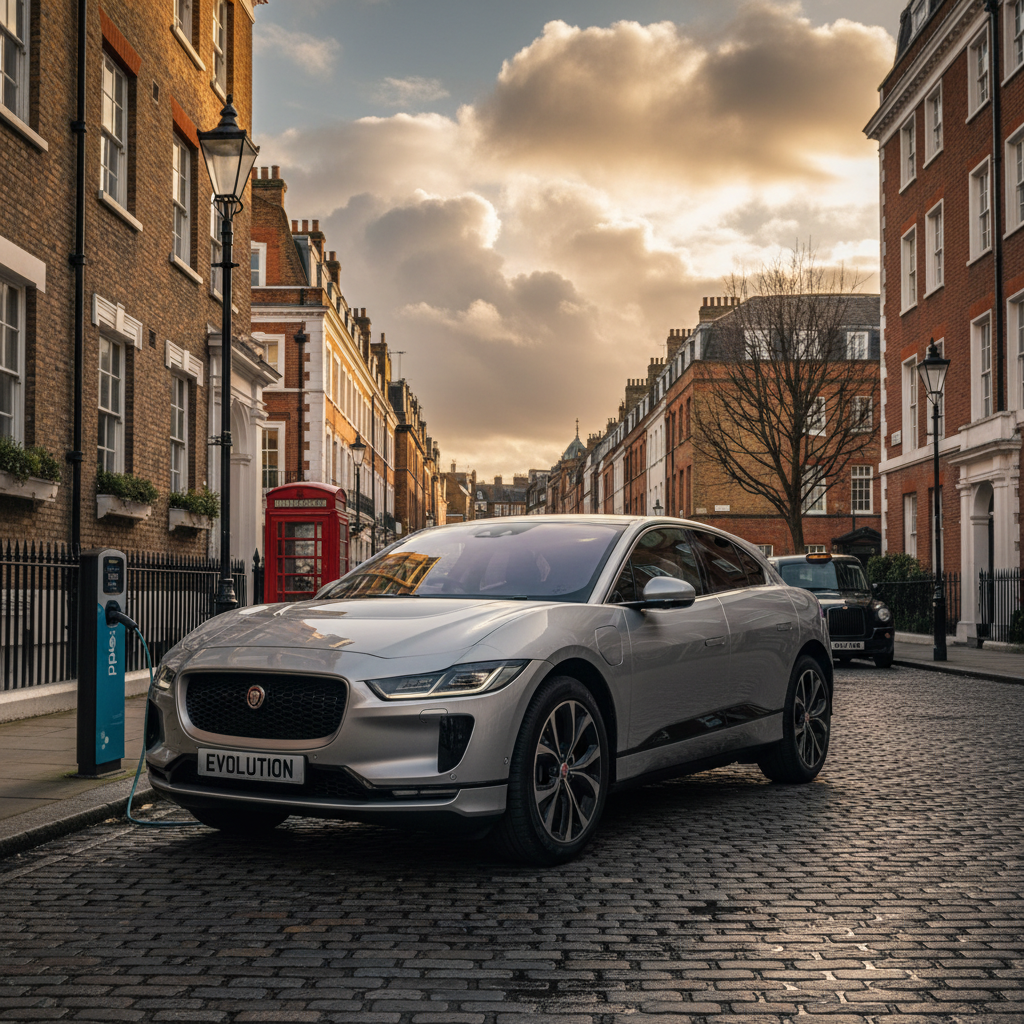
Forget the distant promise of autonomous vehicles and battery breakthroughs; the future of electric motoring isn't just on the horizon, it's unfolding on our roads right now. What truly excites me, as an EV specialist, is how rapidly cutting-edge technology – particularly AI and advanced infrastructure – is converging to make sustainable driving more practical, more efficient, and ultimately, more appealing for everyday Brits.
The Intelligent Grid: AI's Role in Charging Our Future
When we talk about the electrification of transport, battery technology often gets the spotlight, and rightly so. However, the unsung hero increasingly becoming integral to this transition is Artificial Intelligence. It's not just about making cars smarter; it's about making the entire ecosystem work better. For instance, in motorsport, AI is rapidly becoming a new computational fluid dynamics (CFD) tool, demonstrating its capacity to optimise performance in highly complex environments. This kind of AI-driven optimisation isn't confined to the racetrack; it's filtering into how we manage and build our charging infrastructure.
Think about smart charging systems and Vehicle-to-Grid (V2G) solutions. These aren't just buzzwords; they're intelligent systems using AI to predict demand, balance the grid, and even allow your EV to give power back to your home during peak times, turning your car into a mobile power bank. This enhances grid efficiency and reliability, positioning the UK EV charging market for truly sustainable growth. We’re moving beyond just building more charge points to building smarter ones.
Charging Ahead: The UK's Infrastructure Leap
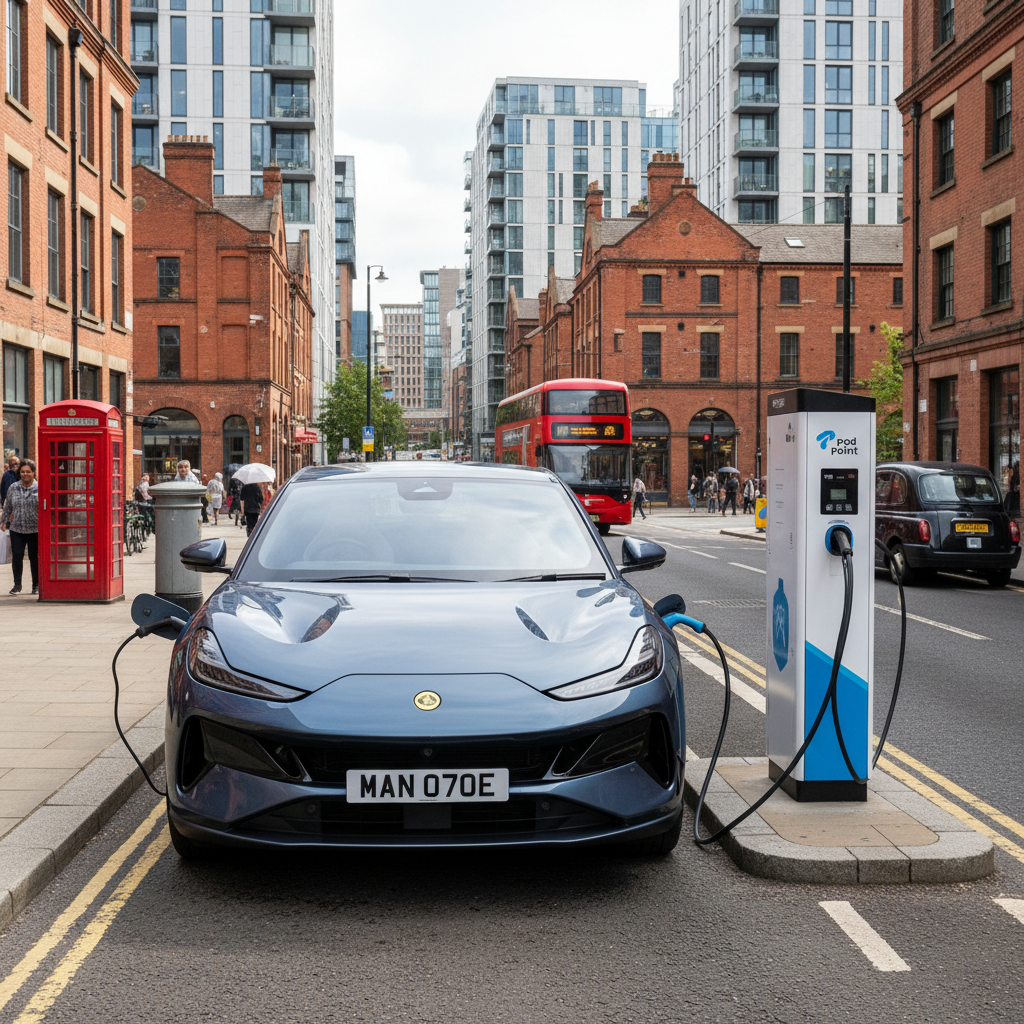
One of the biggest hurdles for potential EV buyers has always been range anxiety and the availability of charging points. But the landscape is shifting dramatically. The UK saw a significant boost in 2025, with 14,097 new EV charge points installed across the country. According to RAC Drive, this brought the total to 119,080 connectors across 46,107 locations, a 12% increase on March 2025 figures. This expansion is critical, especially when considering that the average EV in 2025 achieves around 300 miles on official WLTP tests. More impressive still is the advent of ultra-rapid chargers, with some selective locations offering charging speeds up to 500kW – enough to add 100 miles of range in under 3 minutes, as highlighted by The Electric Car Scheme. This kind of speed fundamentally changes the EV experience, making long journeys far more convenient.
However, it's not all plain sailing. While cities like Bristol have a relatively advanced infrastructure with over 40% rapid chargers, there are still regional disparities. Some areas risk lagging behind without significant investment in volume and wider accessibility, as noted by Fleetnews. The good news is that the government is actively looking at this; in April 2025, they announced a relaxation of some ZEV mandate rules following a consultation, demonstrating a responsiveness to market needs confirmed by the House of Commons Library.
The AI-Driven Car: Beyond the Charge Point
Beyond infrastructure, the vehicles themselves are becoming incredibly intelligent. Take GM's Super Cruise, which has already clocked a billion miles of hands-free, eyes-on driver assist on geofenced highways. While features like Tesla's FSD are still navigating regulatory complexities in Europe, the general trend towards advanced driver assistance systems (ADAS) is undeniable. These systems, powered by sophisticated AI, enhance safety and reduce driver fatigue. We're also seeing companies like Zoox designing robotaxis from the ground up, starting with sensors and building the entire bidirectional vehicle around that core. This 'sensor-first' approach has clear advantages for future mobility solutions.
And let’s not forget the global race. There's a lot of hype around Chinese EVs, and much of it is true. They are pushing boundaries, not just with screens but with AI integration across their vehicle fleets. This global competition is a powerful catalyst for innovation, driving down costs and improving technology for everyone.
Shifting Gears: The Big Picture
If you're considering making the switch to an EV, now is an exciting time. The narrative around EVs is maturing beyond just environmental benefits (though those are paramount). It's increasingly about technological sophistication, convenience, and a genuinely enhanced driving experience. Yes, challenges remain, particularly around consistent infrastructure rollout and grid connection delays. But with smart charging, ever-improving battery technology, and intelligent vehicle systems, the path to a truly sustainable and future-proof motoring landscape is clearer than ever.
Key Takeaways for Future EV Buyers:
- Infrastructure is expanding rapidly: With thousands of new charge points and ultra-rapid speeds, range anxiety is becoming a relic of the past.
- AI is making EVs smarter: From optimising charging to advanced driver assistance, AI is enhancing efficiency and safety.
- Battery tech is pushing boundaries: Expect even longer ranges and faster charging in next-generation vehicles.
- Government support is evolving: Policies are being adapted to accelerate the transition to zero-emission transport.
- The global market is innovating: Competition is driving better, more affordable EVs to the UK market.
The convergence of robust charging infrastructure and intelligent vehicle technology is paving the way for a motoring future that is not just eco-friendly but genuinely cutting-edge and seamlessly integrated into our lives. The UK is on an impressive journey, and I’m genuinely thrilled to see how these advancements will continue to transform our driving experience.