

Decoding the Electric Future: It's More Than Just the Battery
It's easy to get caught up in the headlines about battery breakthroughs and new models hitting the showrooms. But peel back the shiny veneer of the latest electric vehicle (EV) announcements, and you'll find something even more profound: a fundamental rethinking of how cars are designed, driven, and even charged. As an EV specialist with Motoring News, I'm consistently fascinated by the unseen forces and clever technologies shaping our sustainable motoring future. It’s not just about what's under the bonnet, but what’s behind the digital dashboard, and frankly, what’s going on at the charging point down the street.
Take, for instance, the quiet revolution happening in vehicle development. While Ferrari might be teasing its first EV, alongside a more traditional V12 Purosangue, the real game-changer is being built into the very fabric of how these vehicles come to life. Artificial Intelligence (AI) isn't just a buzzword; it's a powerful new tool in the automotive engineer's arsenal. In motorsport, where every gram and every millisecond counts, AI is already proving its worth, multiplying limited computational fluid dynamics (CFD) resources to refine aerodynamics and efficiency. This 'nowhere to hide' approach, as referenced by Arstechnica, means that the lessons learned on the track will inevitably trickle down to our everyday electric commuters, making them more aerodynamic, more efficient, and ultimately, more eco-friendly.
The Intelligence Behind the Wheel: From AI Design to Smart Driving
The application of AI extends far beyond design. We're seeing it permeate every aspect of the driving experience. Companies like Zoox are literally starting with the sensors first, designing their robotaxis from the ground up to be safe and efficient, showcasing a bidirectional design that offers clear advantages for a working taxi. If you're considering making the switch to an EV, understanding this holistic approach to design – where the digital intelligence is as core as the physical structure – gives you a glimpse into the incredible safety and efficiency gains on the horizon.
And let's talk about those autonomous miles. GM's Super Cruise, their hands-free, eyes-on driver assist system, has already clocked over a billion miles since 2017. While it currently operates on geofenced highways, this staggering figure highlights the rapid pace of development and the growing reliability of advanced driver-assistance systems. This isn’t just about convenience; it's about future-proofing our commutes, reducing driver fatigue, and enhancing road safety. It’s a testament to how complex AI algorithms, coupled with robust sensor arrays, are moving us closer to a truly intelligent mobility ecosystem. You can learn more about how AI is revolutionizing our electric future and how AI and advanced sensors are rewiring our electric future from track to town.
Charging Ahead: Powering the UK's EV Transition
Of course, a brilliant EV is only as good as the infrastructure that supports it. The UK is making strides, but it's a dynamic landscape. According to Imperial College London's Grantham Institute, current EV models boast ranges of almost 300 miles, thanks to innovations in battery energy density. This addresses a significant part of the 'range anxiety' concern for many potential buyers.
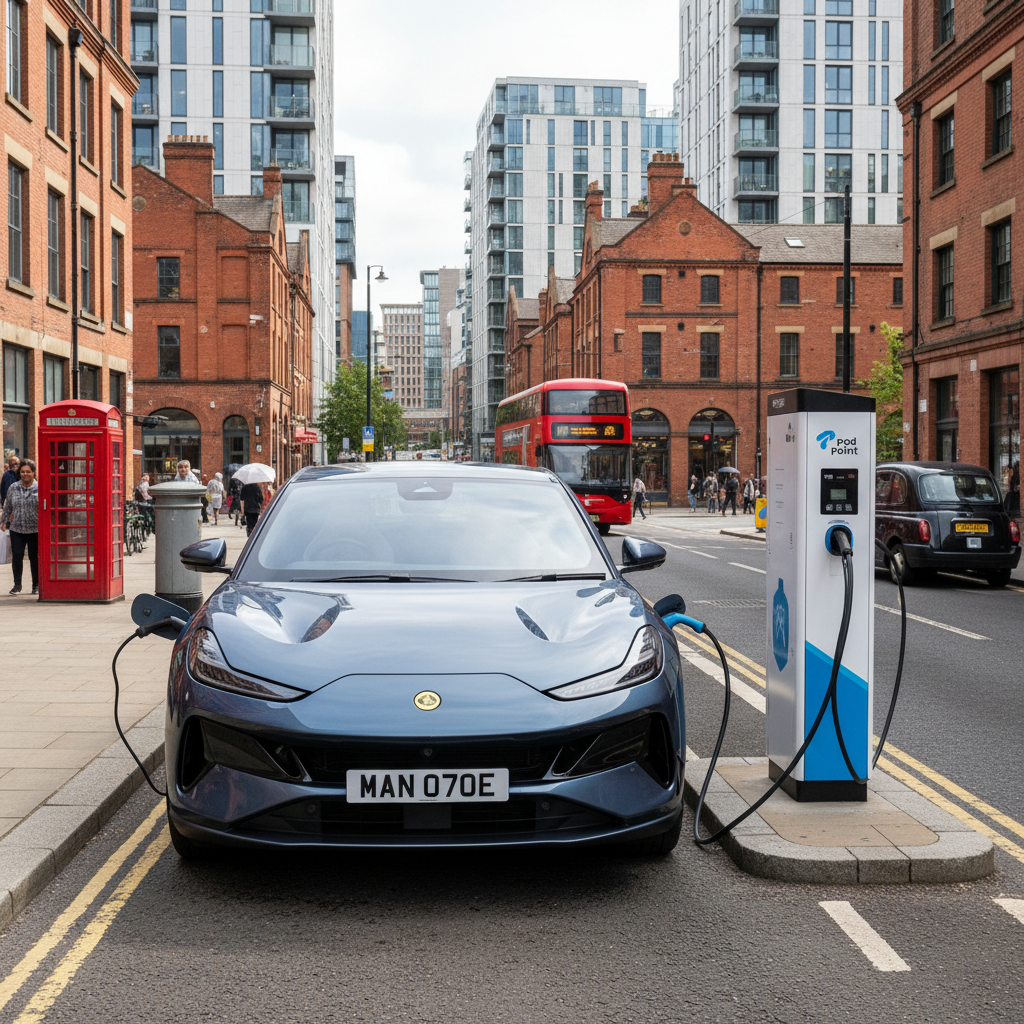
However, the rapid uptake of EVs demands an equally rapid expansion and improvement of our charging network. As of May 2025, the UK had over 80,000 public charging points, with over 8,000 of those being rapid chargers (150kW or above), as reported by the BBC. Yet, the government is continuously consulting on reforms to address a 'two-tier system' and relax certain ZEV mandate rules, as noted in EV Infrastructure News and the House of Commons Library. This signals a proactive approach to ensuring the charging infrastructure keeps pace with vehicle adoption.
By mid-2026, we can expect over 5,000 ultra-rapid chargers nationwide, with speeds up to 500kW at select locations, capable of adding 100 miles of range in under 3 minutes, according to The Electric Car Scheme. This kind of cutting-edge infrastructure, bolstered by emerging technologies like smart charging systems and Vehicle-to-Grid (V2G) solutions, as highlighted in a market analysis by NextMSC, is essential for a truly sustainable and future-proof motoring landscape. It’s about more than just having chargers; it’s about having smart chargers that integrate seamlessly with our electricity grid, enhancing efficiency and reliability. For more on how ultra-fast charging is unlocking our EV future, delve into our dedicated article.
The Reality Check: Navigating the EV Transition
While the innovation is electrifying, it's crucial to remain realistic. Challenges remain, such as grid connection delays affecting charger installations in 2025, as Shufflebotham noted. And while Chinese EVs are garnering significant hype for their screen-filled, AI-packed offerings, the true long-term impact on the global market is yet to be fully seen, as per Arstechnica.
The journey to a fully electric future is not a straight road, but the direction is clear. Porsche's sale of its stake in Bugatti, even as BMW bumps up its 7 Series with an all-new battery and hybrid options, shows a strategic pivot towards electrification even among luxury marques. The advancements in battery tech, the integration of AI from design to driving, and the continuous development of a robust charging network are creating an incredibly exciting and genuinely sustainable era for motoring.
Key Takeaways for the Future of UK Motoring:
- AI as a Core Enabler: Artificial Intelligence is fundamentally reshaping EV design, efficiency, and autonomous driving capabilities, moving beyond simple infotainment.
- Rapid Charging Evolution: The UK is seeing significant growth in ultra-rapid charging, with 500kW chargers on the horizon, dramatically reducing charging times.
- Infrastructure Momentum: Government reforms and industry investment are actively addressing charging network expansion and accessibility to support EV adoption.
- Sustained Range Confidence: Modern EVs offer ranges nearing 300 miles, alleviating range anxiety for most everyday journeys.
- Smart Grid Integration: Technologies like V2G and smart charging are crucial for enhancing grid efficiency and reliability, making the entire EV ecosystem more resilient.
For those of us passionate about green technology and future mobility, these developments aren't just technical curiosities; they are the gears turning towards a cleaner, more efficient, and ultimately, more fulfilling driving experience. The future of motoring isn't just electric; it's intelligent, interconnected, and inherently sustainable.