

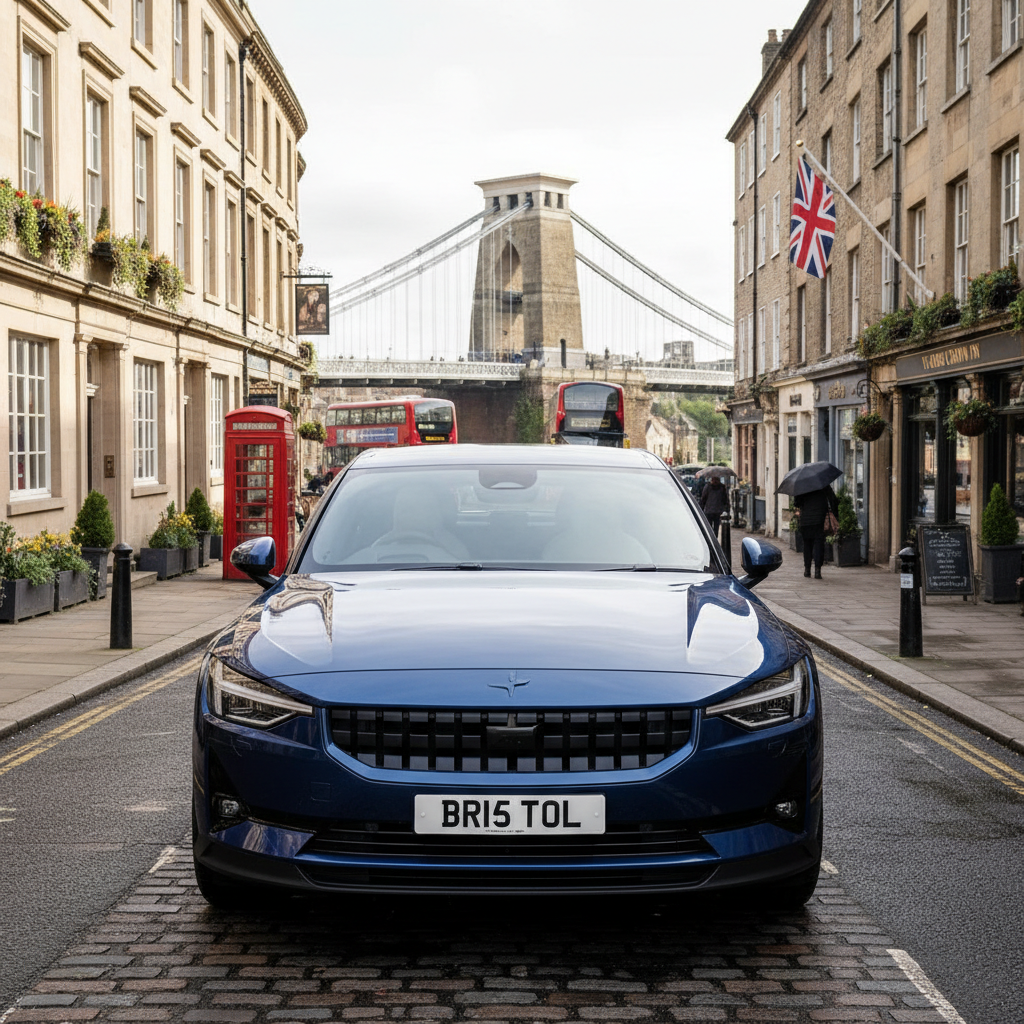
The hum of an electric motor. The instant torque. The promise of a greener tomorrow. For someone like me, who lives and breathes electric vehicles and green tech, it’s an exhilarating time to be on the road. We’re witnessing a fascinating crossroads where raw performance, environmental responsibility, and increasingly, personal privacy, are all converging to redefine what motoring truly means.
The Power Paradox: Performance Meets PHEV Pragmatism
Let's talk about power. Not just any power, but the kind that redefines expectations. Porsche, for instance, is pushing boundaries with cars boasting a staggering 1,139 horsepower and 400 kW charging capabilities. This isn't just about speed; it's about demonstrating that sustainable motoring doesn't mean sacrificing exhilaration. It's about bringing Formula E-level tech to the everyday (albeit very luxurious) drive, as seen with Porsche's electric Cayenne Coupe. This is the cutting edge, showing what's truly possible.
But for many, the journey to a fully electric future involves a stepping stone: the Plug-in Hybrid Electric Vehicle (PHEV). Long debated, recent data is quite encouraging. Toyota’s latest reports suggest that PHEVs are being plugged in and charged more frequently than traditionally assumed, debunking some of the scepticism. This is a crucial insight: if drivers are embracing the charging habit, PHEVs truly become a powerful bridge technology, significantly reducing tailpipe emissions on daily commutes, as we see with the new 2027 Audi RS5 – a performance PHEV that boasts an entirely new electric torque-vectoring rear differential, showcasing the blend of sportiness and sustainable tech.
The Intelligent Grid: Fueling Our EV Future
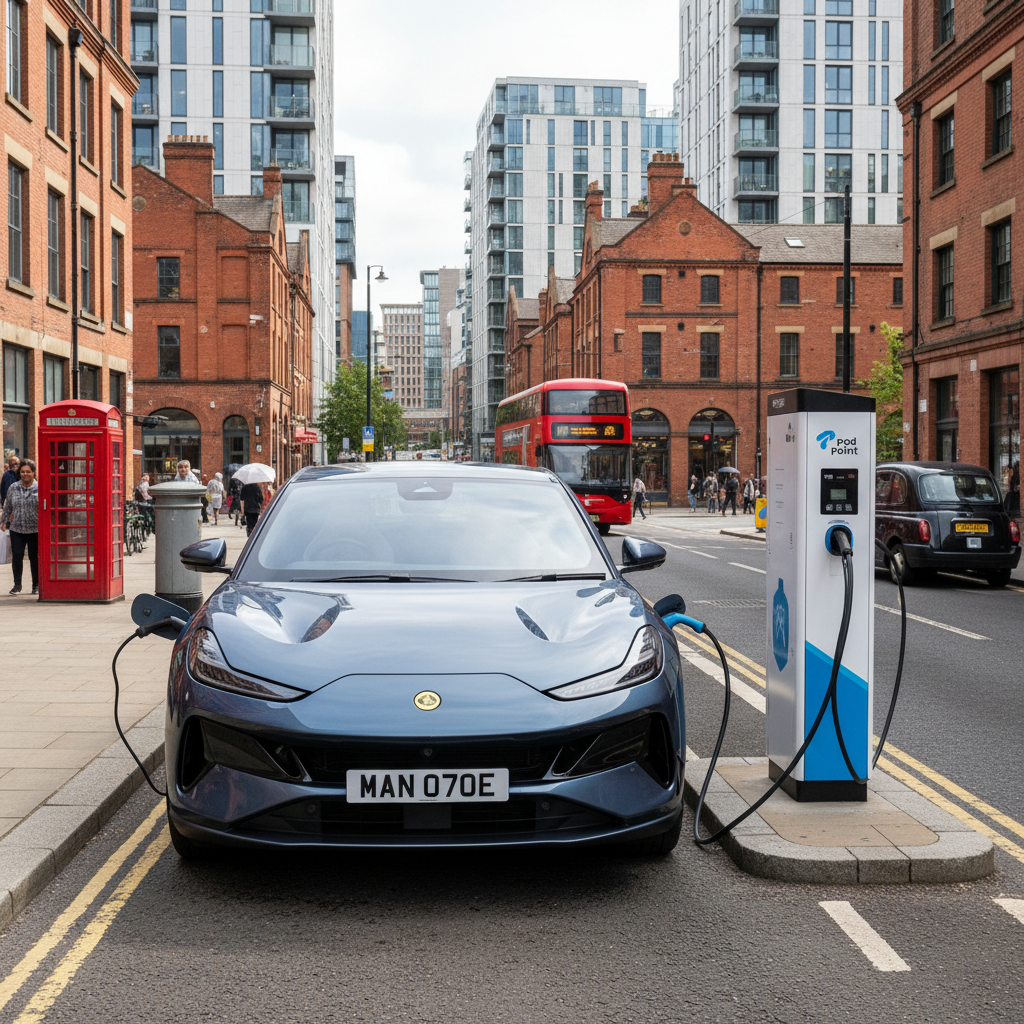
No discussion about EVs is complete without addressing charging. The UK's charging infrastructure is evolving rapidly. While there have been concerns about the rollout keeping pace with EV uptake, particularly in regional disparities, there's significant momentum. We're seeing substantial investments like the £176 million contract secured by EZO (formerly EasyGo) to manage EV charging across four Midlands councils. And InstaVolt is investing £2.5 million into battery energy storage systems (BESS) at charging sites, with more planned, which helps shield consumers from rising grid costs and ensures a more stable, efficient supply.
These aren't just more chargers; they're smarter chargers. Emerging technologies like smart charging systems, ultra-fast chargers reaching 500kW (adding 100 miles in under 3 minutes at select locations by mid-2026), and Vehicle-to-Grid (V2G) solutions are enhancing grid efficiency and reliability. The average EV in the UK is already achieving around 300 miles on a single charge based on WLTP tests, effectively banishing range anxiety for the vast majority of drivers. The government's relaxation of some ZEV mandate rules in April 2025 also suggests a pragmatic approach to ensure a smooth transition while still pushing for greener transport.
Connected Cars vs. Privacy: A New Divide
Now, let's touch on something truly fascinating and, for some, a potential deal-breaker: connectivity. Modern cars are increasingly becoming connected devices, brimming with sensors and embedded modems. This allows for over-the-air updates, predictive maintenance, and a host of infotainment features. However, it also raises questions about data privacy and tracking.
Enter the Slate Truck. This electric pickup is taking a bold stance, proudly declaring it will never track you. With no embedded modem, it’s the antithesis of today's hyper-connected vehicles. This 'un-connected' approach might resonate deeply with a segment of the market concerned about data harvesting and surveillance. It also puts a spotlight on a broader geopolitical issue: the US government's ban on Chinese connected car components for model year 2027 onwards, which Volvo recently navigated with approval to bypass. This highlights that connectivity isn't just a convenience; it's a complex layer of technology with significant national security implications, something companies like Audi, whose CEO Gernot Döllner is focused on local production, will undoubtedly be navigating.
The Tech Under the Bonnet: Accelerating Innovation
Behind these incredible vehicles and infrastructure developments lies a silent revolution in engineering. General Motors (GM) is a prime example, using AI and Machine Learning to dramatically speed up development cycles. What once took 15 hours in simulations now takes one minute, thanks to advanced computational fluid dynamics (CFD), finite element analysis (FEA), and digital twins. This acceleration is crucial for rapidly iterating designs, improving efficiency, and ensuring safety in the fast-paced EV world. It’s also enabling breakthroughs like Audi’s new active beam headlights, which satisfy new NHTSA rules on minimising glare, a subtle but significant safety innovation coming to the 2027 Audi Q9.
If you're considering making the switch, or upgrading your current EV, these trends are incredibly important. The market is diversifying, offering everything from luxurious, powerful EVs like Ferrari's controversial Luce (their first EV and visually stunning, I hear) to pragmatic, privacy-focused options. The charging network is becoming more robust and intelligent, and the technology underpinning it all is advancing at an unprecedented pace.
The future of motoring is not just electric; it's smart, it's sustainable, and it’s increasingly tailored to individual preferences, whether that's for ultimate connectivity or absolute privacy. It's an exciting road ahead.
Key Takeaways for Future-Proof Motoring:
- Performance & Practicality: Powerful EVs and effective PHEVs are making sustainable motoring exhilarating and accessible.
- Smart Charging Evolution: UK infrastructure is rapidly advancing with ultra-fast chargers and intelligent grid solutions reducing range anxiety.
- Privacy-First Options: New electric vehicles are emerging that prioritise driver data privacy, offering a clear alternative to hyper-connected cars.
- Accelerated Innovation: AI and digital tools are dramatically speeding up vehicle development, bringing cutting-edge tech to market faster.
Conclusion: A Greener, Smarter, More Diverse Road Ahead
The landscape of sustainable motoring is more dynamic than ever. From the high-octane world of performance EVs that demonstrate what's technically possible, to the pragmatic advancements in PHEV adoption and a rapidly intelligent charging network, the pieces are falling into place. The emerging conversation around data privacy in connected cars adds another fascinating layer to the decision-making process for consumers. This isn't just about swapping petrol for electrons; it's about a holistic transformation of how we design, power, and interact with our vehicles. The green credentials are not just strong; they're becoming increasingly sophisticated and tailored to a diverse set of driver needs and values.