

Alright, let's talk about speed. Not just the eye-watering kind that scorches the Nürburgring, but the rapid pace of innovation driving sustainable motoring forward. It's exhilarating to watch, isn't it? As an EV specialist, I've always championed the fusion of cutting-edge technology with ecological responsibility. And what we're seeing now, from the track to our town centres, is simply incredible.
Take the Porsche Taycan, for instance. A marvel in its own right, pushing the boundaries of electric performance. Now, Nordschleife specialist Manthey has developed an upgrade package to make it even faster, as reported by Ars Technica. While most of us won't be logging lap times at the 'Ring, these high-performance ventures are invaluable. They become real-world test beds for advanced battery management, thermal control systems, and power delivery – innovations that inevitably trickle down into our everyday family EVs, making them more efficient, more reliable, and ultimately, more sustainable.
The Power Grid: A Silent Revolution Underway
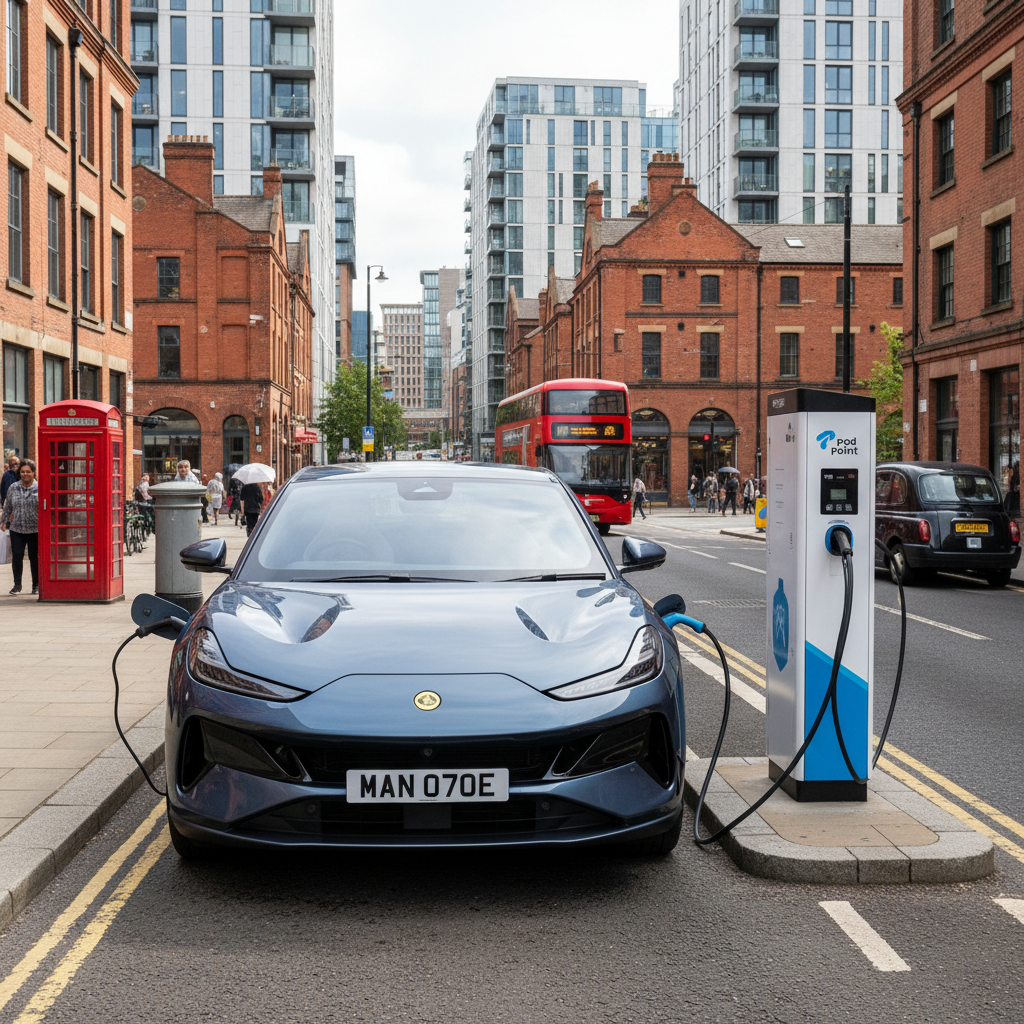
But raw performance is only one piece of the puzzle. The true cornerstone of a green motoring future lies in our charging infrastructure. The rapid growth of EV adoption, while fantastic, presents significant challenges for charging, as highlighted by Nature.com's research into sustainable EV adoption in the UK. This isn't just about putting more plugs in the ground; it's about smart, resilient networks.
The UK is making strides here, albeit with some bumps in the road. We're seeing investment in battery energy storage systems (BESS) by companies like InstaVolt, as reported by GB News, which will help stabilise the grid and even pass savings on to drivers. This is crucial for managing demand peaks and ensuring grid stability as more of us plug in. The House of Commons Library also notes relaxed ZEV mandate rules in April 2025, alongside ongoing grant schemes for charge points, signalling a commitment to infrastructure growth.
While the Guardian observed a slowdown in charger rollout, particularly for local infrastructure, there's optimism for 2026 and 2027 with delayed Levi funding finally arriving. We're also seeing projections for over 5,000 ultra-rapid chargers nationwide by mid-2026, offering charging speeds up to a blistering 500kW at select locations – adding 100 miles of range in under 3 minutes, according to The Electric Car Scheme. This directly addresses one of the biggest anxieties for potential EV buyers: range anxiety.
Bridging the Gap: Affordable EVs and Intelligent Systems
Speaking of everyday drivers, the push for more accessible EVs is vital. Ford's 'skunkworks' in California, working on a $30,000 electric pickup, as detailed by Ars Technica, is a prime example of OEMs focusing on affordability without compromising capability. Similarly, Rivian's exploration of R2 variants beyond the SUV, potentially including a pickup and an R2X, shows a commitment to diversifying the electric portfolio for broader appeal. This democratisation of zero-emission vehicles is a game-changer.
And let's not forget the intelligent systems that will bind it all together. Tesla's Full Self-Driving (FSD) is grappling with European regulatory approval, as Ars Technica reports, but the broader move towards sophisticated driver assistance and autonomous features is undeniable. Beyond driving, emerging technologies like smart charging and Vehicle-to-Grid (V2G) solutions are enhancing grid efficiency and reliability, positioning the UK EV charging market for sustainable and profitable growth, according to NextMSC. This isn't just about driving; it’s about an integrated eco-system transforming UK roads.
The Green Credentials: Performance Meets Purpose
If you're considering making the switch, it's clear the landscape is evolving at breakneck speed. From the high-octane performance of track-honed EVs pushing battery and motor limits, to the strategic deployment of smart, ultra-rapid charging infrastructure, the future is looking incredibly bright for eco-friendly motoring.
The average EV in 2025 achieving around 300 miles on WLTP tests, as noted by Zest.uk.com and Imperial College London, means range anxiety is becoming a thing of the past for most daily commutes. It's about more than just reducing emissions; it's about a superior, future-proof driving experience.
The challenges remain, particularly in ensuring equitable access to charging and integrating renewable energy sources fully. But the commitment from manufacturers, infrastructure providers, and governments alike suggests we're on a firm path towards a truly sustainable, electric future.
Key Takeaways for the Future Motoring Enthusiast:
- Performance Drives Practicality: High-end EV innovations are directly improving everyday vehicle efficiency and reliability.
- Smart Infrastructure is Key: Investment in battery storage and ultra-rapid chargers is tackling range anxiety and grid stability.
- Affordability on the Horizon: Manufacturers are actively developing more accessible and diverse electric vehicle options.
- Integration is Everything: Smart charging and V2G technologies will create a seamless, efficient EV ecosystem.
- UK Progress: While challenges remain, the UK is investing significantly in growing and modernising its charging network.
In conclusion, the convergence of high-performance EV technology and strategic infrastructure development paints a compelling picture. We're not just replacing petrol engines with electric motors; we're fundamentally rethinking how we move, how we power our lives, and how we build a truly sustainable future. The verdict? The green credentials of electric motoring are not just strong; they're getting stronger, faster, and smarter every day. This evolution is shaping the road ahead, electrifying performance and powering a sustainable UK grid.