

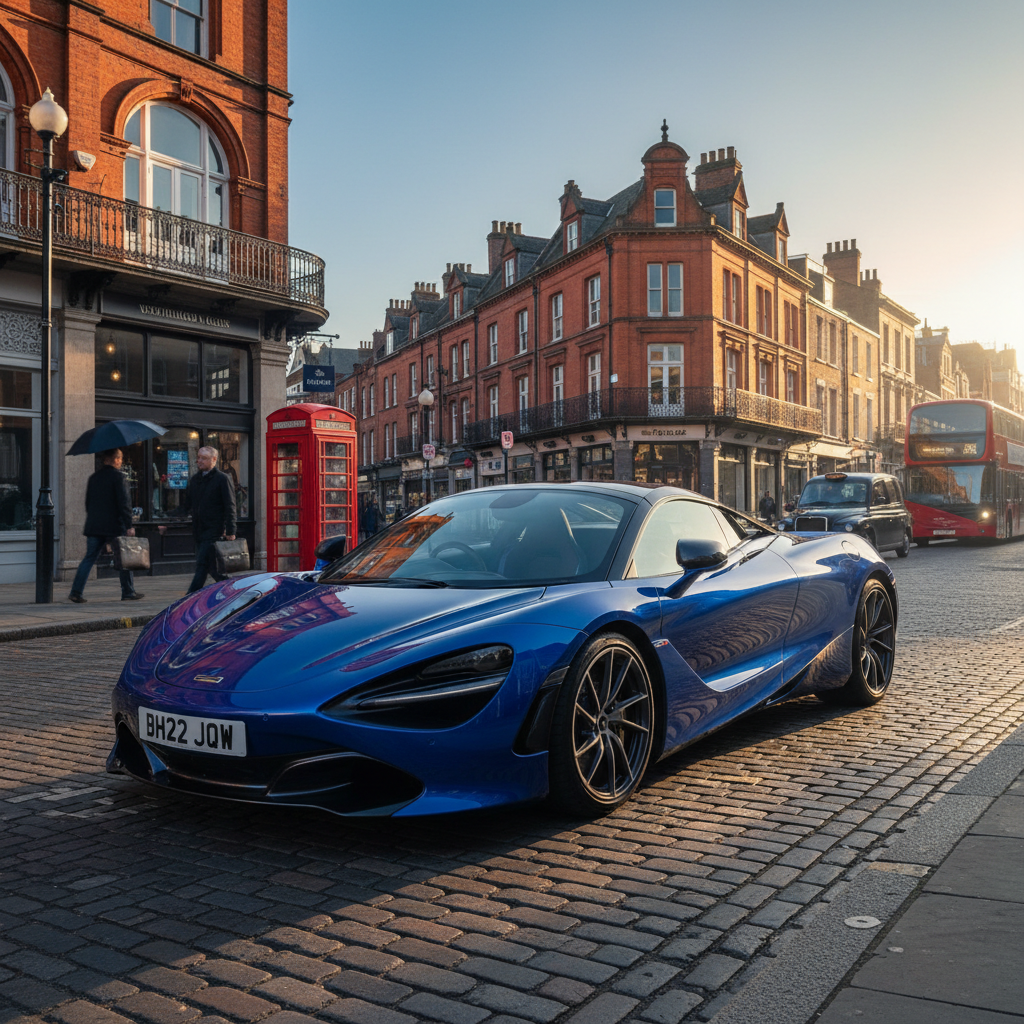
For a decade now, the green motoring transition has felt like a bit of a brute-force exercise. Car makers scrambled to stuff gargantuan, heavy battery packs into towering SUVs. They chased headline-grabbing range figures. Vehicle weight, efficiency and everyday affordability? Secondary concerns, apparently. But the industry is finally waking up. We are entering the era of "right-sized" engineering. This is a sensible philosophy that matches a car’s powertrain to its actual job, rather than pretending a heavy electric SUV is a one-size-fits-all cure.
The Return of the Pragmatic Hybrid
Let's call a spade a spade: not every journey requires a 100kWh battery pack. Forcing heavy EVs onto buyers without driveways is a bit of a faff. For drivers needing total flexibility without the massive price premium of a long-range EV, the hybrid is evolving. It is no longer just a compromised stepping stone. A prime example is the return of a legendary badge. As reported by Ars Technica, the new 2026 Honda Prelude hybrid coupe pairs striking styling with a highly efficient powertrain that achieves 44 mpg. For my money, it proves we do not need to drag tonnes of lithium around to slice tailpipe emissions.
This dual-track approach, where clever hybrids sit alongside pure electric vehicles, is gaining political traction too. Following recent consultations, the UK government has relaxed some of its ZEV (Zero Emission Vehicle) mandate rules to allow more flexibility. Westminster has finally realised that plug-in and self-charging hybrids play a vital, practical role in weaning drivers off petrol without causing massive lifestyle friction.
The Next Generation of Zero-Emission Achievers
If you are ready to make the jump to a pure EV, the news is just as encouraging. The days of sacrificing driving fun or boot space for eco-credentials are over. Take the upcoming 2027 Rivian R2, highlighted by Ars Technica as a massive leap forward. By squeezing the brand's premium, adventurous DNA into a smaller, sub-$60,000 package, it makes a genuinely capable SUV accessible to the mid-market.
Even badge-engineered efforts like the 2026 Subaru Solterra, also reviewed by Ars Technica, prove that rugged, daily-driver EVs are shaking off their agricultural dynamics. The chassis tuning is spot on, making them genuinely pleasant things to steer. According to researchers at the Grantham Institute at Imperial College London, the average EV in 2025/2026 achieves around 300 miles of range on official WLTP tests. Combine that with the fact that 350kW rapid chargers can now dump 200 miles of juice into your battery in just 20 minutes, and range anxiety simply evaporates.
Closing the Loop: Second-Life and Grid Integration
True sustainability does not stop when you switch off the ignition. It is about what happens when the car is parked, or when its primary life cycle ends. This is where the circular economy of battery tech gets clever. As reported by Ars Technica, old Waymo robotaxi batteries are being repurposed as backup grid storage in California and Texas. Instead of heading to an early grave in a recycling plant, these high-capacity packs get a second life stabilising local power networks.
We are starting to see the same logic applied over here. Charging giant InstaVolt has confirmed a £2.5 million investment into five new battery energy storage systems (BESS) sites, with 20 more planned by the end of the year. These localised battery buffers store renewable power when grid demand is low, shielding drivers from volatile electricity prices during peak hours. In fact, analysis from ChargeUK and LCP Delta projects that the EV charging sector is poised to throw a whopping £15.5 billion into the UK economy over the next decade. As highlighted by Fleet News, electric cars are turning from mere transport into active parts of our national energy grid.
Key Takeaways for the Future-Proof Driver
- Right-Sized Powertrains: The industry is moving away from absurdly oversized batteries toward lighter, tailored solutions, like the 44 mpg Honda Prelude hybrid.
- No More Anxiety: Modern EVs average nearly 300 miles of range. Throw in 350kW charging that adds 200 miles in 20 minutes, and long trips are trivial.
- The Circular Economy: Old EV batteries, like those from Waymo's autonomous fleet, are getting a second life stabilising local power grids.
- Boosting the UK: Localised battery storage systems (such as InstaVolt's BESS) and a growing charging network are set to pump £15.5 billion into the economy.
The Verdict: A Tailored Path to Zero Emissions
The point here is that green motoring is no longer a rigid, terrifying leap of faith. Whether your lifestyle suits a lightweight, highly efficient hybrid like the Honda Prelude, or a smart, grid-integrated EV like the Rivian R2, the market is finally building the right tools for the job. I reckon this focus on common-sense powertrains, clever charging and second-life batteries is exactly what we needed. The automotive world is finally delivering a future that is genuinely practical, cost-effective, and remarkably easy to live with.